Sculpture
© Manu M Das
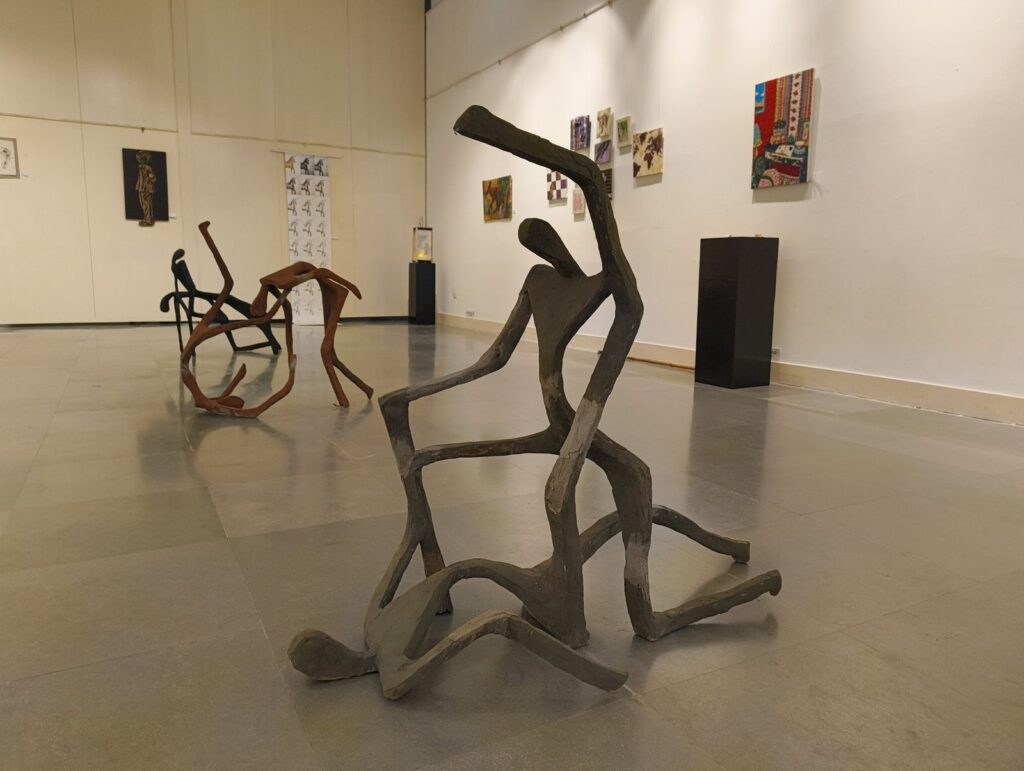
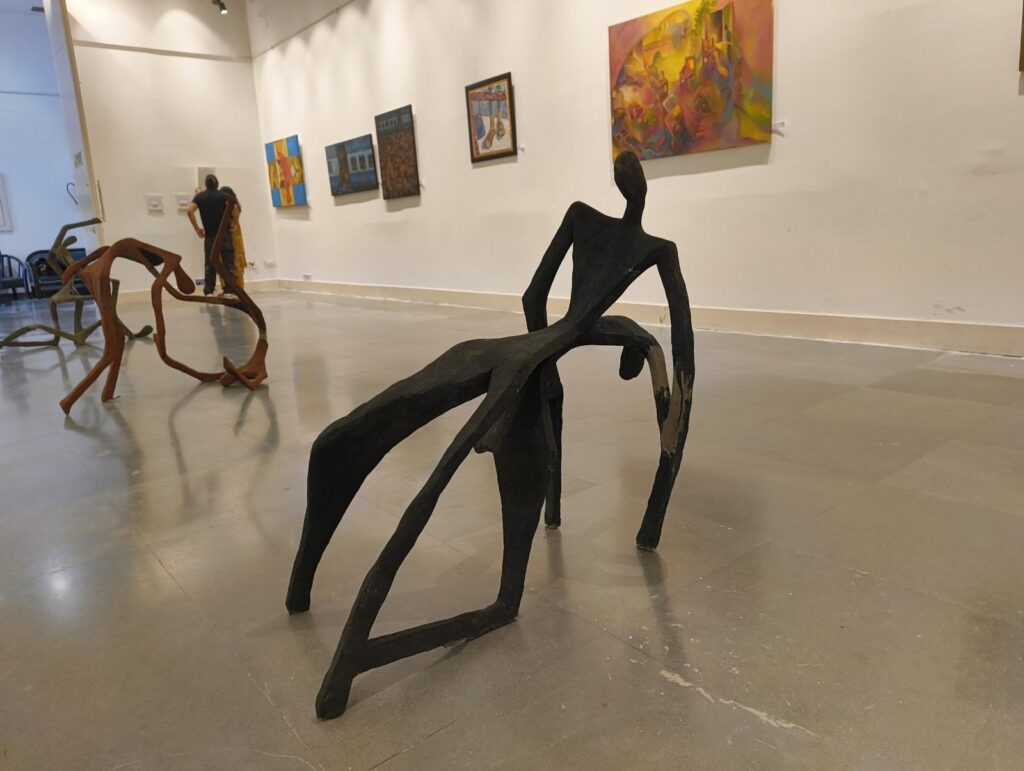
1. What can you make with a pen and seven hours?
Manu came home from an artist residency at Sandarbh, in Rajasthan, unsure how to go on. He wanted to return to Delhi and keep making work, but money was hard and he needed a job.
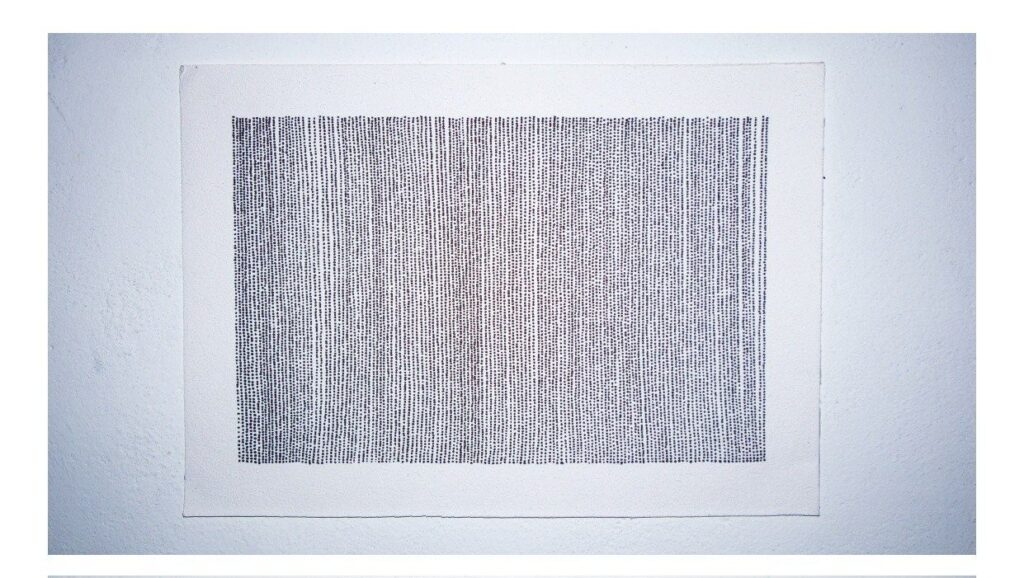
He had a sheet of paper and a pen. He did not want to sketch or paint. So he began to place tiny dots across the page, counting each one and timing himself.
“I wondered how an artist could continue making art when everything seemed to be going against them.”
“The artwork is never the object itself.”
© Manu M Das
The title is the work. Seven hours are 25,200 seconds. In that time he placed 16,779 dots.
“The process became meditative, while also demanding intense focus.”
He was interested in durational performance and endurance and in shapes, lines and dots rather than figures. The dots gave him ideas for new work.
“How I could make something from a place where the future felt dim.”
2. Why keep a kullhad?
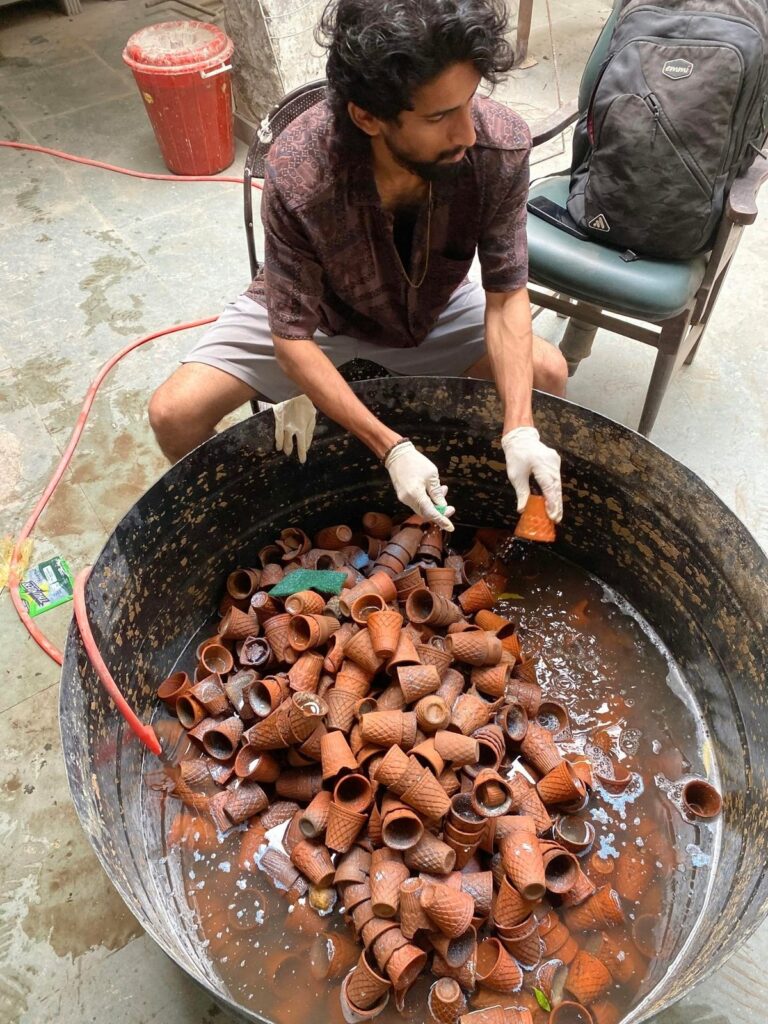
When Manu first came to Delhi from Kerala, he had never drunk tea from a terracotta cup. What surprised him was that people threw such beautiful objects away. He could not, so he took one home and kept it.
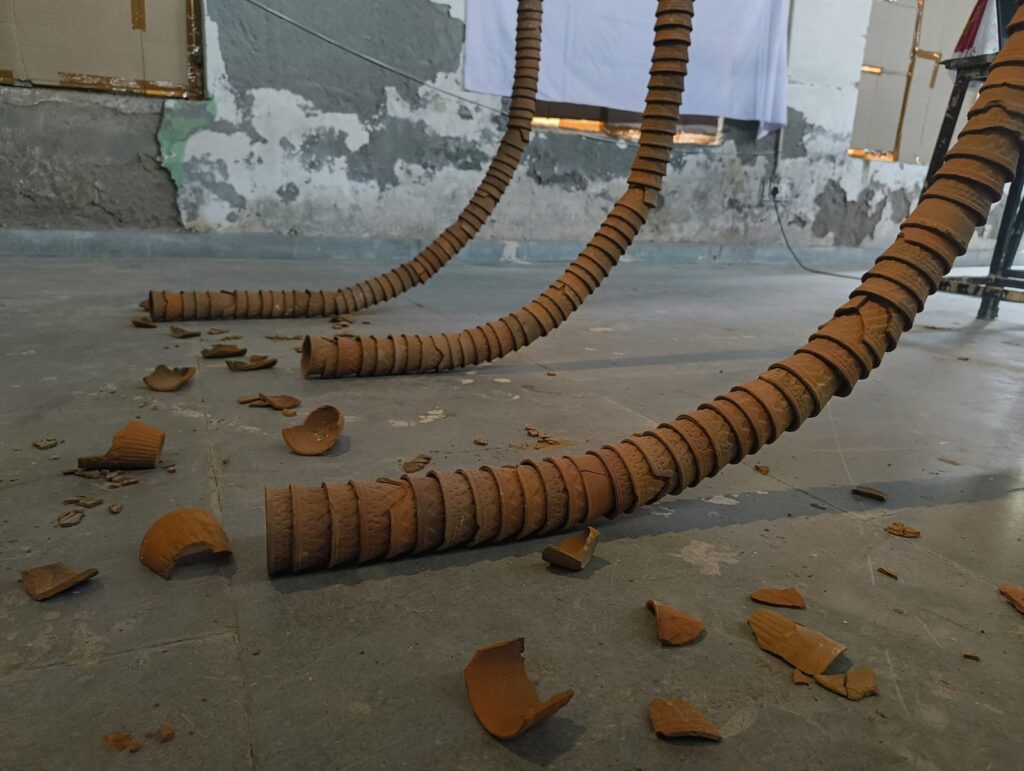
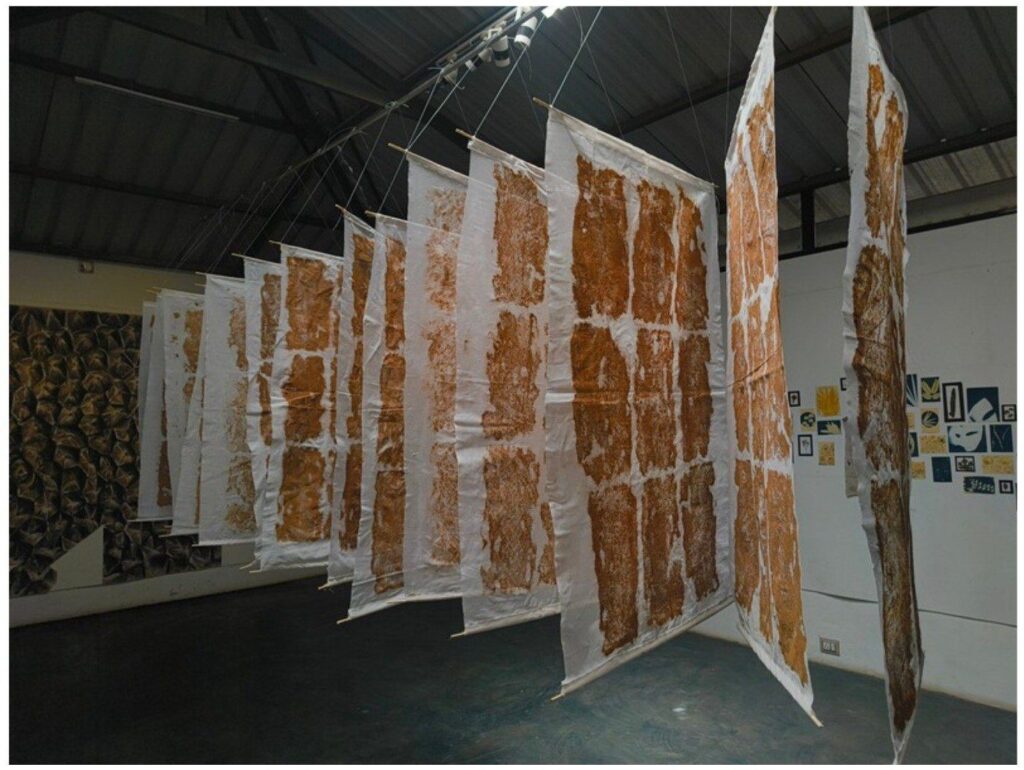
A year later he made Kullhad Columns from 1,000 discarded kullhads collected from tea shops near Jamia.
“The maker and the person who drank from it had both spent time with the same material. That felt fascinating to me.”
“A way of archiving the presence, and the time, of many individuals.”
© Manu M Das
© Manu M Das
© Manu M Das
3. What happened on the wrong hill?
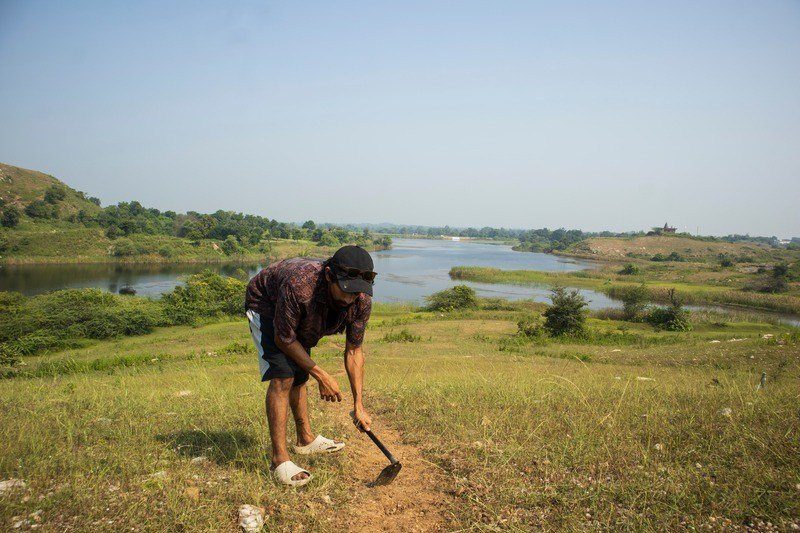
At the Sandarbh Artist Residency, Manu wanted to make a durational performance on a green hill. He spent two days looking for one on the bicycle the residency gave him. He found it, but only saw it from across the river.
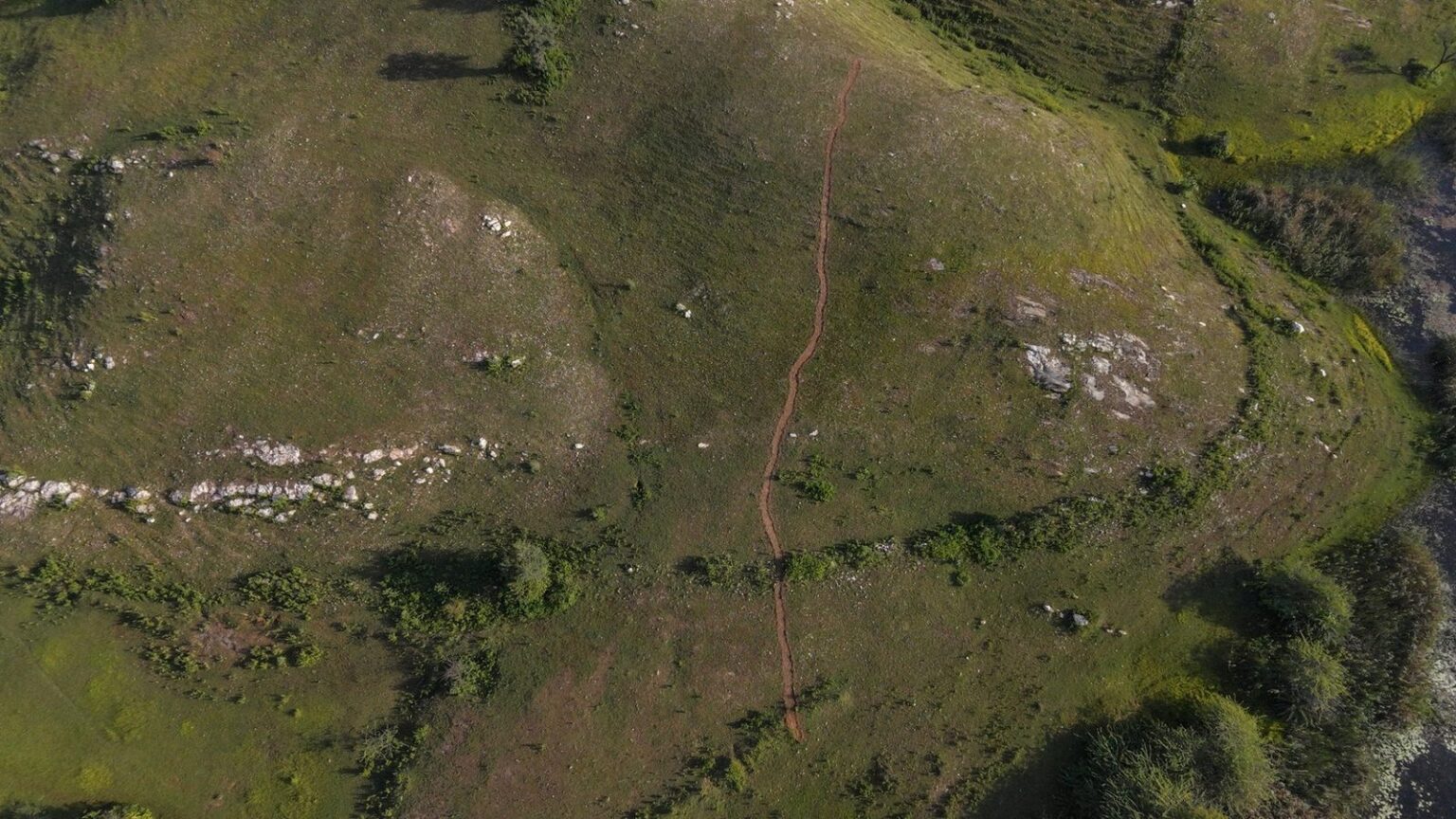
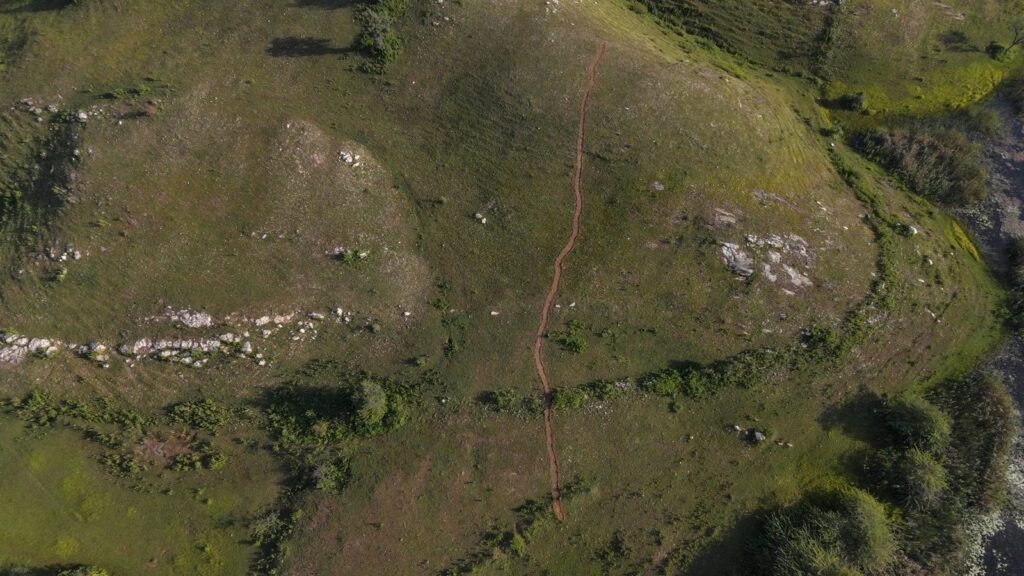
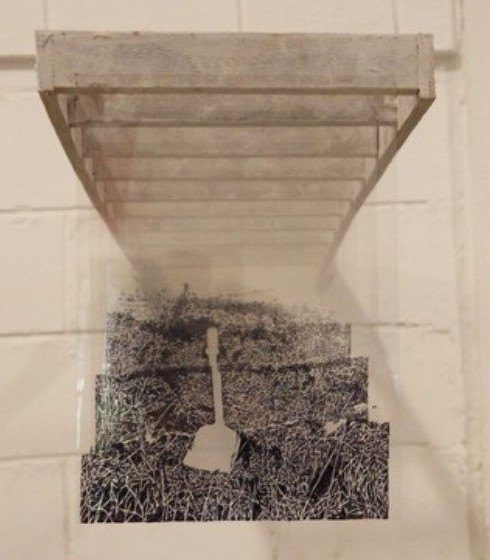
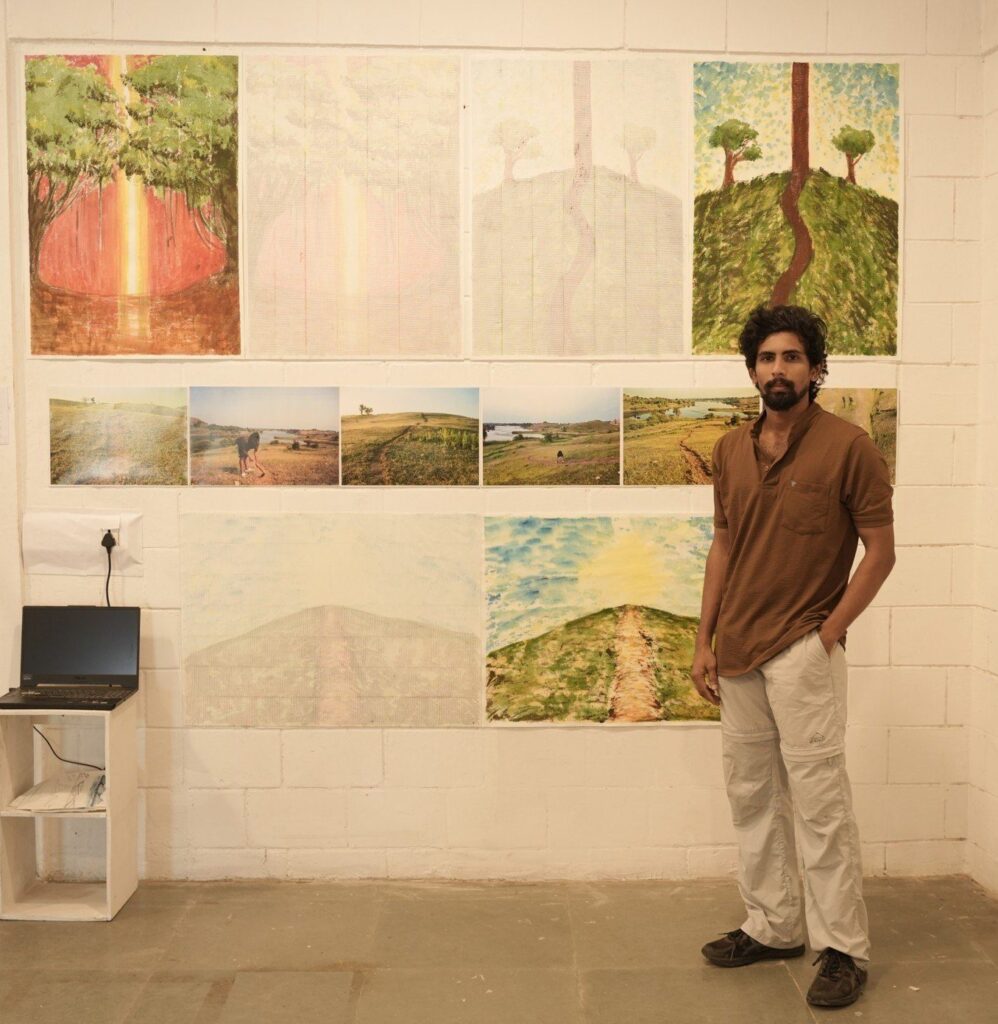
The next day he climbed it. It was mostly rock, with very little grass. The work could not be done there in the time he had. So he found another hill right next to it, and there he performed Marking a Line, which lasted six days.
“It wasn’t necessarily wrong; it was a miscalculation on my part.”
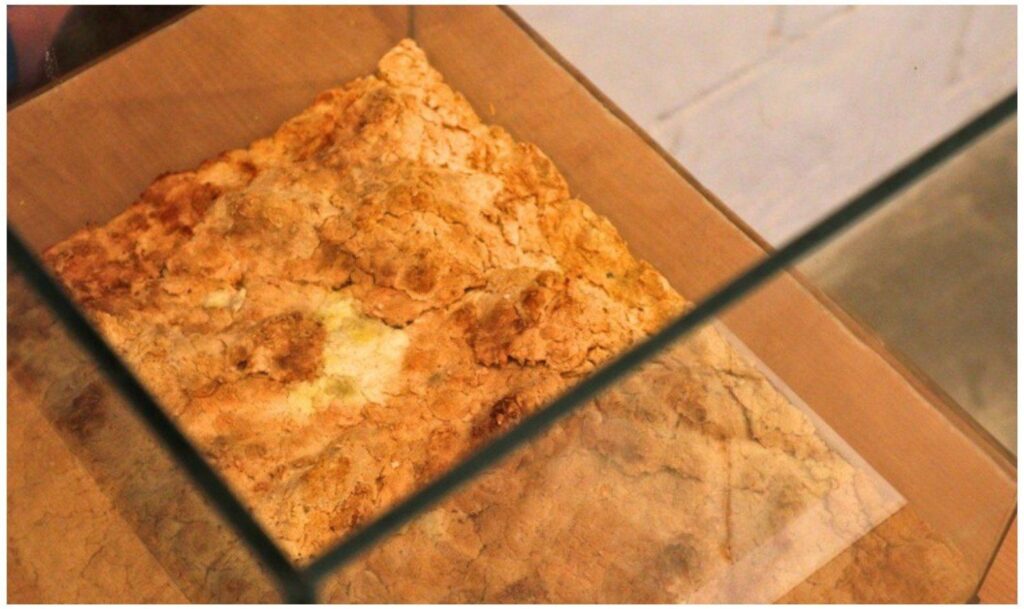
Two works grew out of the performance. One imagines how the land will change, in materials that change too. The other holds the hill and the tool that marked it, in ten layers.
© Manu M Das
Time, labour and effort
Manu does not work in one fixed way. Sometimes he follows instinct. Sometimes he takes time to research and plan. He looks for a material or an idea that strikes him, collects it, studies it and tries different ways of working until one feels right.
A work can take a day or six months.
“In most of my work, I want viewers to experience the sheer weight of the time, labour, and effort invested in its making.”
© Manu M Das
4. Who taught him the most?
© Manu M Das
“The thing I use most in my life is something I’ve learned from people whose names I may never know: the person who helped me when I was lost as a child and brought me back to my family; the person who gave me shelter when I was stranded alone in an unfamiliar place; the person I saw carrying three children and travelling in a general coach for two days without sleep, looking after their family; and my parents, who have endured (and continue to endure) so much to help my sister and me build better lives, sacrificing their own happiness along the way.”
“Every household with a story of endurance and sacrifice has taught me an important lesson.”
“Art is not separate from life. Art is life itself.”
What comes next
“Strengthen your foundation. When your base is strong, you can build anything on top of it.”
Next, Manu is planning a new durational performance. It has not begun yet and he is looking for the support to make it happen. He wants his work to keep growing wherever it is shown, “rather than remain still, confined to a concept or a box with only one limited understanding.”
To support his next performance: kalyanikalakriti.in/partner-with-us
Manu M Das
Instagram @mm_da5
Read Issue Five, with all seventeen films →
More about Manu →
Next in Issue Five
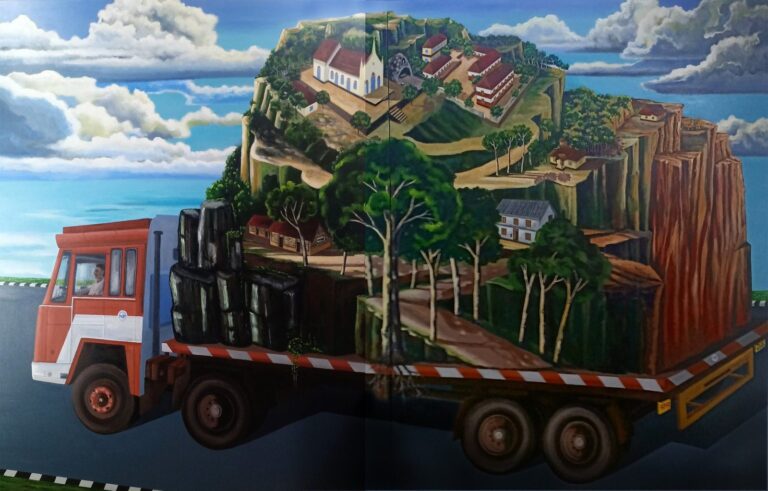 The Long ViewA hill on a lorryProf. Shijo Jacob3 min read
The Raconteur is open to every reader and every artist. If you would like to help, you can give to Kalyani Kalakriti Foundation.
Watch Manu M Das in his own words
Send Manu a note.
A few words about their work mean a lot to a young artist. The team reads every note before it goes to Manu.
Get the next issue every Monday.
Just your email.