
1. What changed at the ghat?
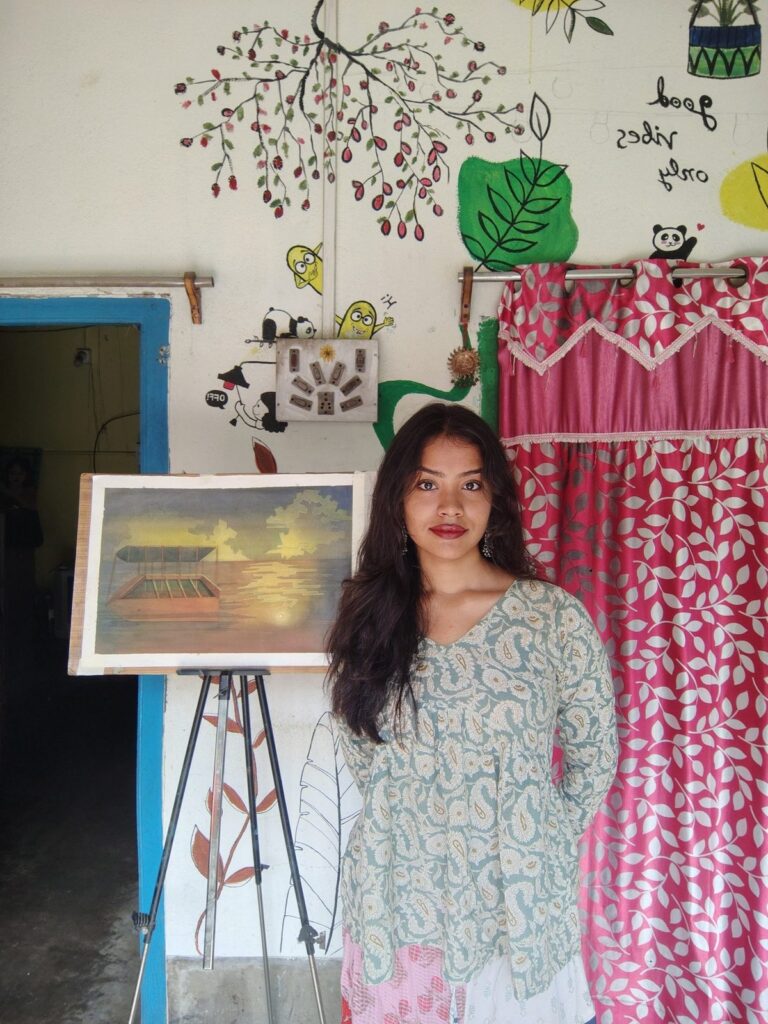
Asmita is in her third year of a BFA in painting at the Indian College of Arts and Draftsmanship in Kolkata.
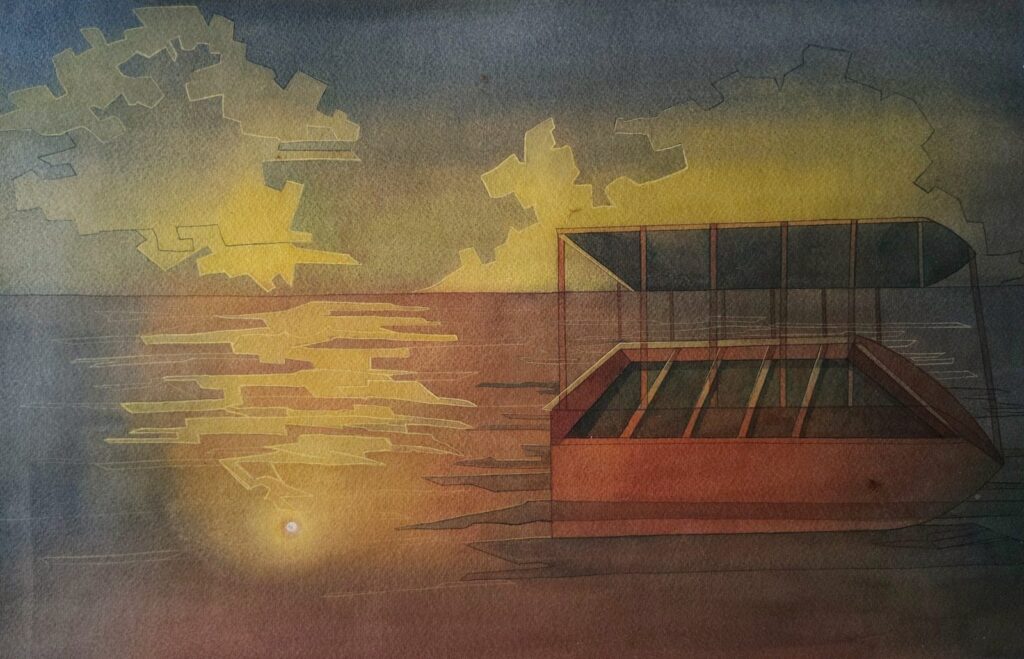
Her painting The Encroachment of the Ganges began at Baghbazar Ganga Ghat, one afternoon. “I witnessed how both banks of the river are changing due to urban development, while the movement of boats and other vehicles on the river is increasing.”
The change, she says, shaped the painting, “influencing the movement of everything within it, from the boats to the sun.”
“The Ganges, which we lovingly call our Mother, once gave us a sense of peace and calmness.”
© Asmita Das
© Asmita Das
The sun sinks into a river of light. Lines run across the water like the wakes of boats. On the right, a boat with its roof frame stands still in the glow.
It is the same river she knew, she says, but it feels “increasingly crowded and congested.”
2. How does a wash become a sunset?
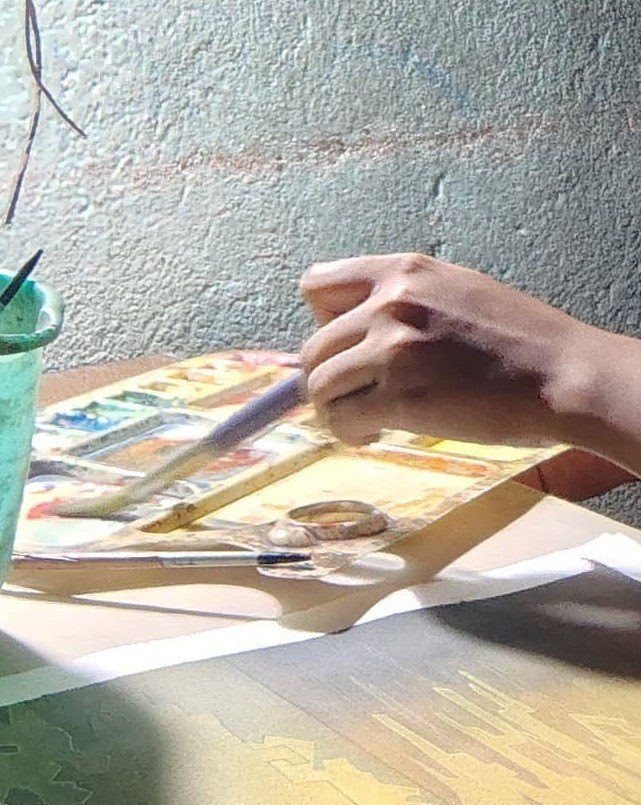
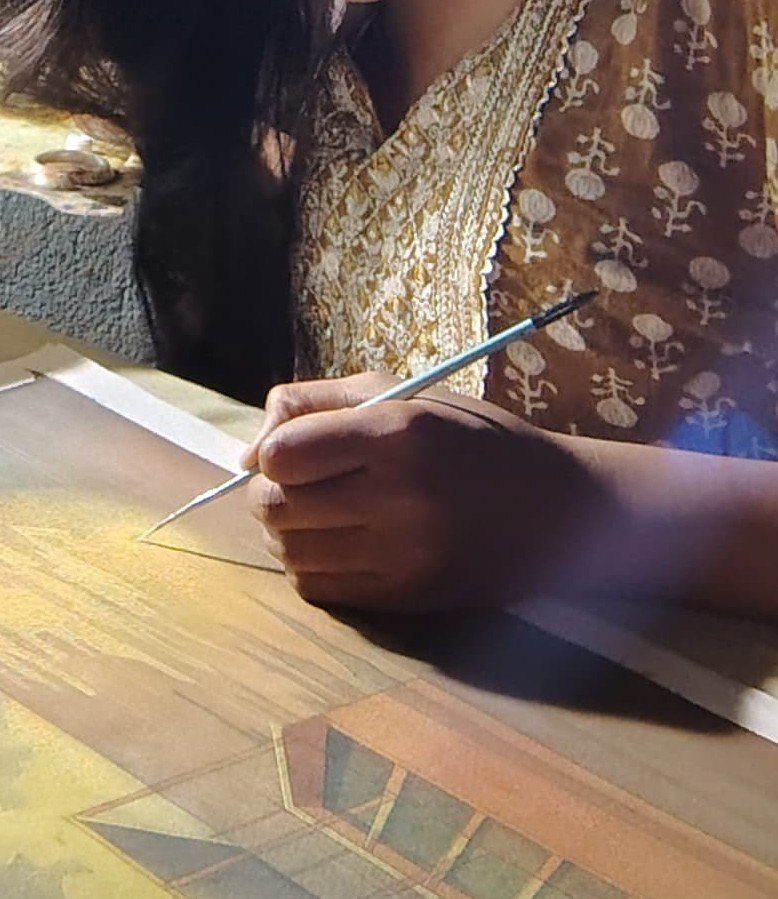
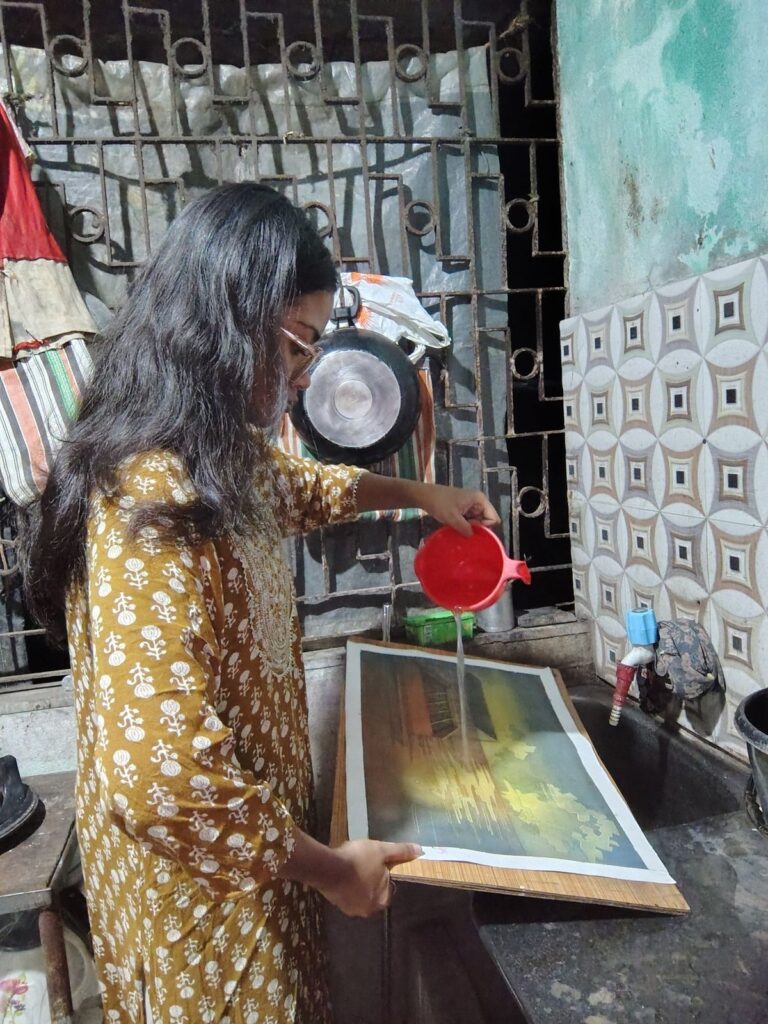
She starts with a sketch. Then she wets the paper and lets it dry and lays the first colour. When that dries, she washes the paper again and lays another wash. Layer by layer, she waits for the colour to settle and only at the end does she add the fine details.
Her tools are simple: “watercolour brushes, paints, water, a wooden board and cloth.”
© Asmita Das
3. What did a wet cloth teach her?
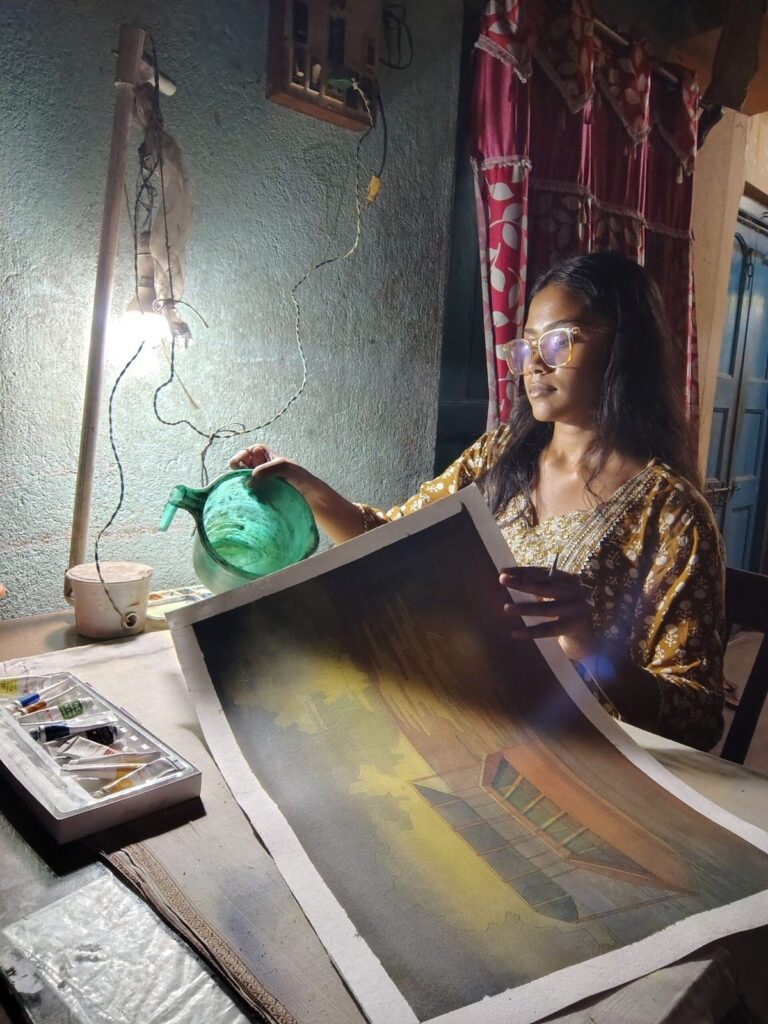
Asmita keeps a damp cloth under the paper so that it stays wet while she paints. Once, she made the cloth far too wet.
“Since I work on damp paper, the extra moisture caused the colour pigments to gather unevenly in certain areas, creating unwanted spots on the paper.”
In watercolour the water decides as much as the brush. Too little and the wash breaks. Too much and the colour runs where it likes.
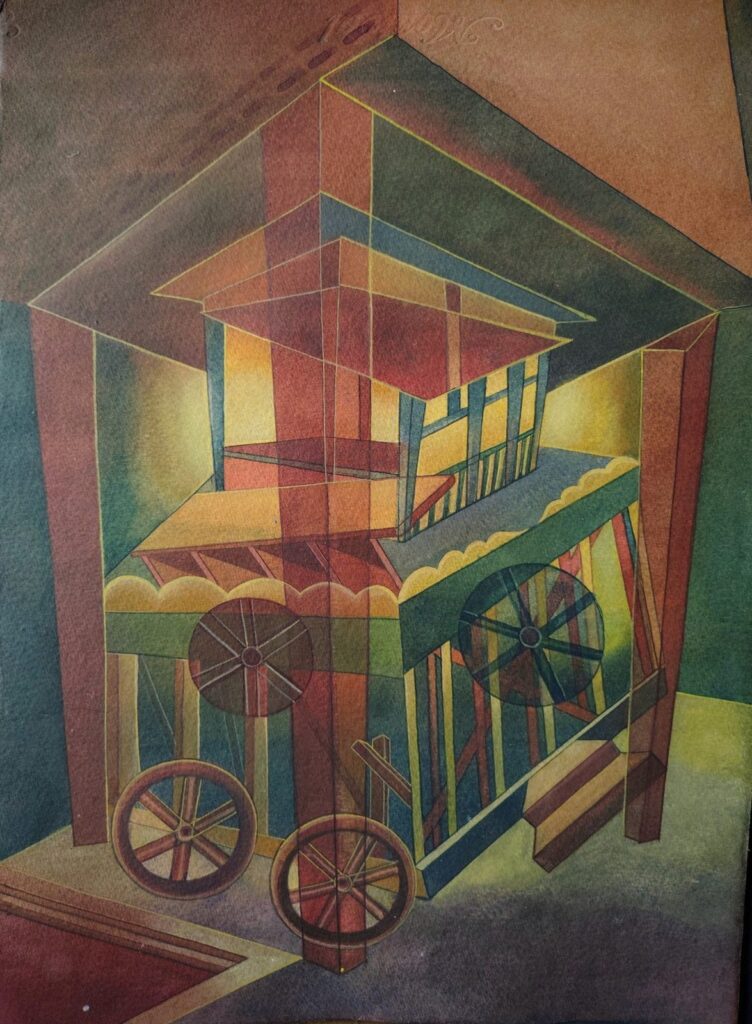
© Asmita Das
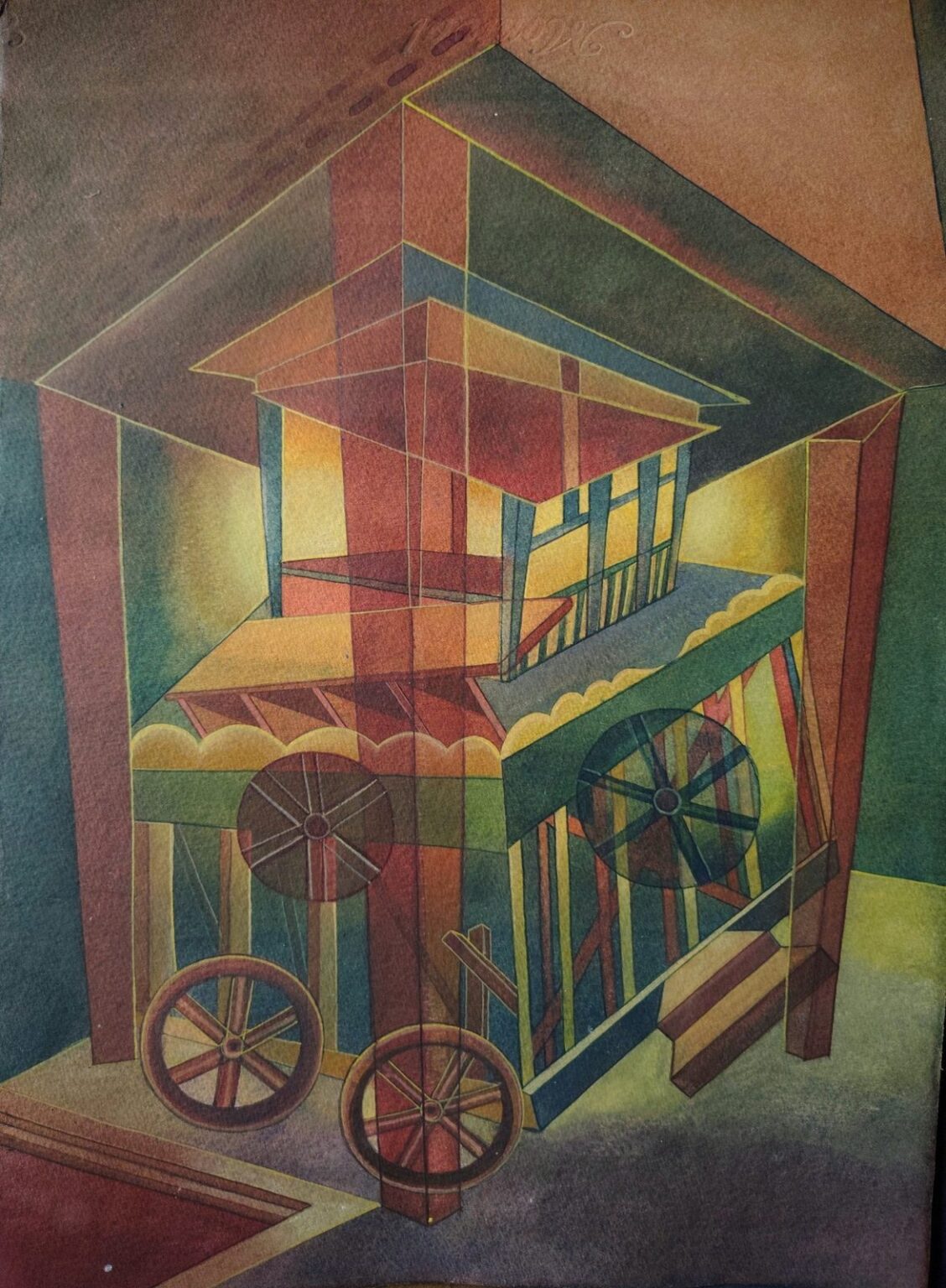
A chariot built like a house, its wheels fixed in place. Like most of her paintings, it began in her head. “Most of them come from my imagination.”
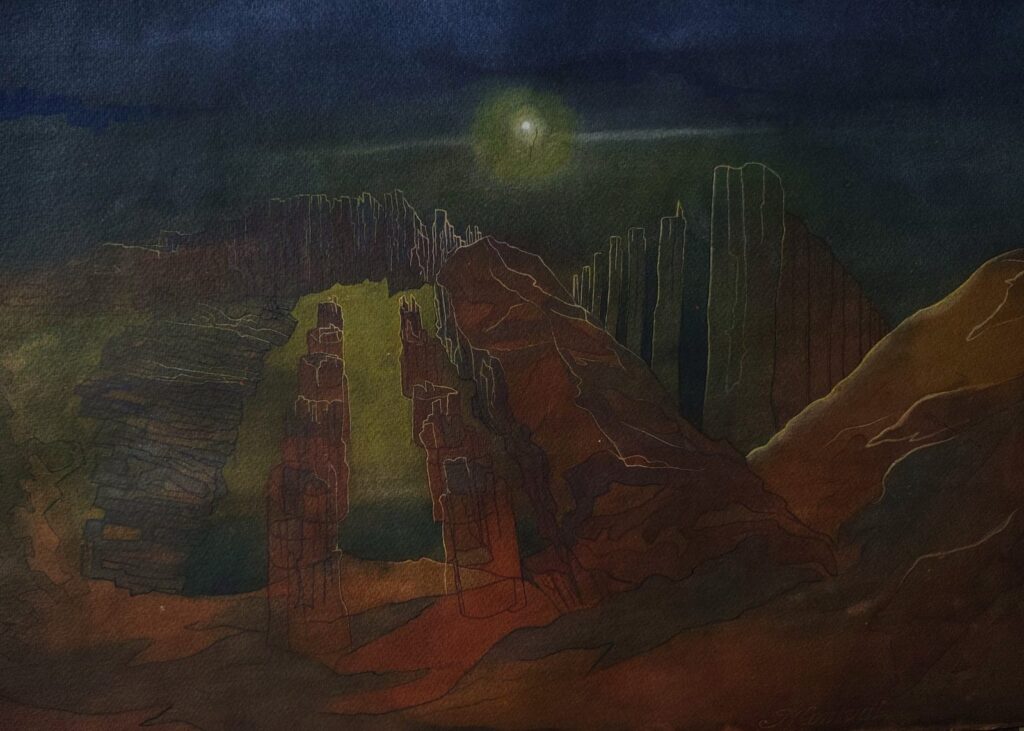
© Asmita Das
4. Where should we start looking?
Anywhere you like, she says. “I don’t want to guide your eyes in any fixed order or direction while viewing my work. You can begin from any perspective, colour, fragment or shape.”
Her pictures are not copied from photographs. They come from imagination and from moments she has lived through and kept, “deeply engraved in my memory, rather than captured in my phone.”
Her style grew from her own practice. “I learned through personal observation, experimenting, making mistakes and learning from my own experiences.”
“No matter where you start, your eyes will eventually lead you to what I want to express.”
To a first-year student
“Never lose hope. Keep working hard and stay true to your journey.”
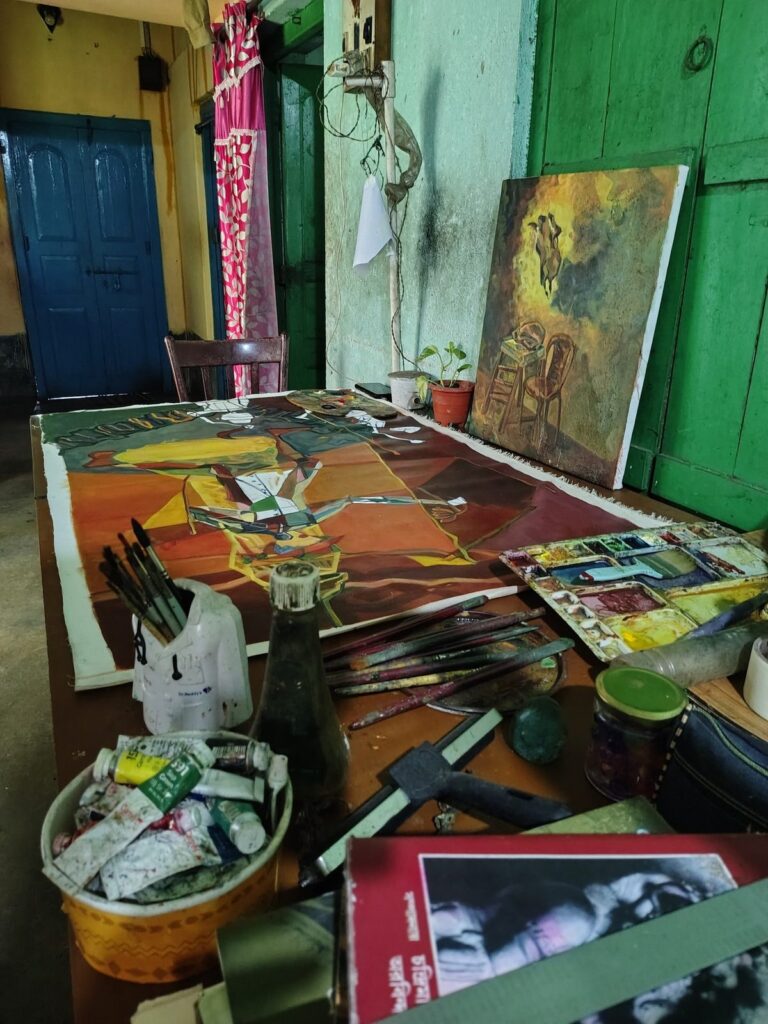
© Asmita Das
She would like to see her work wherever her eyes can reach: an office, a home, a café and “specially in a gallery.” What she paints next depends on what draws her at that moment.
To know about her work: kalyanikalakriti.in/catalogue
Asmita Das
Instagram @asmitaa_das
Read Issue Five, with all seventeen films →
More about Asmita →
The Raconteur is open to every reader and every artist. If you would like to help, you can give to Kalyani Kalakriti Foundation.
Watch Asmita Das in her own words
Send Asmita a note.
A few words about their work mean a lot to a young artist. The team reads every note before it goes to Asmita.
Get the next issue every Monday.
Just your email.