
1. Where did it begin?
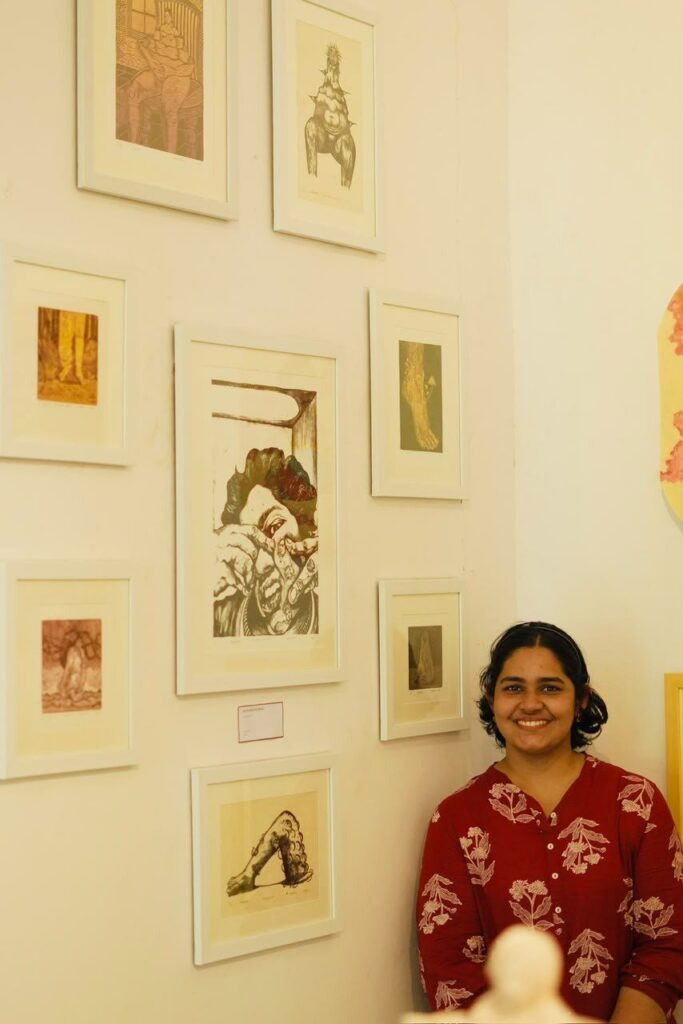
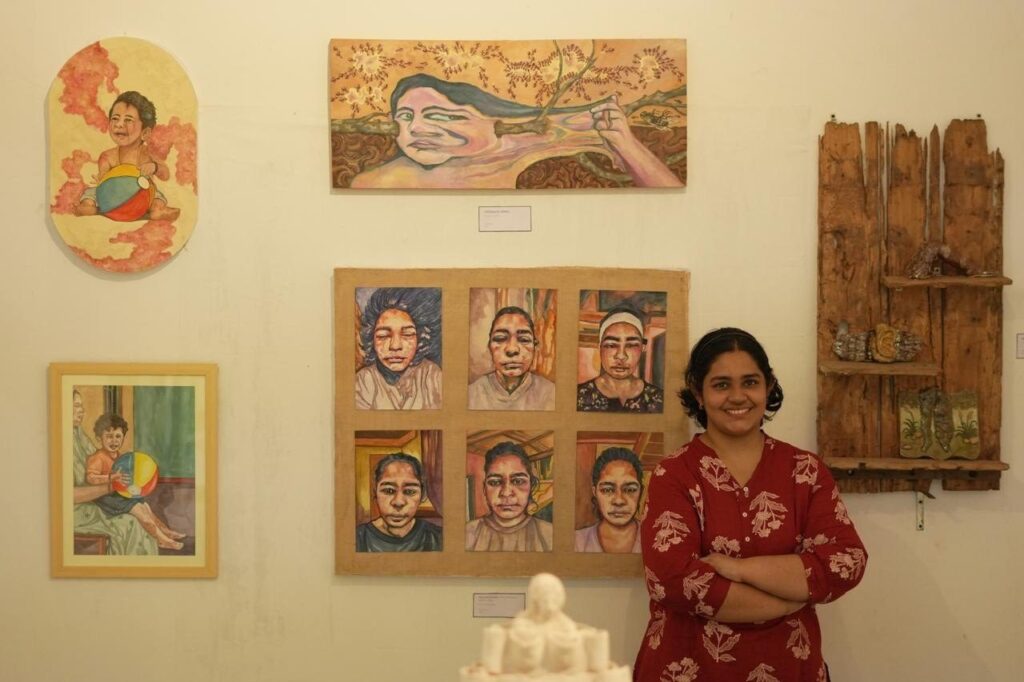
Hind is from Kerala. She did her bachelor’s at the Government College of Fine Arts, Thrissur. Now she is doing her master’s in painting and expanded media at the S.N. School, University of Hyderabad.
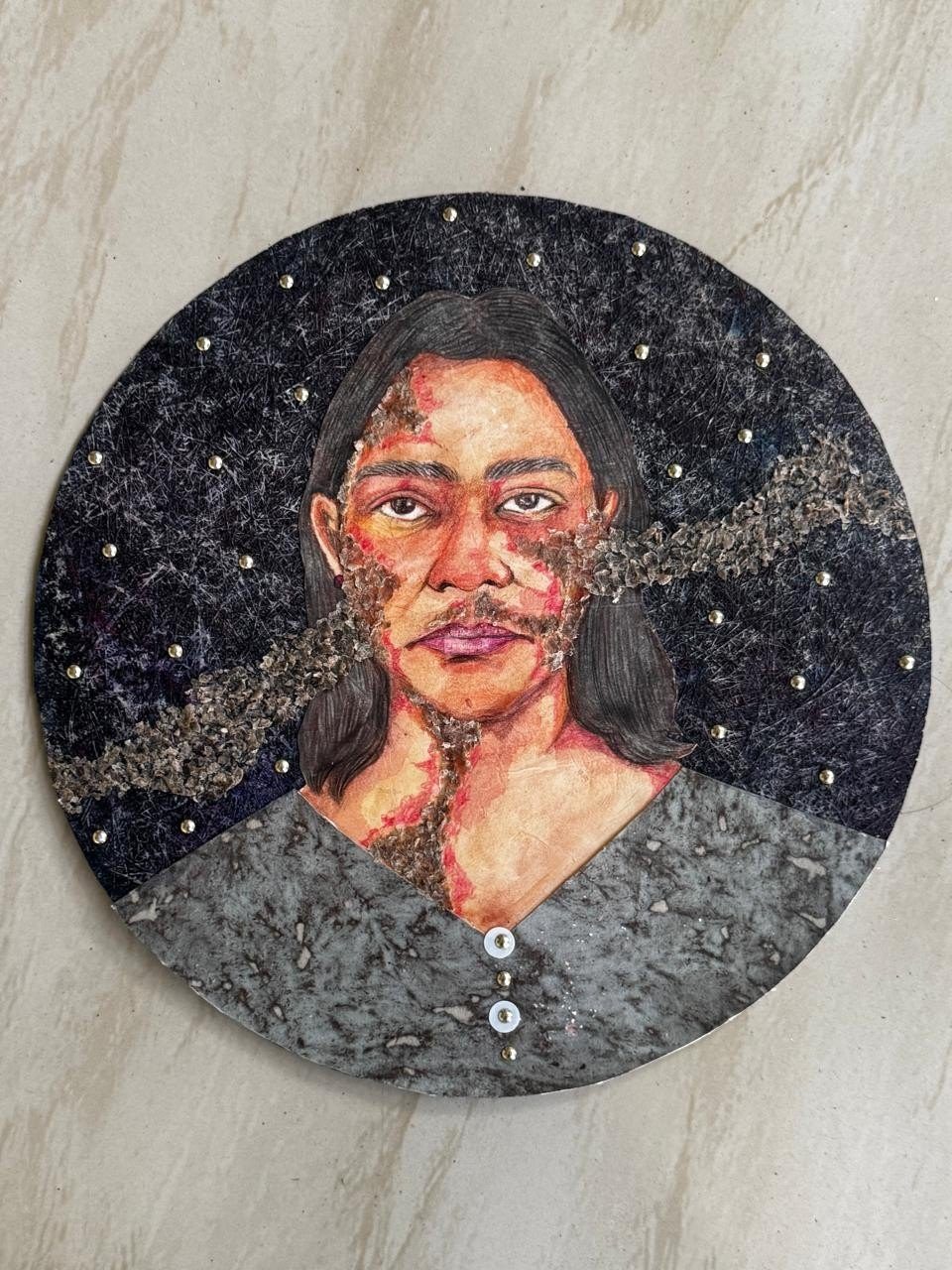
Her work began with her own experience of Topical Steroid Withdrawal. “What initially felt like an individual struggle gradually opened up a much larger set of questions for me.”
She began to read about how the beauty and medical industries shape our idea of acceptable skin. Through a support network for people with the condition, she listened to many others.
“I started looking at it not merely as an outer surface, but as something that carries experiences, vulnerabilities and histories.”
© Hind Salim

© Hind Salim
© Hind Salim
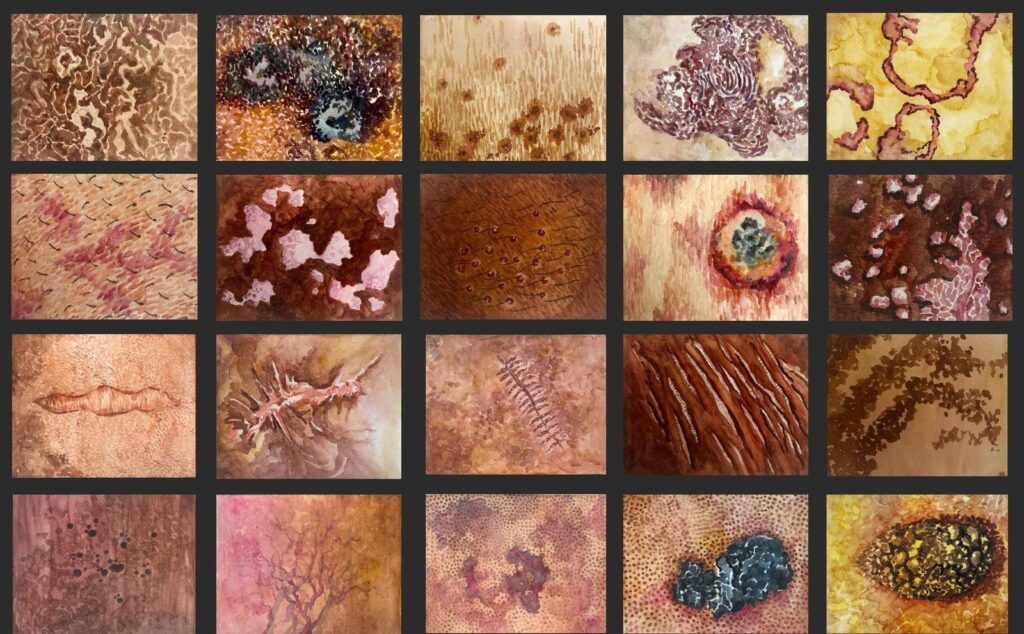
Skin, she says, is “a biological, social and political territory.”
How she works
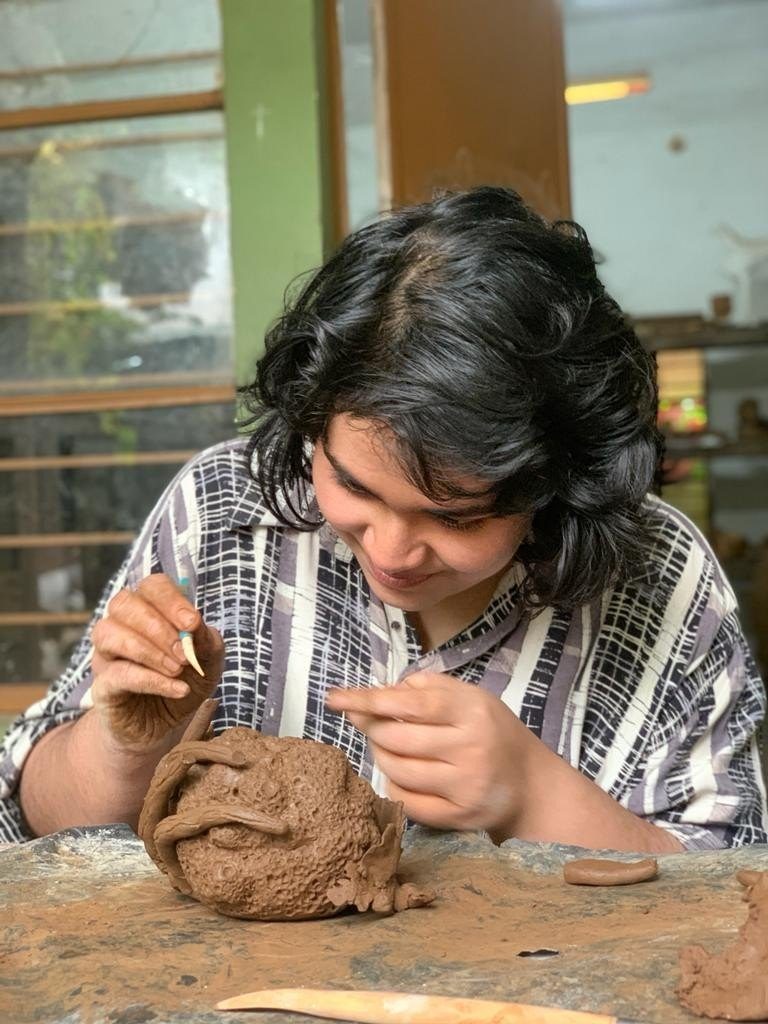
Hind starts with research, observation and collecting, not with a fixed image or a fixed material. She watches organic processes: peeling, cracking, erosion, decay and regeneration. Then she looks for materials that can do the same, such as latex, starch membranes, fabric, felt, paper, natural pigments and algae.
Some materials are left to dry, rot or change on their own, so a work can take days or weeks.
“For me, making is as much about observing and responding as it is about constructing something.”
© Hind Salim
An artist’s book
© Hind Salim
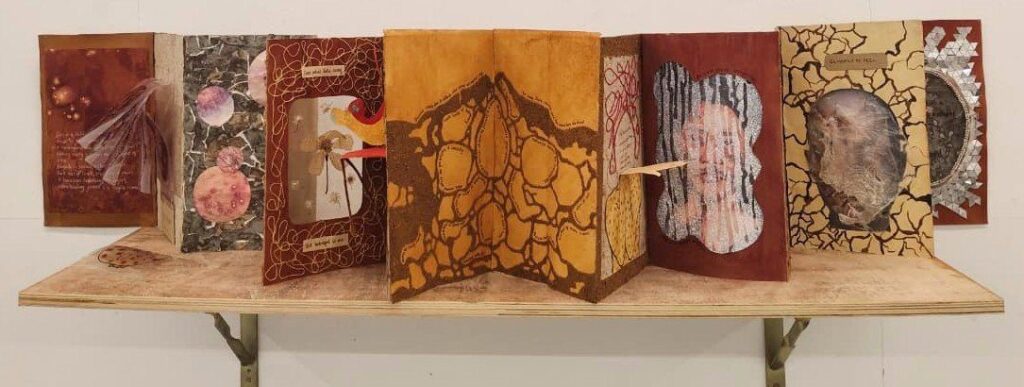
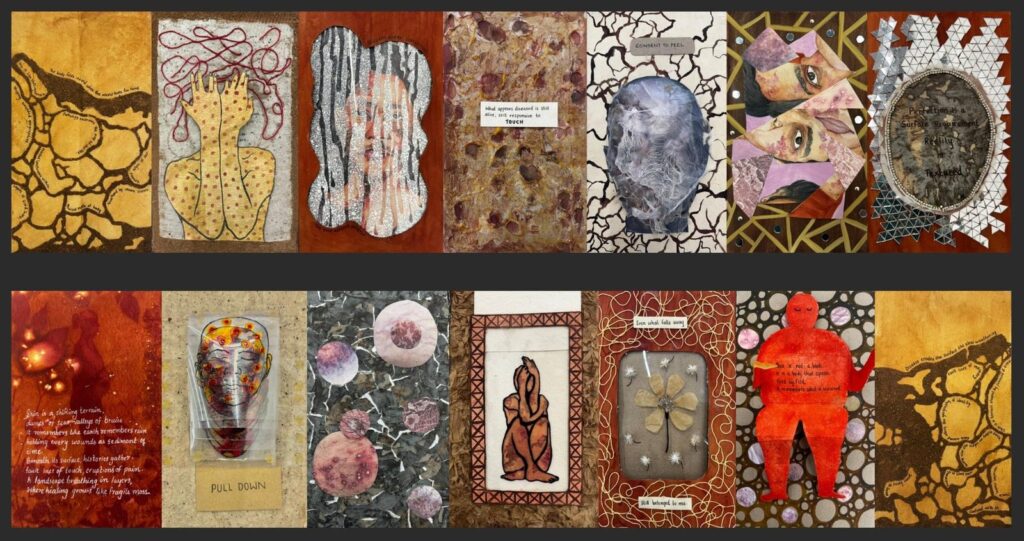
Topographies of Skin folds like an accordion. Opened out, it is almost ten feet long, and it can be read in any order, from any page.
In its flowers is skin that Hind shed herself.
The book was shown in Un Shelving Memories, an exhibition curated by Shijo Jacob, who is in The Long View in this issue.
“Fragmentation and reconstruction allow for a nonlinear navigation of identity and memory.”
© Hind Salim
2. Why did the pink turn grey?
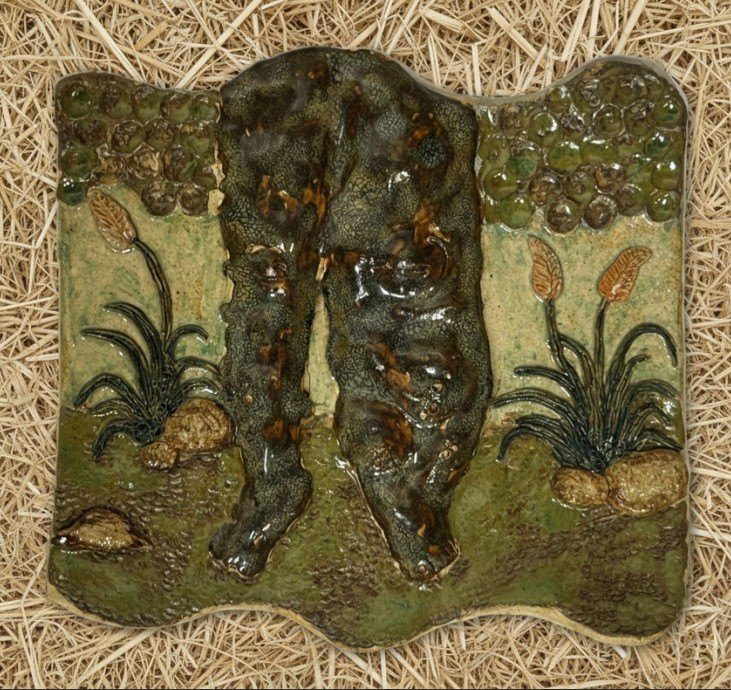
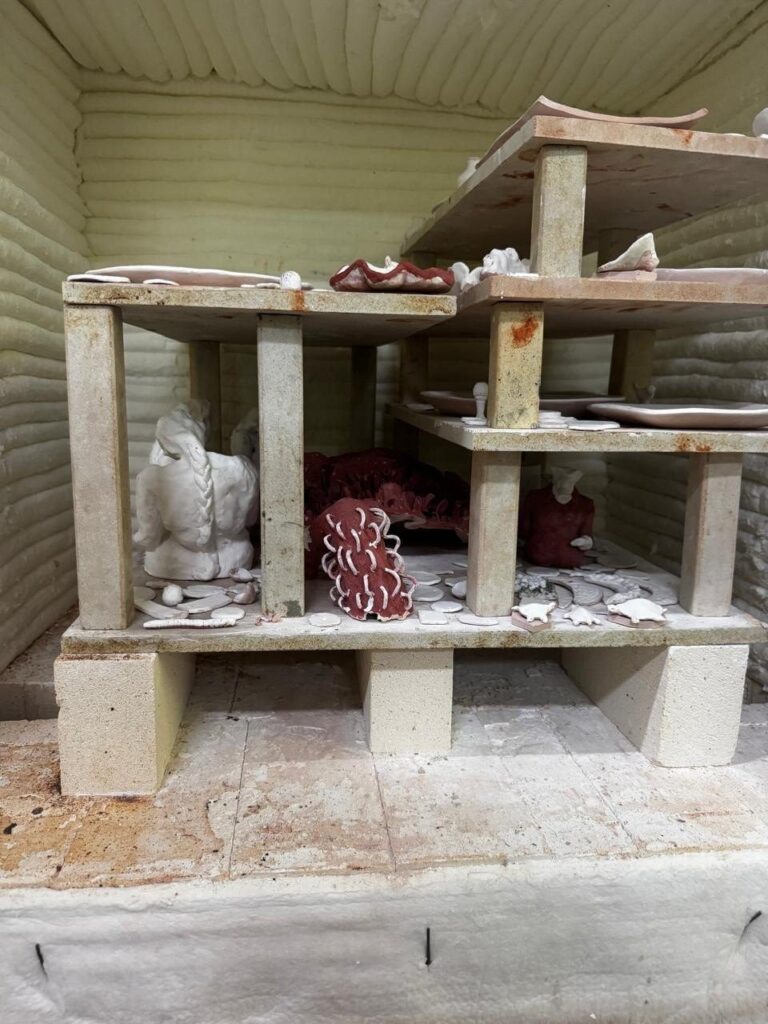
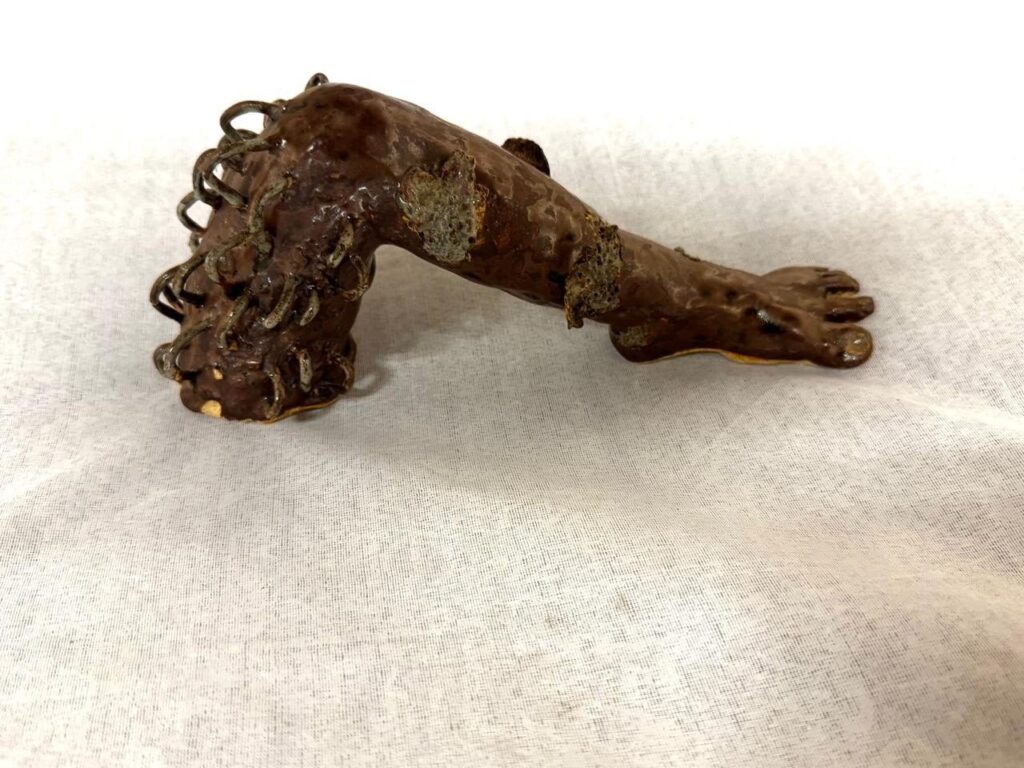
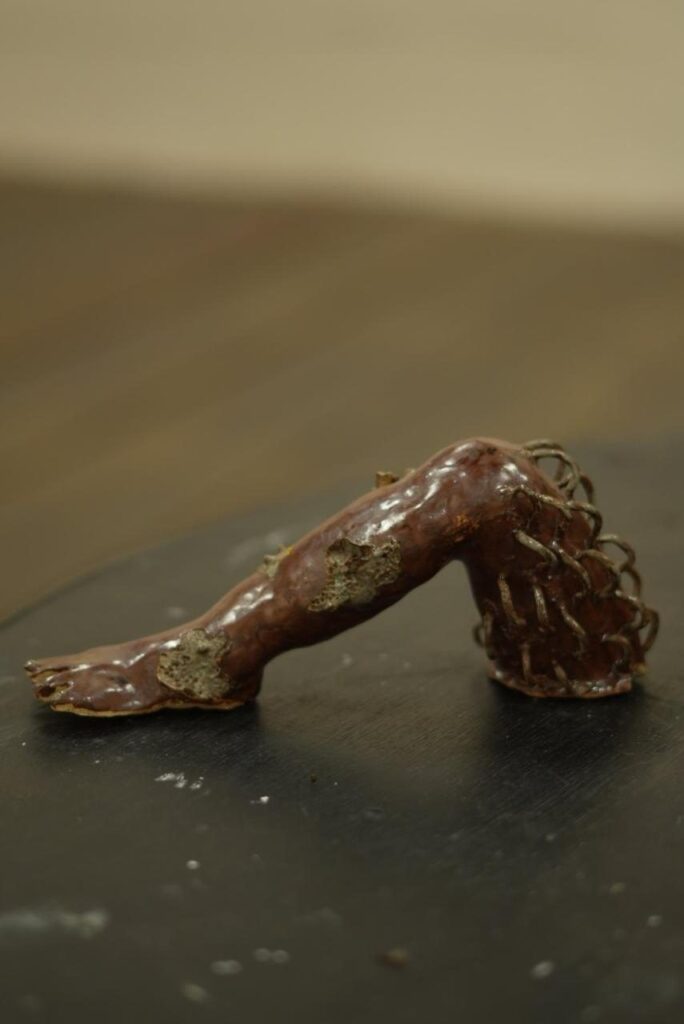
Glazing a ceramic piece, Hind used a pink stain and expected pink after the firing. The piece came out of the kiln grey.
“Initially, it was quite unexpected, but I found myself drawn to the result. The grey had a certain subtlety and character that I hadn’t originally planned for.”
She kept it. With ceramics, she says, firing and glazing are never fully in your control and she likes that.
© Hind Salim
© Hind Salim
© Hind Salim
“Sometimes, the material makes a decision of its own.”
3. What was living on the algae?
© Hind Salim
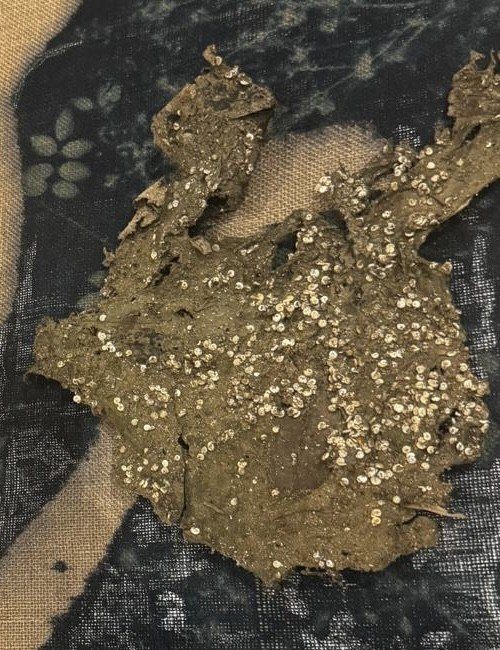
Algae had been cleared from a pond near her home in Kerala and left to dry. When Hind went back to look, the dried sheath was covered with tiny white snail shells and eggs.
“What initially appeared to be discarded organic matter had gradually become a small landscape of decay, habitation and transformation.”
She put it into a work about bodily decay and the life that carries on. “Nature had already produced an intricate composition through time, chance and transformation.”
“A surface is never simply an endpoint.”
4. What should we look at first?
First, the surface. “Notice its textures, layers, irregularities and the materials used.” It may remind you of skin, a wound, a landscape or an eroded wall, without being any one of them.
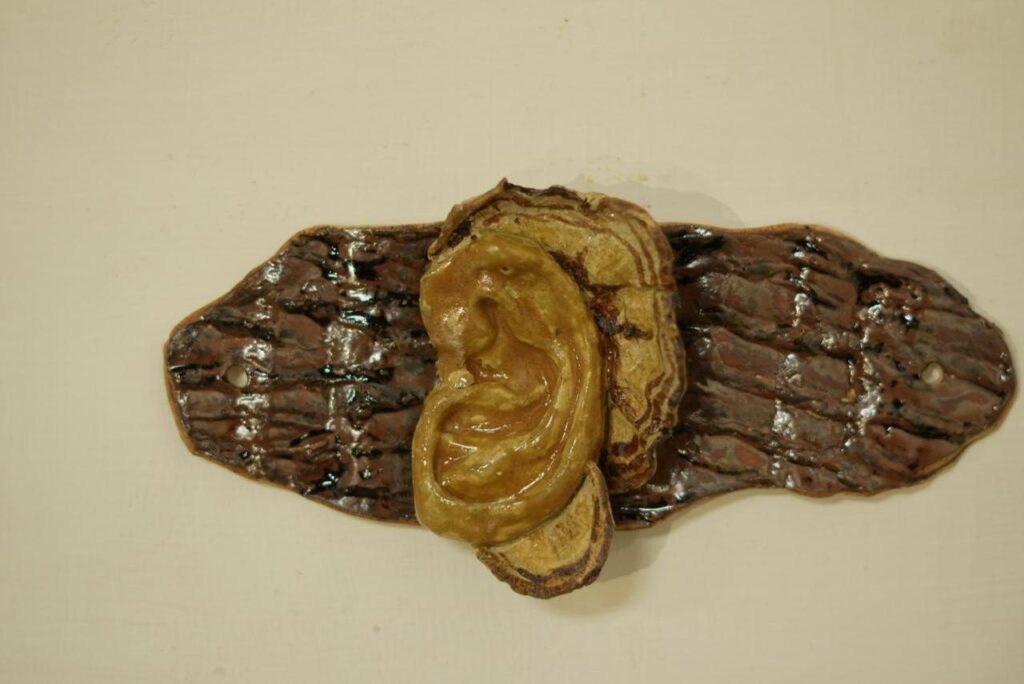
Second, the material and what it has been through. Peeling latex, dried algae, glazed clay, layered prints: each carries traces of time.
Third, your own body. “Think about vulnerability, memory, discomfort, healing and the ways we perceive and judge different bodies.”
© Hind Salim
“The work becomes meaningful when looking turns into a more personal and sensory experience.”
What a teacher said
Understand what you are working with. Above everything, enjoy the process of making.
That advice came from Blaise, who led a workshop by ABC Art Room that Hind attended. It was Blaise and Bhagat Singh, her mentor and a faculty member at the Government College of Fine Arts, Thrissur, who taught her to truly know her medium: its nature, its limits and its endless possibilities.
“I have become more patient with materials, more willing to experiment and less concerned about arriving at a predetermined outcome.”

© Hind Salim
To a first-year student
“Art school is not a race, and developing an artistic voice takes time.”
Don’t hurry, she would tell a first-year student. Let yourself be unsure, make mistakes and try things without knowing where they lead. Don’t worry about whether something looks like art. Read, travel, talk to people and look closely at the world outside the studio.
“You don’t have to have all the answers in your first year; sometimes, learning to ask better questions is where everything begins.”
Next, she wants to treat the body and its surfaces as changing landscapes, with softer and more organic materials. She would love to see her work in public spaces and workshops, where it meets people beyond the usual gallery crowd and in museums where it can be explored in depth.
© Hind Salim
To know about her work: kalyanikalakriti.in/catalogue
Hind Salim
Instagram @hind.salim_
Read Issue Five, with all seventeen films →
More about Hind →
Next in Issue Five
 The Studio · WatercolourA crowded riverAsmita Das3 min read
The Raconteur is open to every reader and every artist. If you would like to help, you can give to Kalyani Kalakriti Foundation.
Watch Hind Salim in her own words
Send Hind a note.
A few words about their work mean a lot to a young artist. The team reads every note before it goes to Hind.
Get the next issue every Monday.
Just your email.