
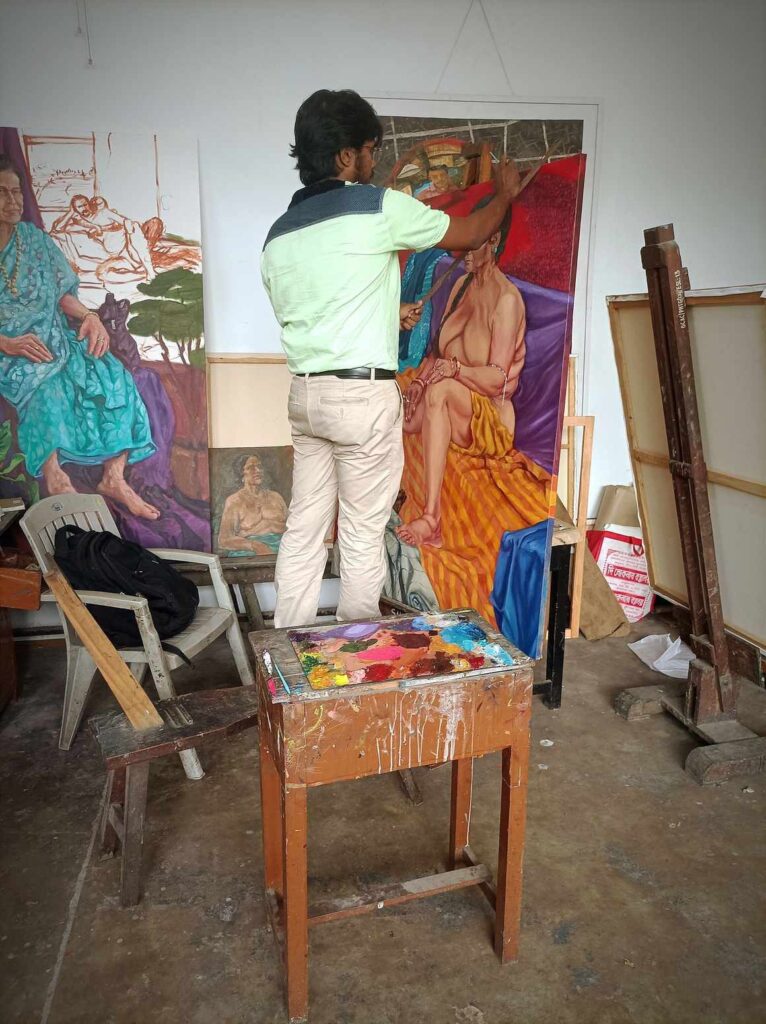
© Shakibul Islam
The canvas was standing on a chair in the painting department. The wind caught it and it fell. When Shakibul Islam lifted it up, one of his favourite works was torn right through the middle. “I was in full shock,” he says. What his friends did next is why he still tells the story.
“God never made this discrimination,” he says. “Humans did.”
What happened next
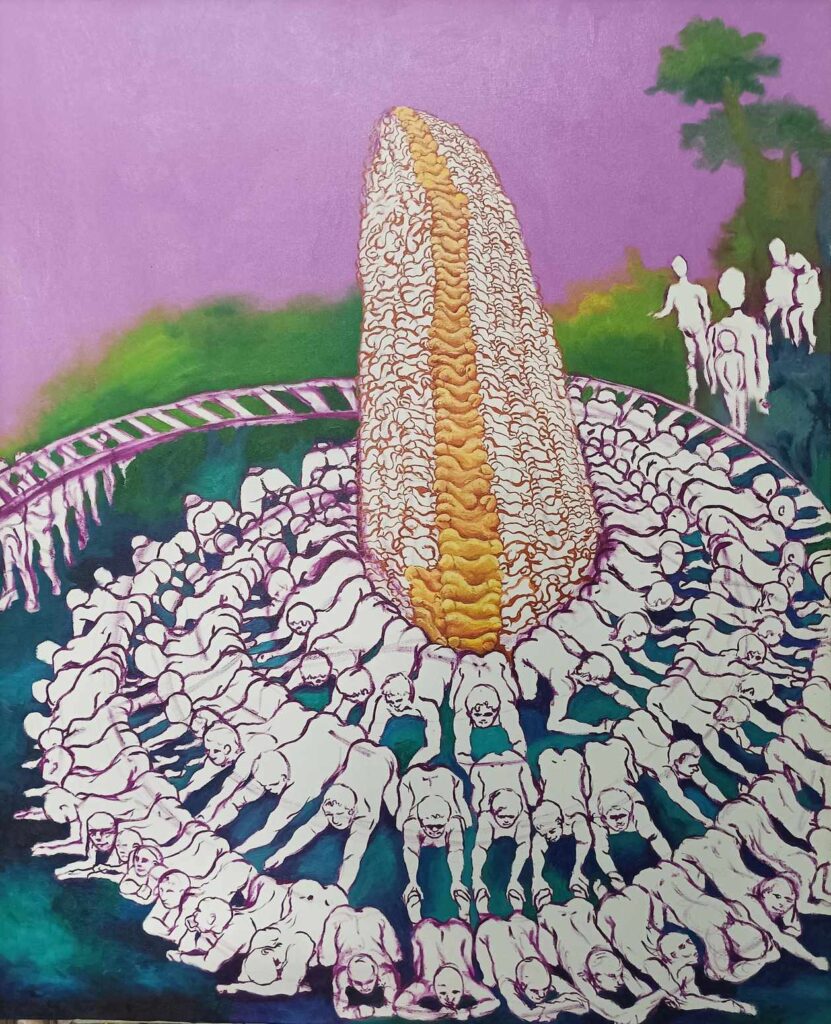
It was the corn panel of Fishtingzone, already finished. His batchmates gave him their own materials. With gesso and strips of canvas they restored it, the way a torn painting is conserved. The tear was joined from behind, like a bandage, then filled on the front. Then he painted that part again.
He did not hide the repair. A queer life, he says, is often torn by the world around it. It can be mended with care and support from behind. The mending is nothing to be ashamed of.
© Shakibul Islam
© Shakibul Islam
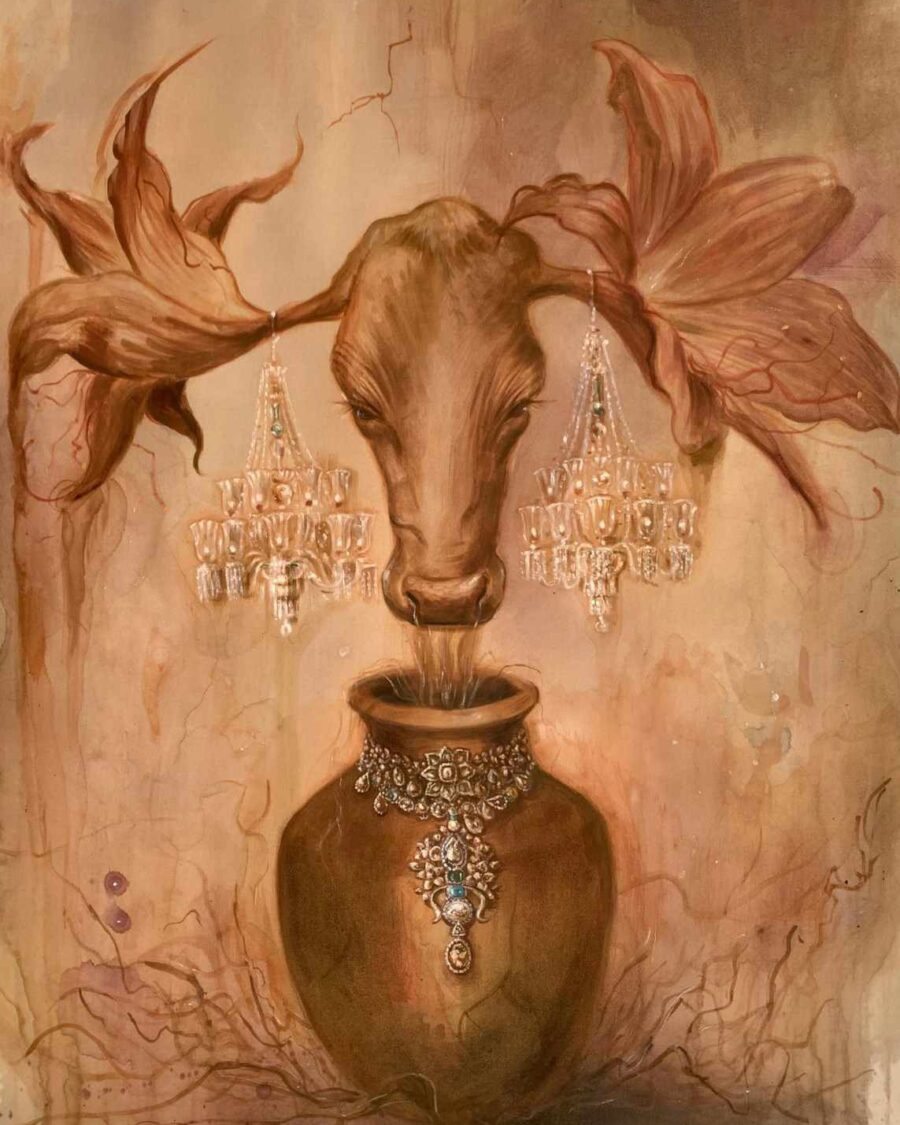
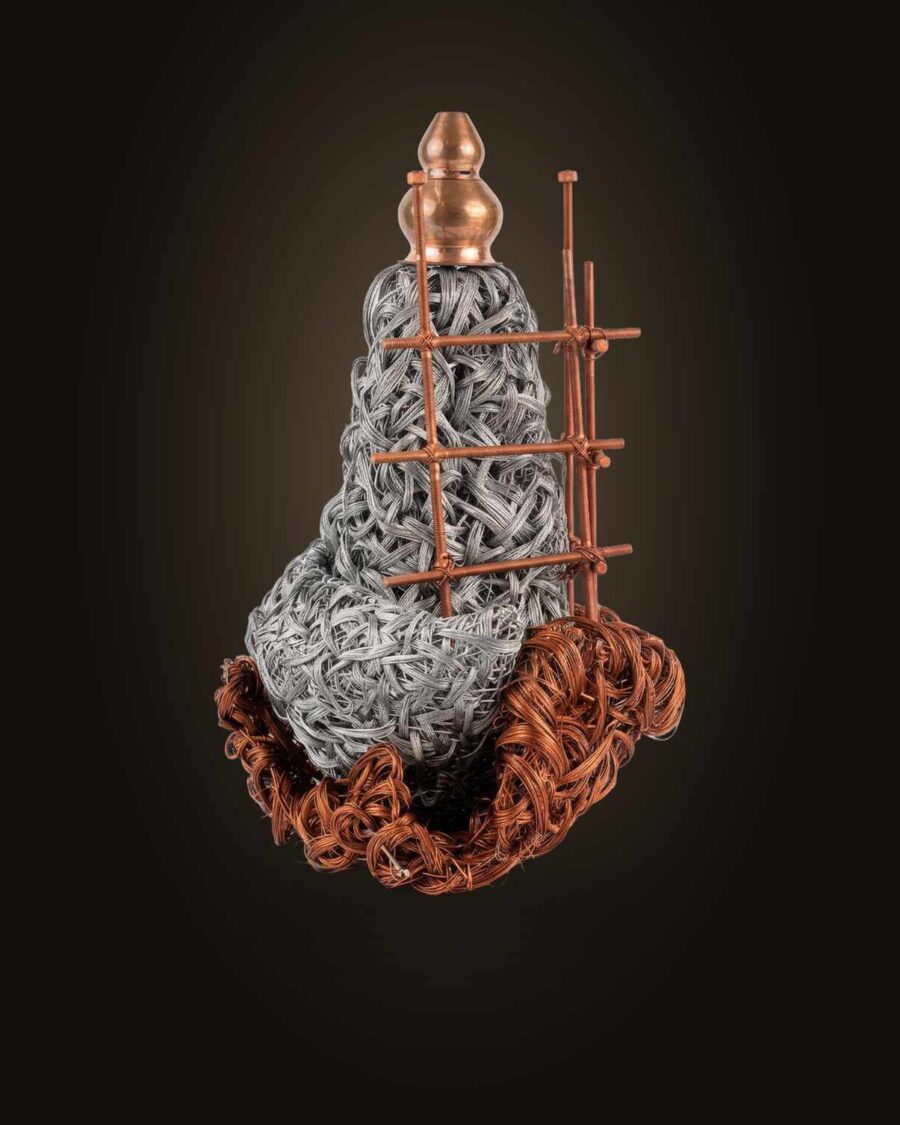
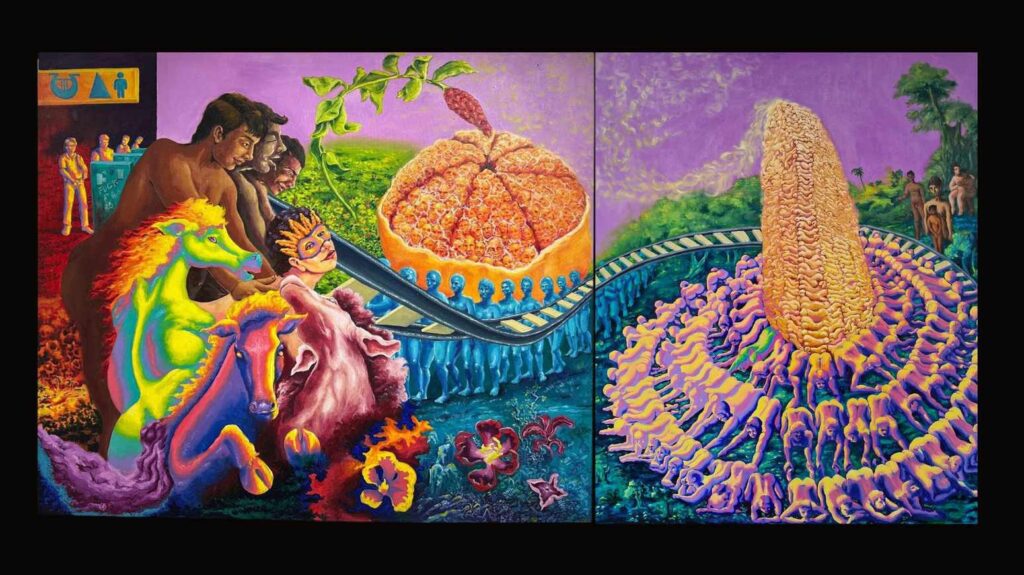
Fishtingzone is about survival. Because of homophobia, he says, queer people in every city have found their own meeting places, where no one judges them: public washrooms, thickets, the bushes beside railway lines. He painted those places. The tangerine and the corn stand in for the body. Nature, he says, has never discriminated in what it creates.
Before the tear: celebrated in ritual, mocked in the street
Shakibul grew up in Kolkata. Around him, he says, queer bodies were celebrated in ritual and ridiculed in daily life. He knew bullying and exclusion early.
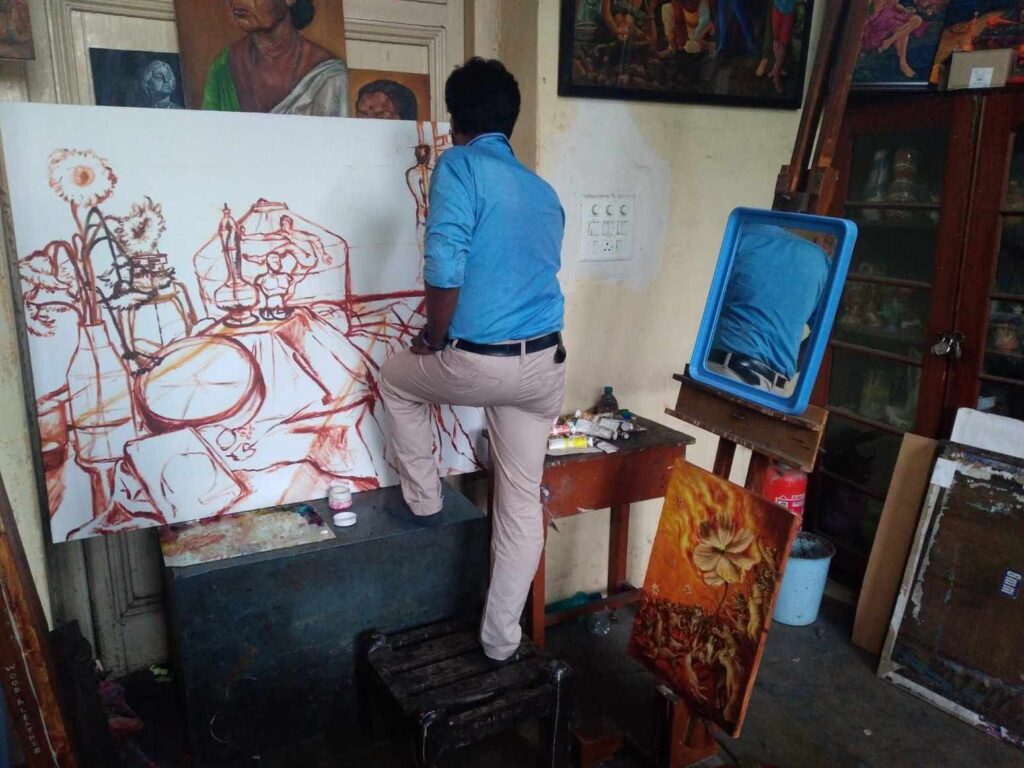
At art school he began to paint it. His first painting about LGBTQIA+ lives came from a class assignment on mythology, in the third year of his BFA at the Government College of Art and Craft. More followed. Not everyone liked them. In 2022 he was called in and told that his paintings were spoiling the college. He kept painting.
He finished his post-graduation at Sir J.J. School of Art in Mumbai. His work was part of the Kochi-Muziris Biennale 2025-26. For six years he has also made Durga Puja installations in Kolkata. Every 15 August he paints the alpona at the Governor’s House there.
© Shakibul Islam
© Shakibul Islam
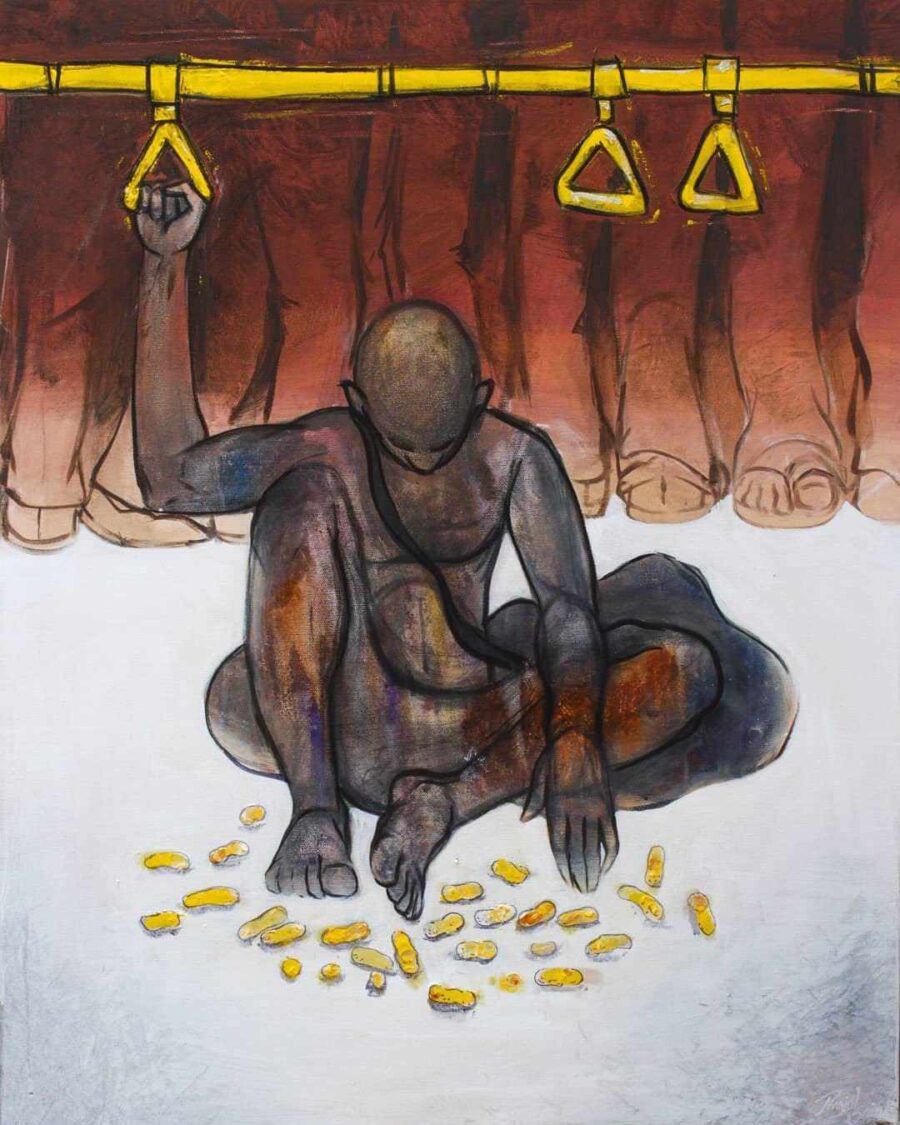
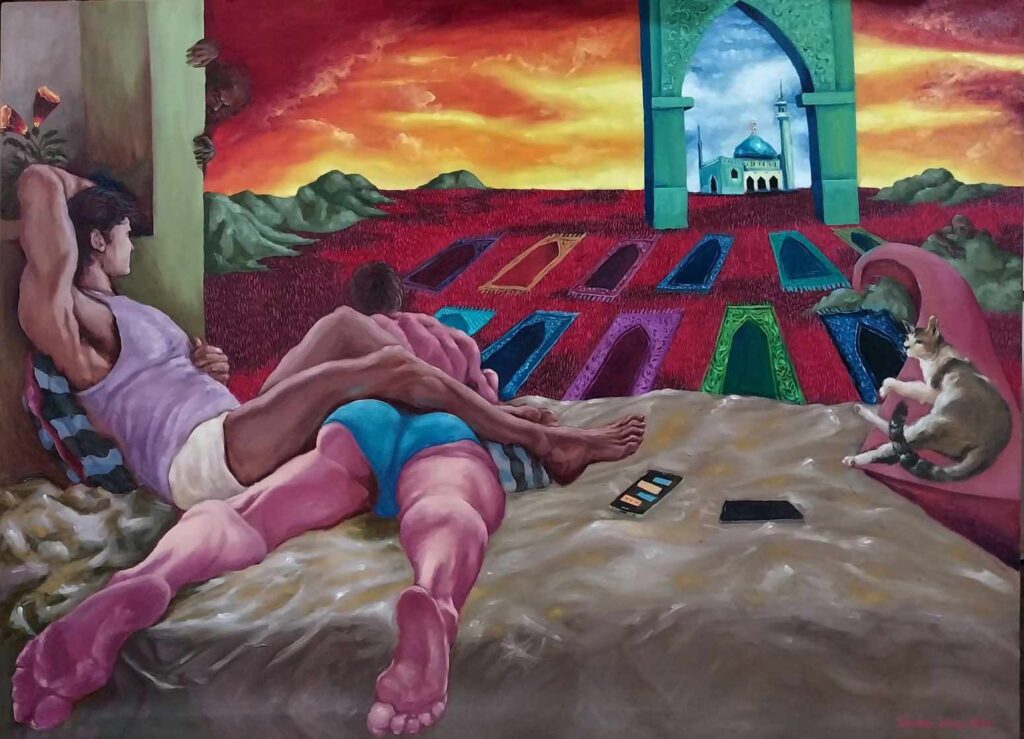
Two men rest together in the open. This is the dream, he says: to live with the person you love, without hiding. He remembers walking beside someone and keeping a gap between them in public. On the canvas he closed the gap. The mosque behind them stands for hope.
Too bright to ignore
Many people cannot look at fluorescent colour for long, he says. It stings the eyes. He has seen people look away from queer people in the same way. So he uses the brightest colours he can, on purpose, until you stay with the discomfort and find the beauty in it.
© Shakibul Islam
© Shakibul Islam
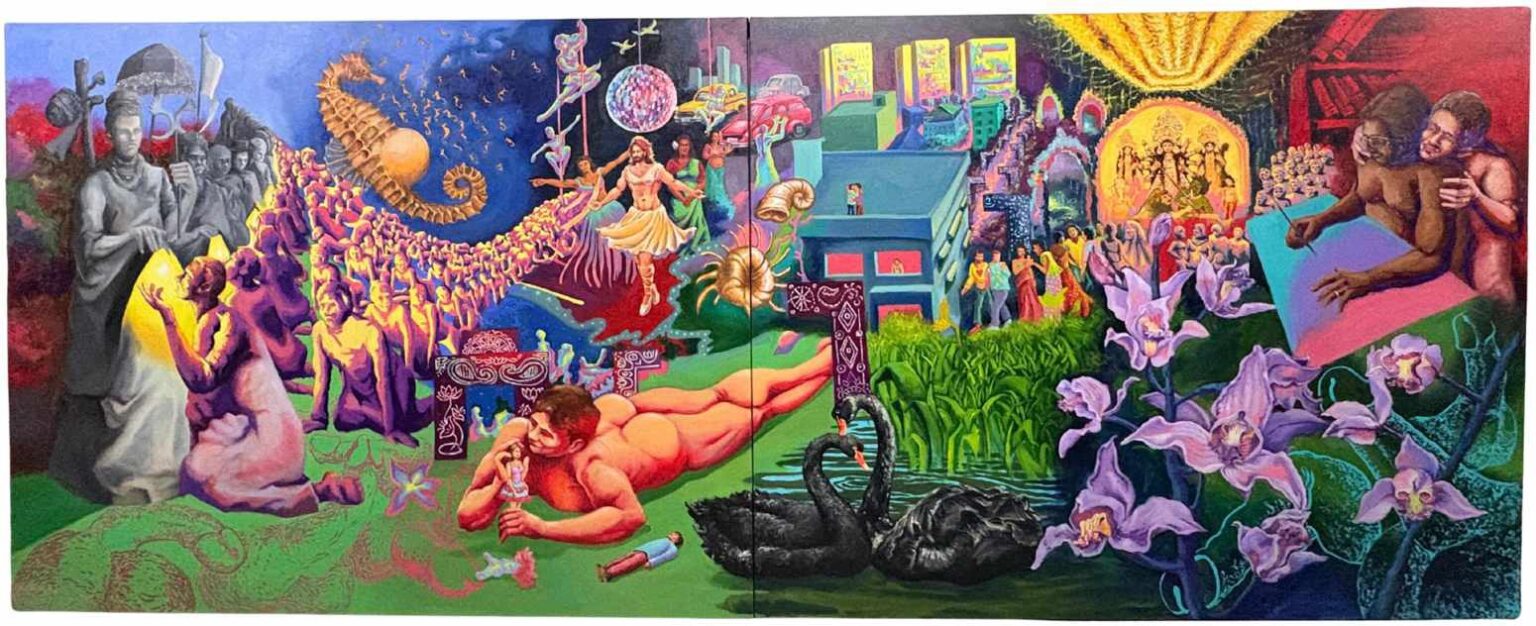
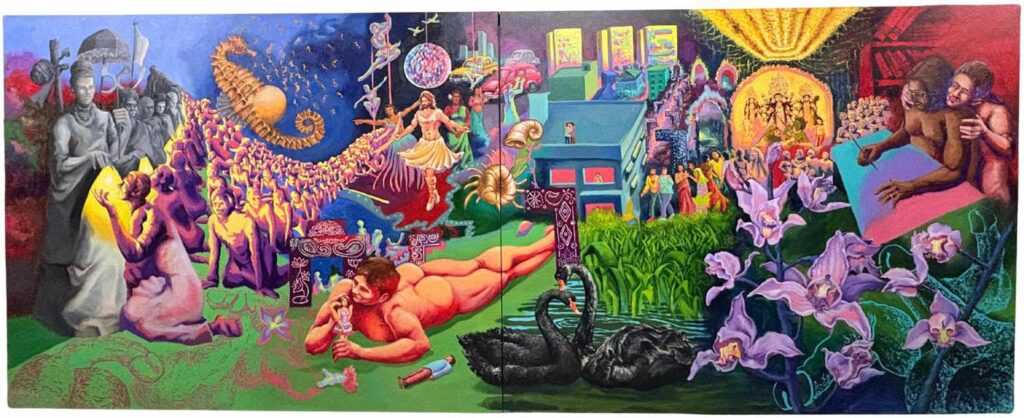
Queer as Folk is the celebration. Here nobody is hiding and nobody is fighting. People dance, bathe, embrace and simply exist, among black swans, seahorses and lilies. Black swans often pair with partners of the same sex. Seahorse fathers carry the young. Some lilies are male and female at once. He paints them, he says, not as decoration but as family.
It is crowded on purpose, like a temple mural, with no single centre.
Nine days in a corridor: the professor who came back
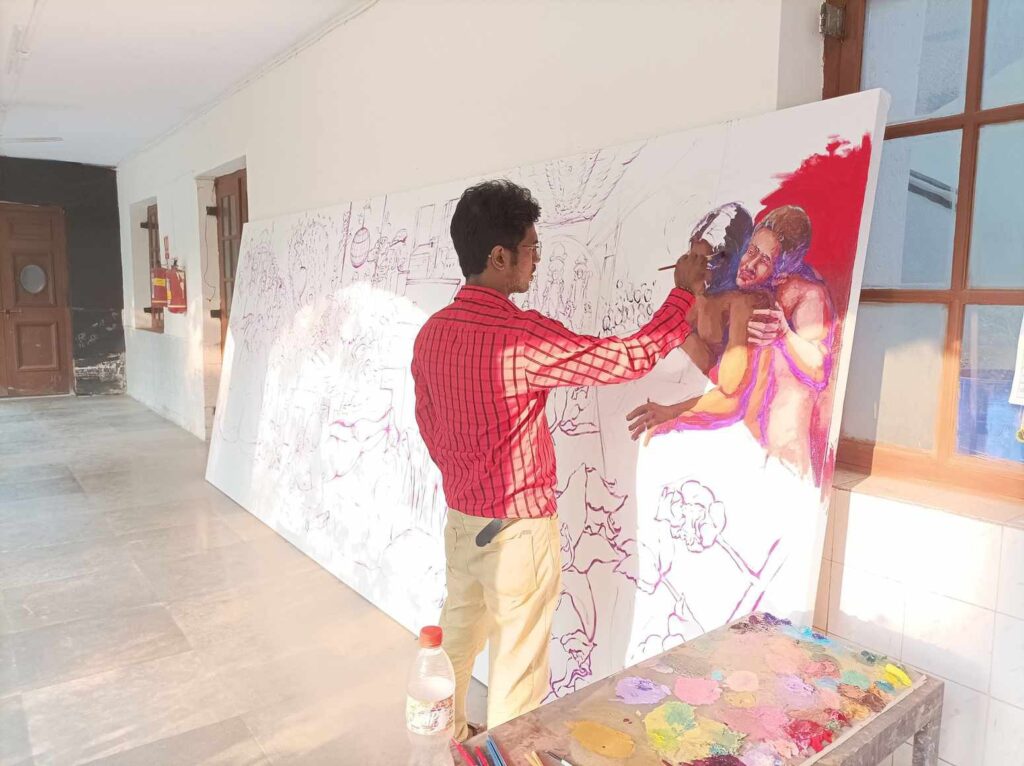
He painted Queer as Folk in nine days, eighteen to twenty hours a day, in a corridor of the architecture building at his college. He stayed day and night to finish it.
A professor stopped and asked what it was. As the painting grew, Shakibul explained queer lives and how they are connected to nature. At first the professor did not believe him. Then he went home and searched online. Male seahorses carry the babies. Two male black swans can raise their young together. The next day he came back and said yes, it is true.
By the time the painting was finished, Shakibul says, the professor’s mind had changed.
“I am very proud that because of my work, people’s minds about homophobia could change.”
© Shakibul Islam
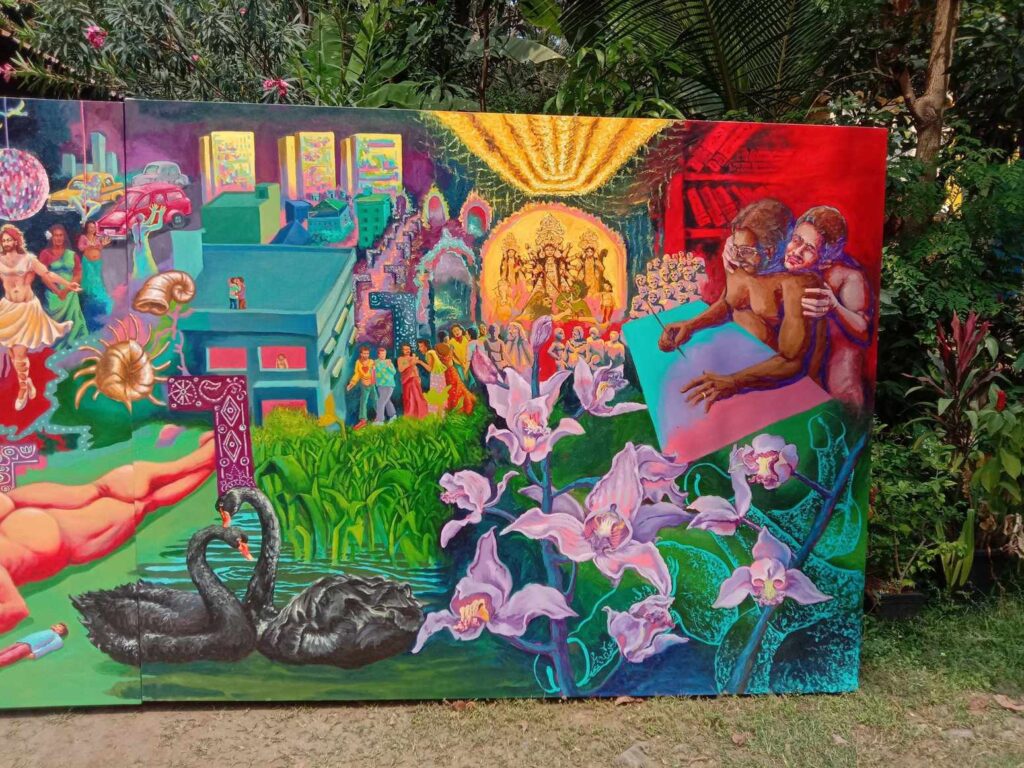
Part of the painting is a Durga Puja in his home city. On Durga Ashtami, he says, LGBTQIA+ people gather there to celebrate together. The violet lily is an old queer symbol. And he has painted boys playing with dolls, to break a rule he heard all through childhood. He is in the painting too, he says, showing all of this to his partner.
To students
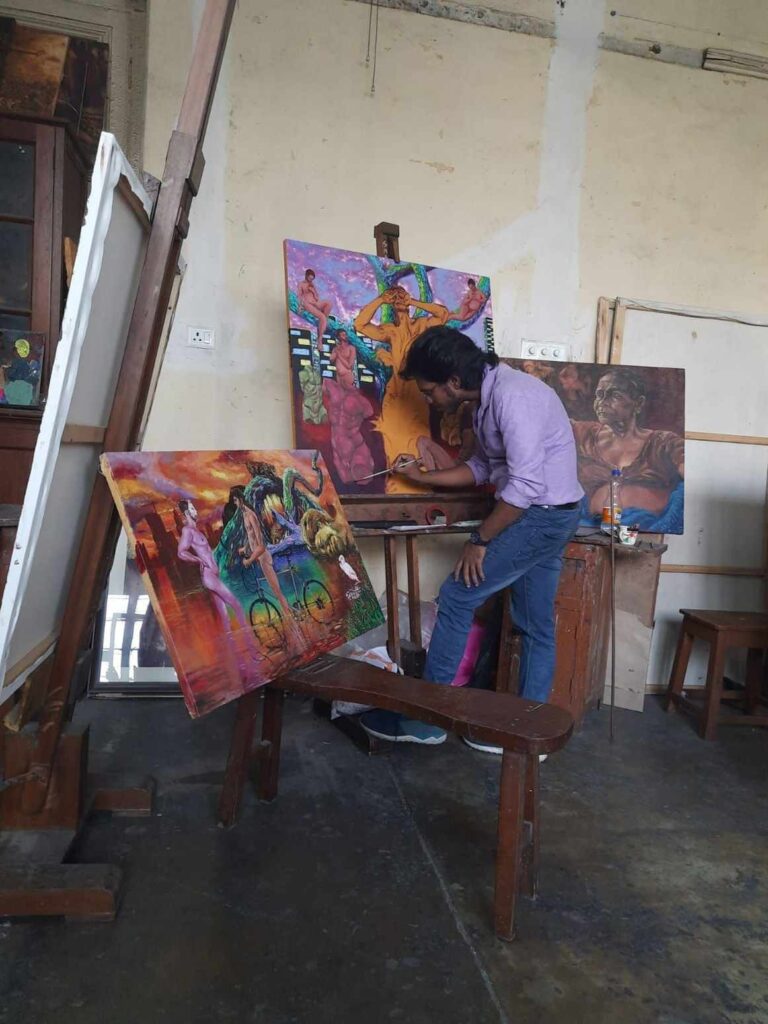
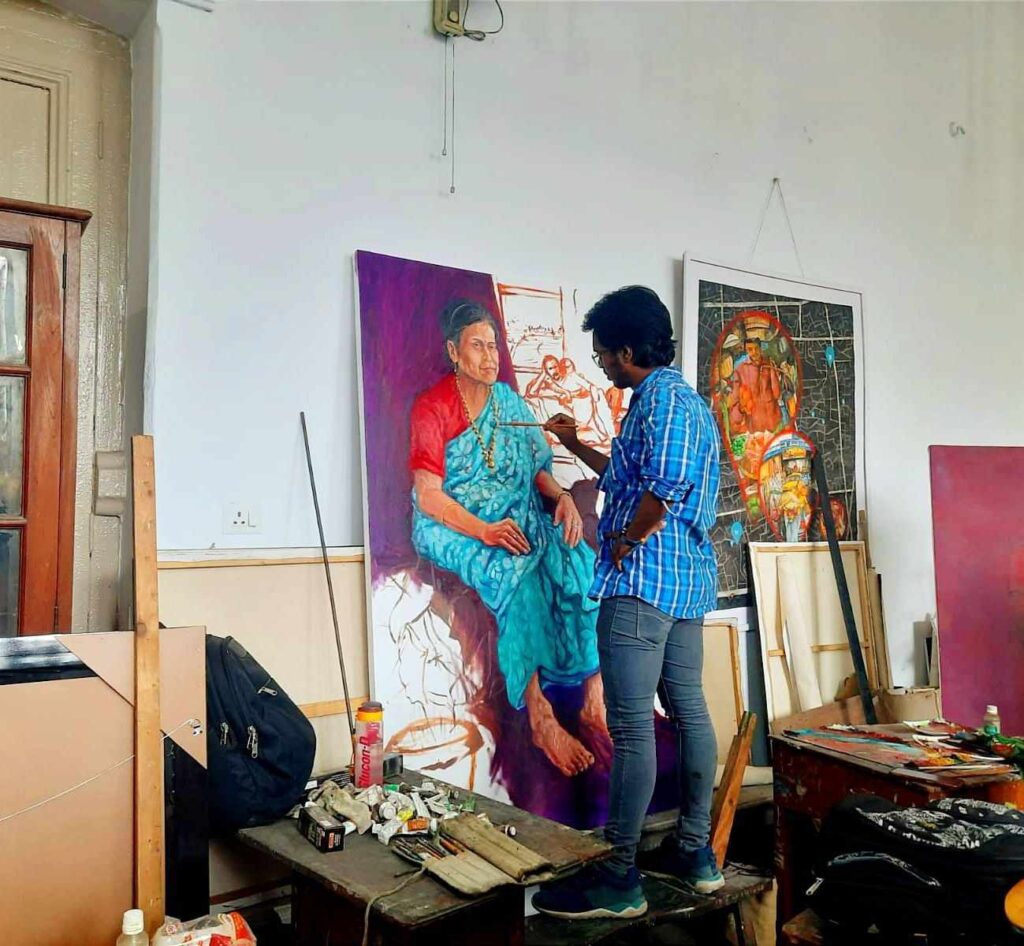
“Keep that much confidence inside you, to say: this is my work, this is my subject, this is my experience.”
In college, he says, students who bring their own subject are often told it will not work. He heard it too.
© Shakibul Islam
© Shakibul Islam
He is not asking for acceptance any more, he says. “It is not about acceptance or rejection. It is about our dignity.” He paints to show that nature already accepts everyone. He wants his work to reach small towns, where a young queer person might see it and know they are not alone.
And to young artists everywhere: “Be confident about the subject you choose.”
Shakibul Islam
Instagram @realshakibulislam
Read Issue Two, with all seventeen films →
More about Shakibul →
Next in Issue Two
 The Long ViewFilms, while drawingPranjal Saini3 min read
The Raconteur is free for every reader and every artist. If you would like to help, you can give to Kalyani Kalakriti Foundation.
Send Shakibul a note.
A few words about their work mean a lot to a young artist. The team reads every note before it goes to Shakibul.
Get the next issue every Monday.
Free, just your email.