
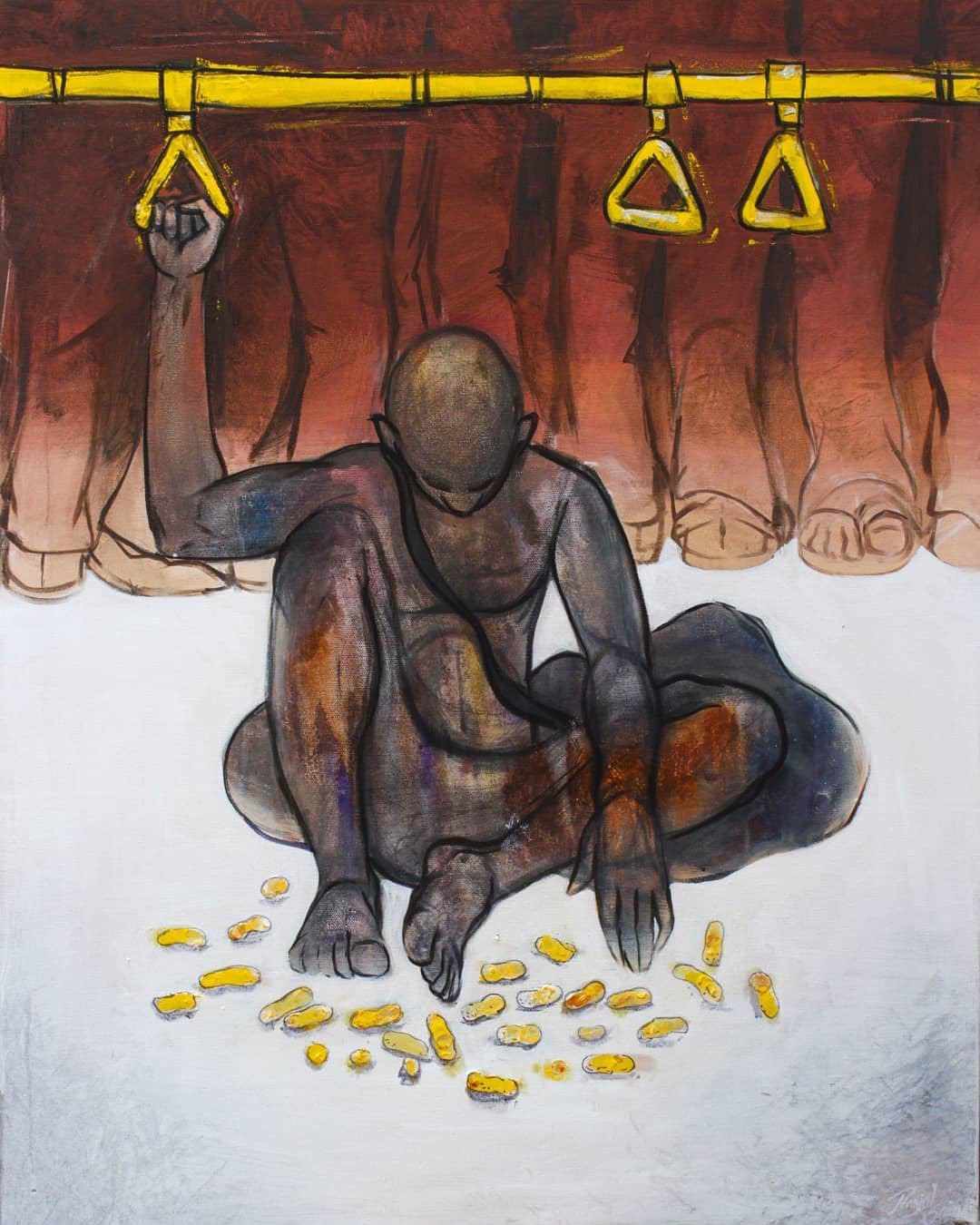
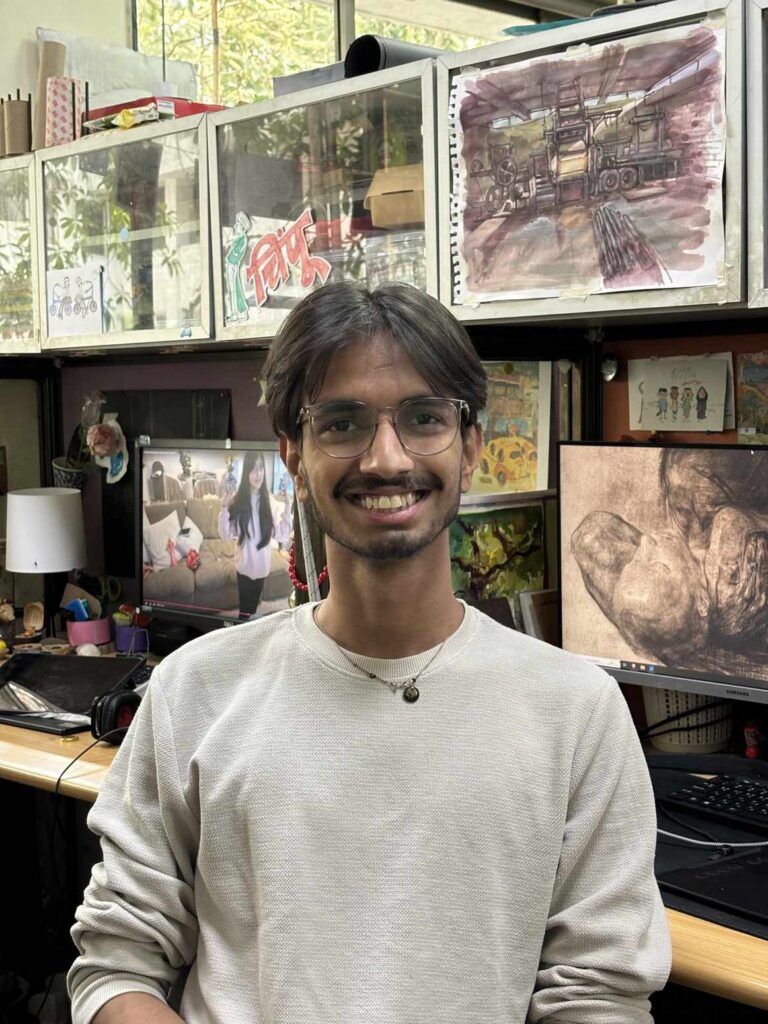
© Pranjal Saini
Pranjal Saini is one of the four artists who chose this edition. Each week, one of them steps into The Long View.
He draws the people around him. Then he makes them move. His subjects are workers, crowds and the cost of a day’s labour.
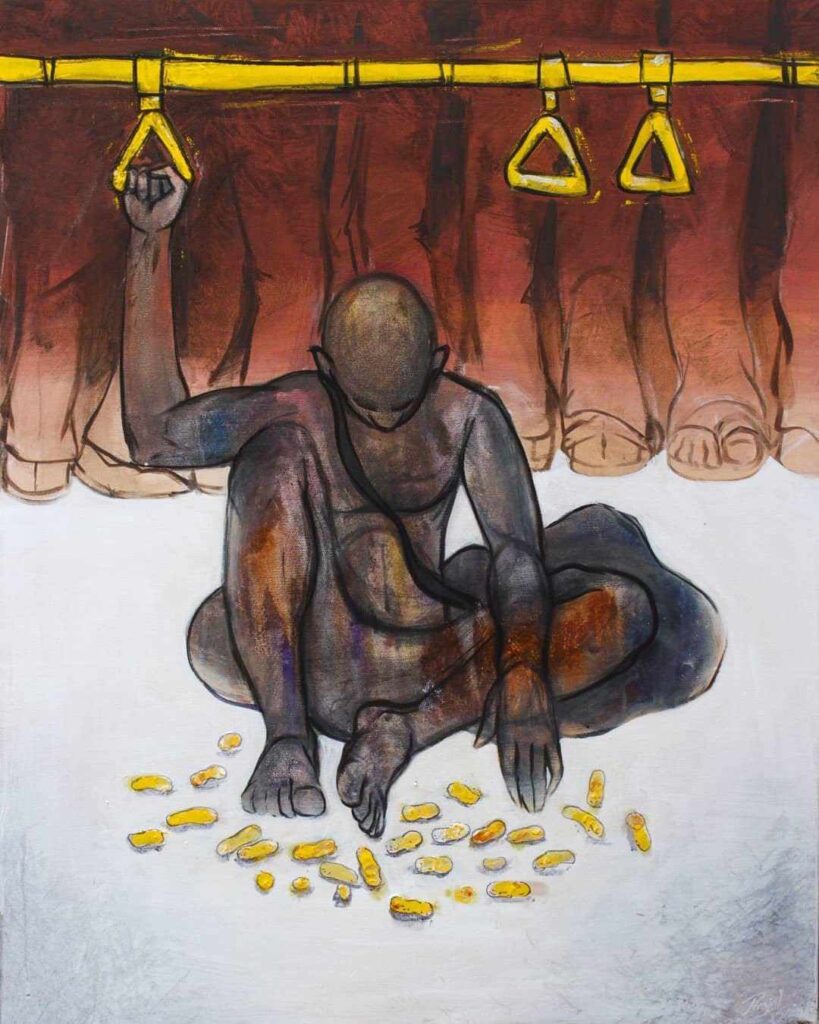
© Pranjal Saini
Out to work
for someone else.
Home again
in a box
full of people
like me.
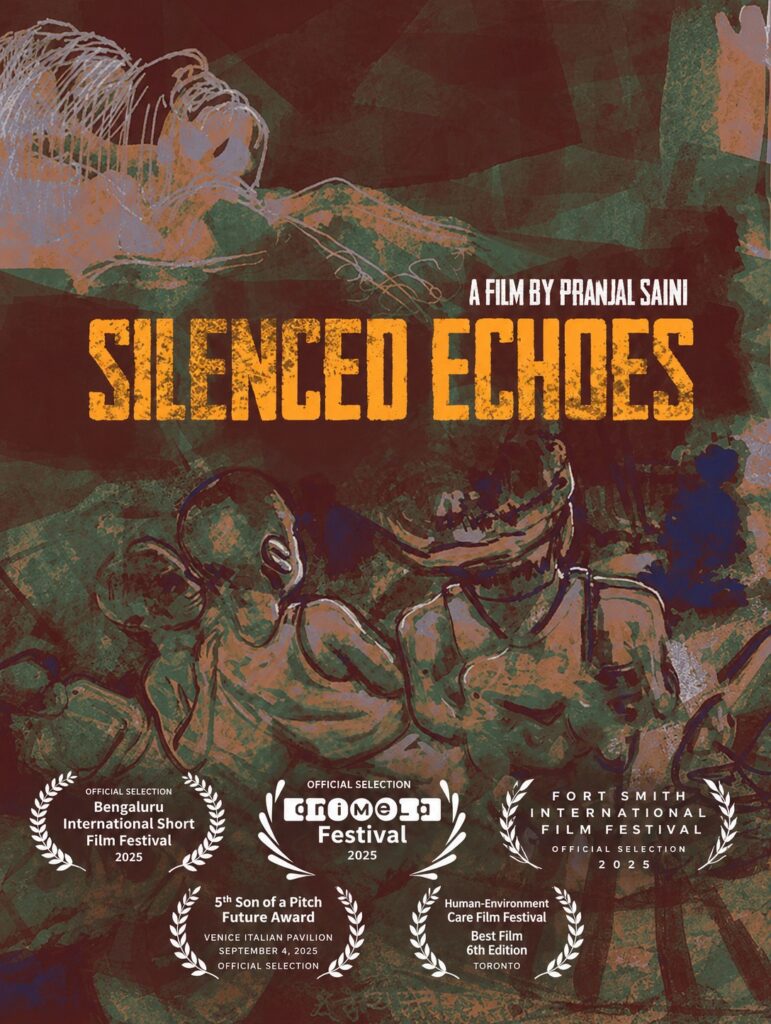
In his own words: Silenced Echoes
© Pranjal Saini
“It began with an interest in the love of the people who make our life possible. The people who work in a factory, the labour force, who create everything from our cloth to utensils to our houses.”
“The film follows a worker who has lost some fingers in an industrial accident. As he continues working, his movements become almost mechanical and his mind drifts towards memories of someone he loves. Through his routine, his dreams and an unexpected encounter, the film tries to look at the thin line between a person and the work they do.”
“I wanted to explore the cost of labour without romanticising the worker’s suffering, while holding on to the humanity that often gets lost.”
“Making it, I was revisiting my own memories of roaming around industrial areas, sneaking into factories of metal products and seeing people working in very desaturated, hard, inhumane environments, where the concept of safety is alien. The alienation of people put me in a complex state of feeling.”
“I was interested in how the story could be told through images, gestures, sounds and silences rather than dialogue. I started it as a dialogue-heavy film. As I explored, I kept eliminating things, so that I could tell the most important thing. Looking back, it was not just an attempt to tell a story about industrial labour, but also an exercise in observing what remains of a person within a system that demands so much from them.”
Silenced Echoes was named Best Film at the Human-Environment Care Film Festival in Toronto. A short scene from it, shared by Pranjal for this issue, plays inside the magazine.
When did your drawings become films?
His father used to bring him CDs of films, not only animated ones. Then he went to art school and found he could draw. He studied at the College of Art in Delhi and did a master’s in animation at IDC School of Design, IIT Bombay. Today he teaches Applied Art at the College of Art. He is writing his next short film.
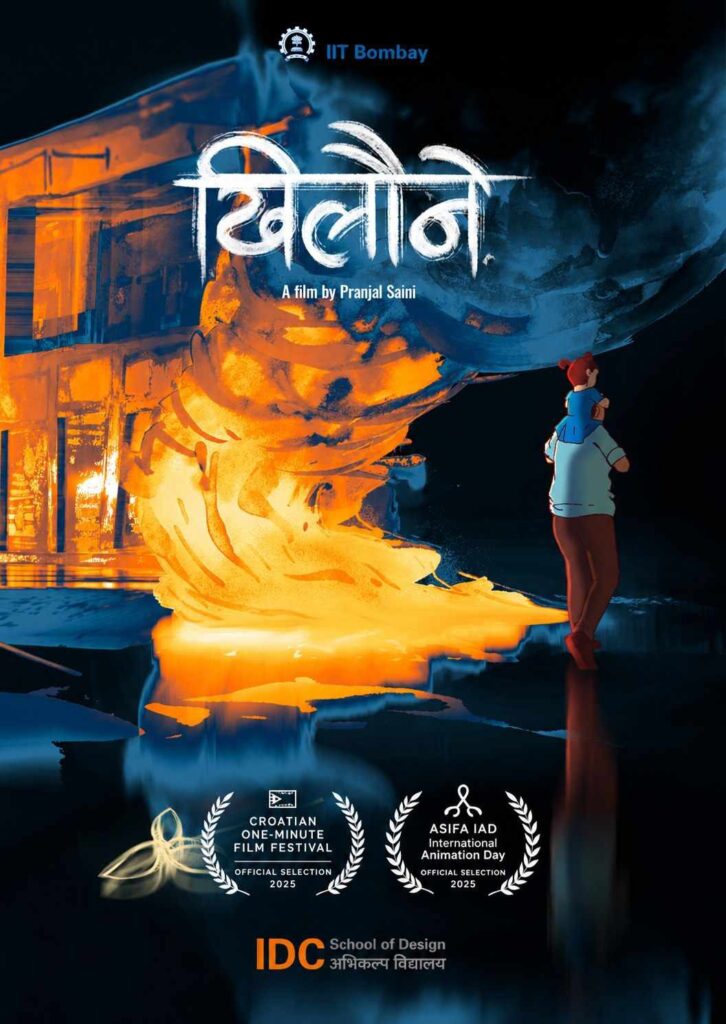
© Pranjal Saini
Khilone means toys. He made this short animated film at IDC School of Design, IIT Bombay. It was an official selection at the Croatian One-Minute Film Festival and for ASIFA’s International Animation Day in 2025.
Why should an artist study history?
Think of Impressionism, he says. Painters could leave the studio and paint outdoors because paint had just begun to come in tubes. “If we go through the whole history of art, we will find all sorts of answers.”
This year he keeps two sketchbooks. One is his own days, in gouache. The other is full of strangers on the Delhi metro.
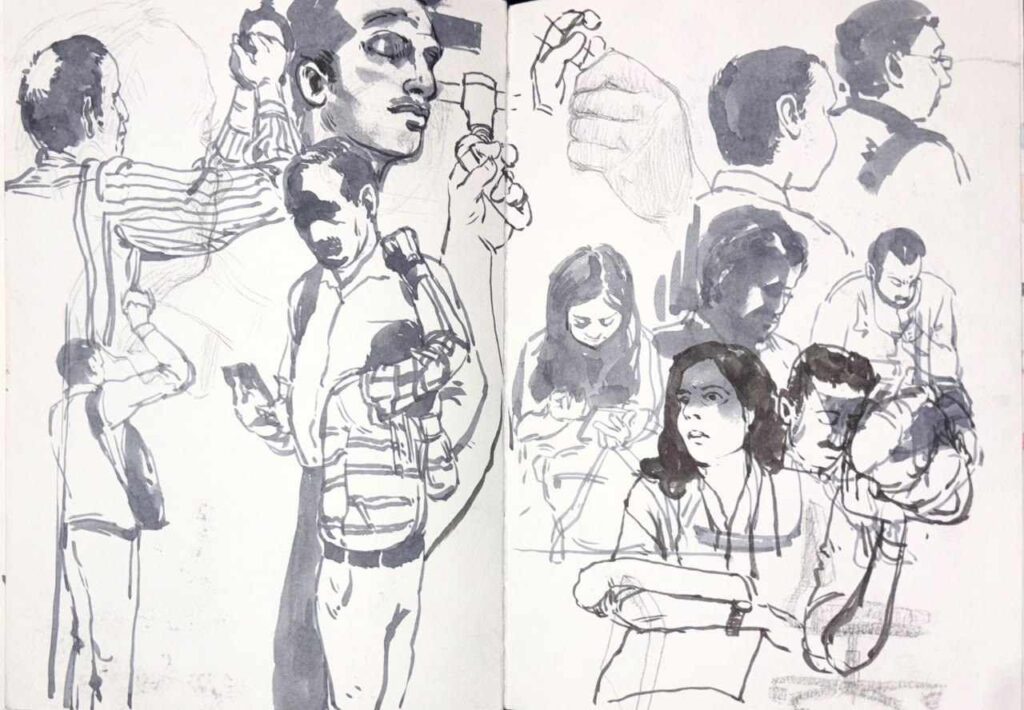
© Pranjal Saini
On the panel
The students’ work surprised him, he says. It was experimental, in sculpture, in painting and in composition. Much of it was political. Many artists worked with personal grief, with belonging, with the places they come from and with migration. “A lot of compositions were quite rebel,” he says. “That was really exciting.”
“I wish somebody had told me that history is important. It is not just an academic thing.”
Next Monday in The Long View: Prof. Tanmay Santra.
Pranjal Saini
Instagram @pranjal_agp
Read Issue Two, with all seventeen films →
More about Pranjal →
Next in Issue Two
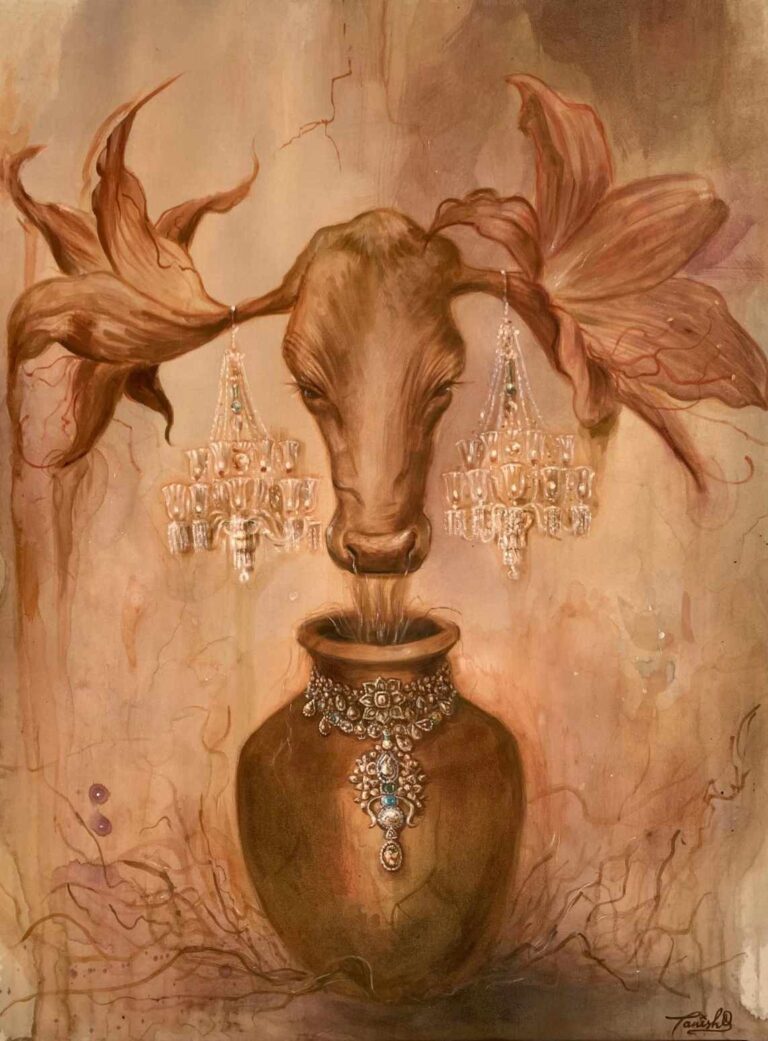 The Studio · PaintingAre we all okay?Tanishq Pratap Singh4 min read
The Raconteur is free for every reader and every artist. If you would like to help, you can give to Kalyani Kalakriti Foundation.
Send Pranjal a note.
A few words about their work mean a lot to a young artist. The team reads every note before it goes to Pranjal.
Get the next issue every Monday.
Free, just your email.