© Tanishq Pratap Singh
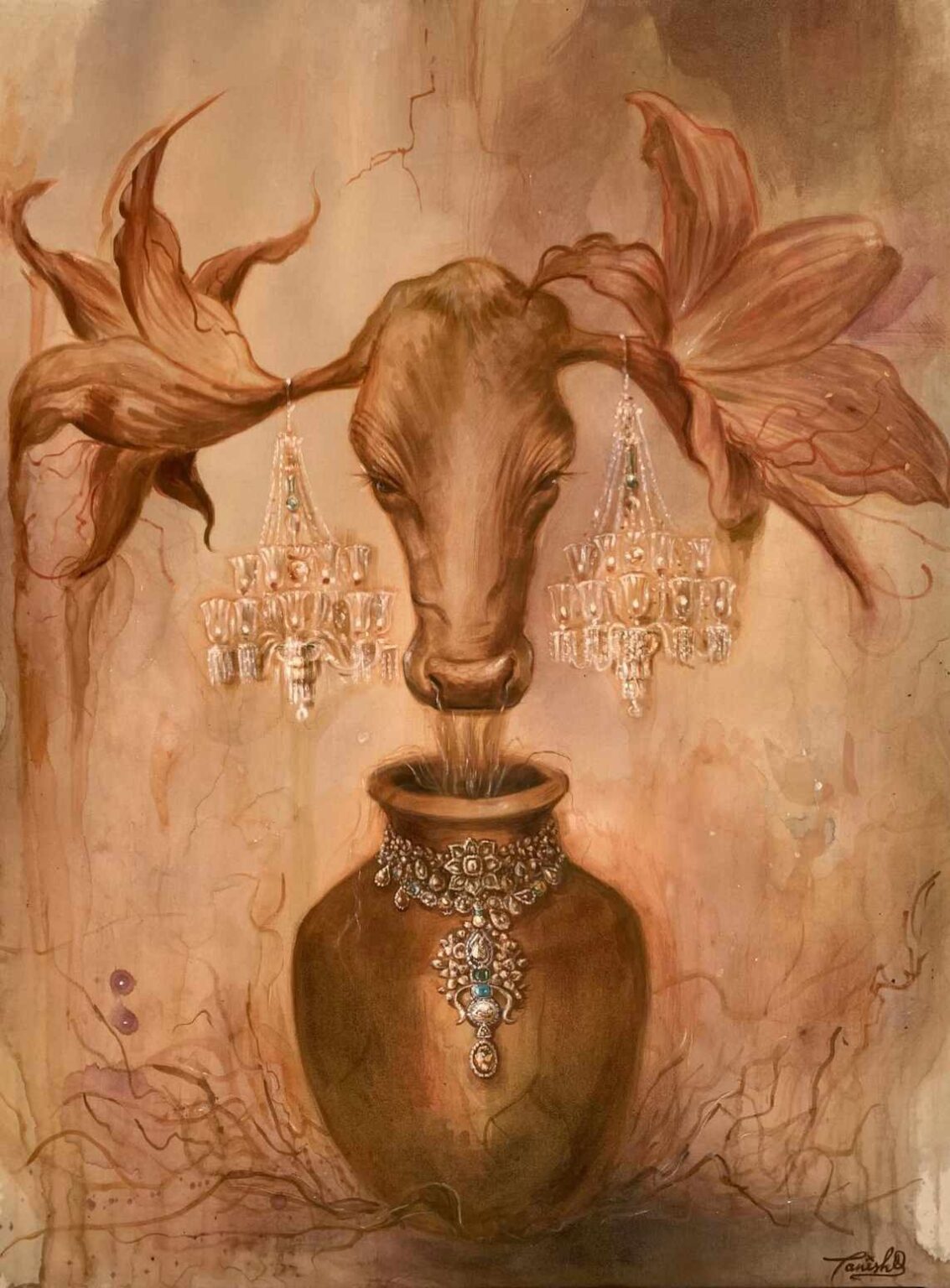
In Rudrapur, cows stand between the traffic and the shops. In the stories the cow is holy. On the street the same cow eats from a rubbish heap and nobody seems to notice. Tanishq Pratap Singh noticed. He paints her with silk, pearls and lily petals. And he asks a lot of questions.
So we built his story out of five of them.
1. Why the street cow?
Tanishq grew up being told how to look at a cow. “Growing up in a Hindu family, I am supposed to look at a cow in a particular way,” he says. “Through mythology and stories.”
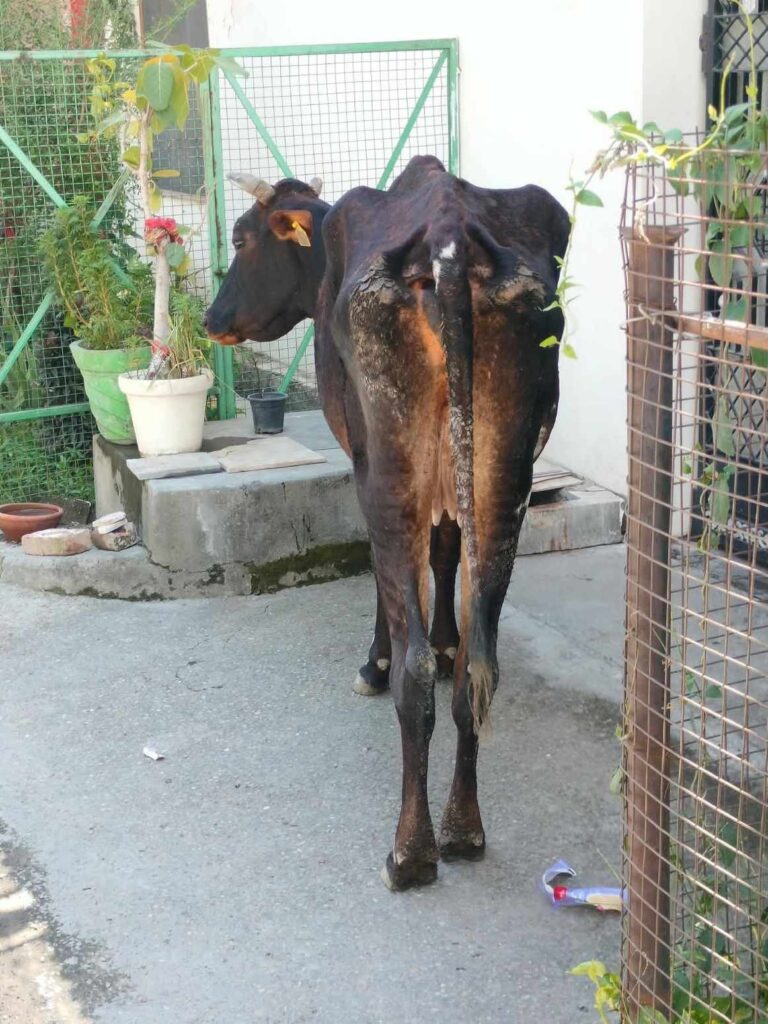
Then he looked at the street. In Rudrapur, in Uttarakhand, cows wander between the traffic and the shops. They eat from rubbish heaps. “The same animal is worshipped in a culture and in the same way it is eating trash in the streets,” he says. “But rather than being sentimental about it, I am just curious. I want to know and explore this side.”
Slowly he began to see something of himself in them. Street cows stand in the open, he says, “fully exposed.” They put up with a world they did not make. They endure, without making trouble.
He is mostly self-taught. He has a certificate in visual arts from IGNOU. He is in the second year of a BFA in painting at MIT University, Sikkim, by distance learning. The rest he learns at gallery openings, from books, online and from the artists he meets.
© Tanishq Pratap Singh
“I like to provoke a subtle tension in my paintings. Are we all okay?”
2. How does a street cow reach the canvas?
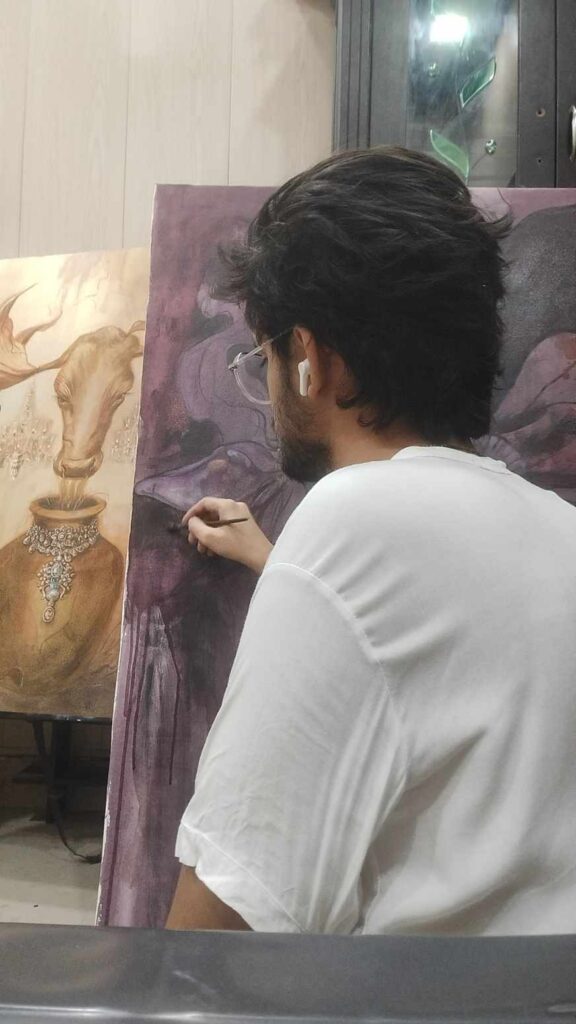
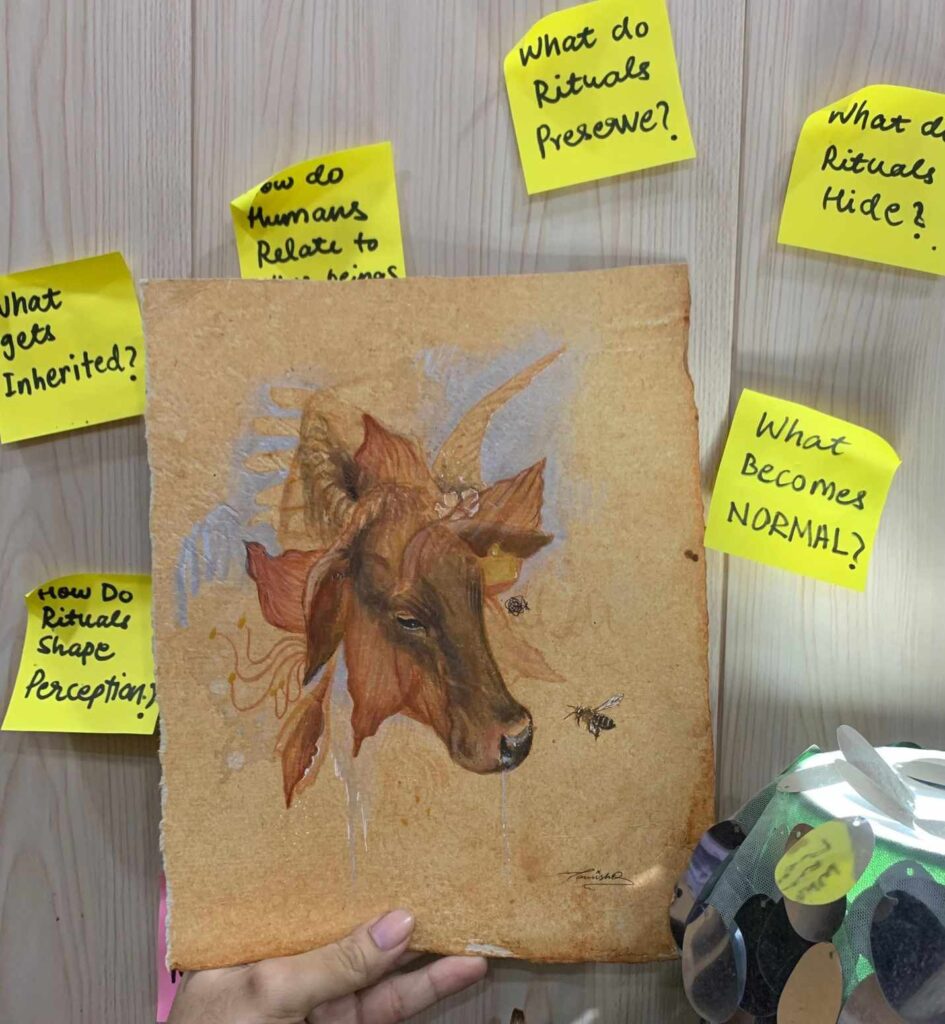
Photograph. Whenever he is out, on his phone. Sketch. From the photographs, in his own hand. Ask. Questions go up on the wall. Paint. On Wasli, on silk, on raw canvas.
He makes the images “in my own language,” he says. The surface matters too. One day he painted on the raw back of an old canvas and liked the way the acrylic sank into it. “Now I only buy raw canvas for acrylic painting.”
© Tanishq Pratap Singh
3. How did a lily become a cow’s ear?
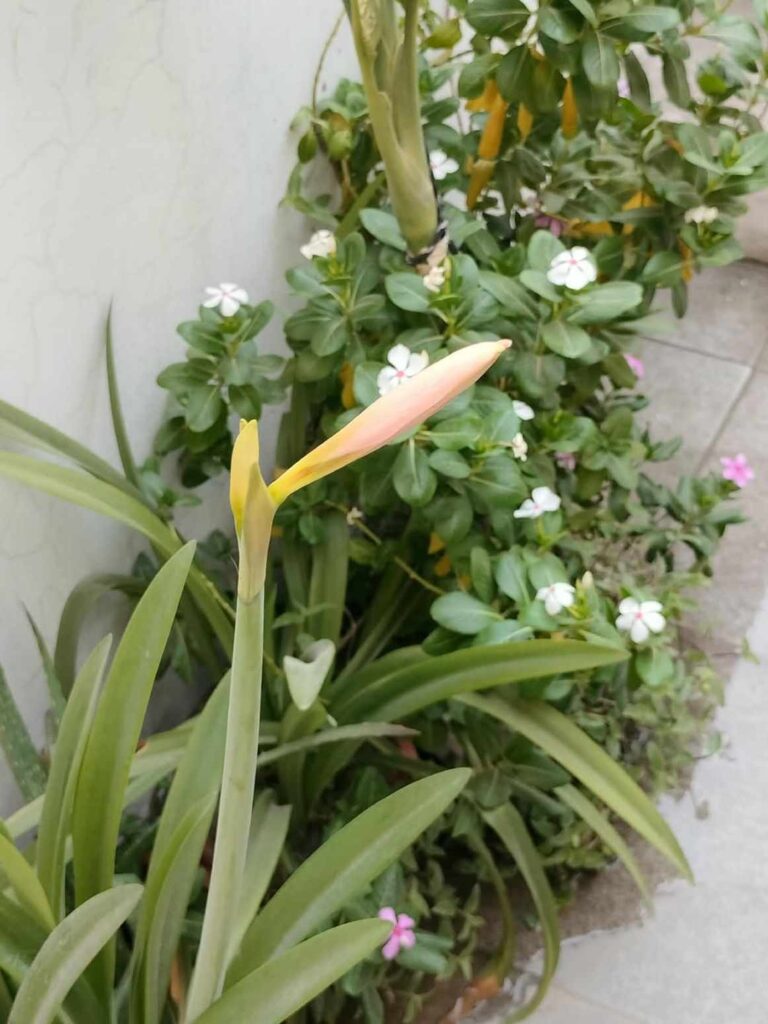
One day he was drawing lilies in his small garden. A lily lives for about a week. He watched it open, fold, wrinkle and droop. Then he looked at his cows. The ear of a cow, he saw, is about the size of a lily petal.
© Tanishq Pratap Singh
© Tanishq Pratap Singh
4. Am I free or told to be free?
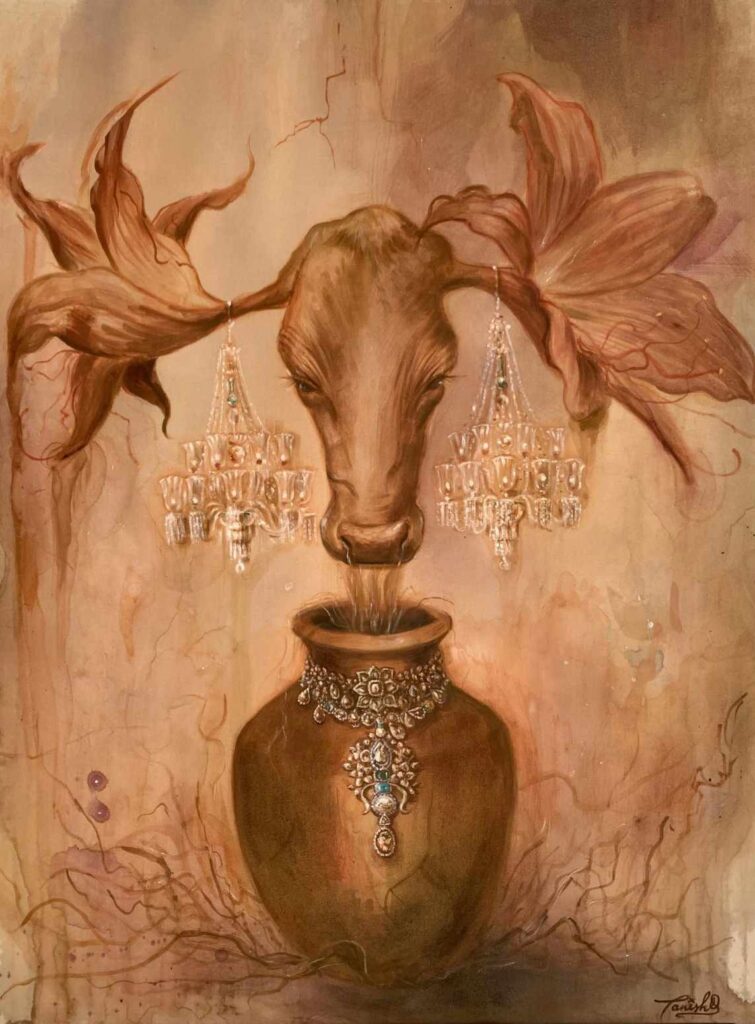
With Houseplant he sent us the questions he asks himself. “I am well protected, but do I need to be? Am I free or told to be free? Can something be loved, protected, even admired and still feel confined?”
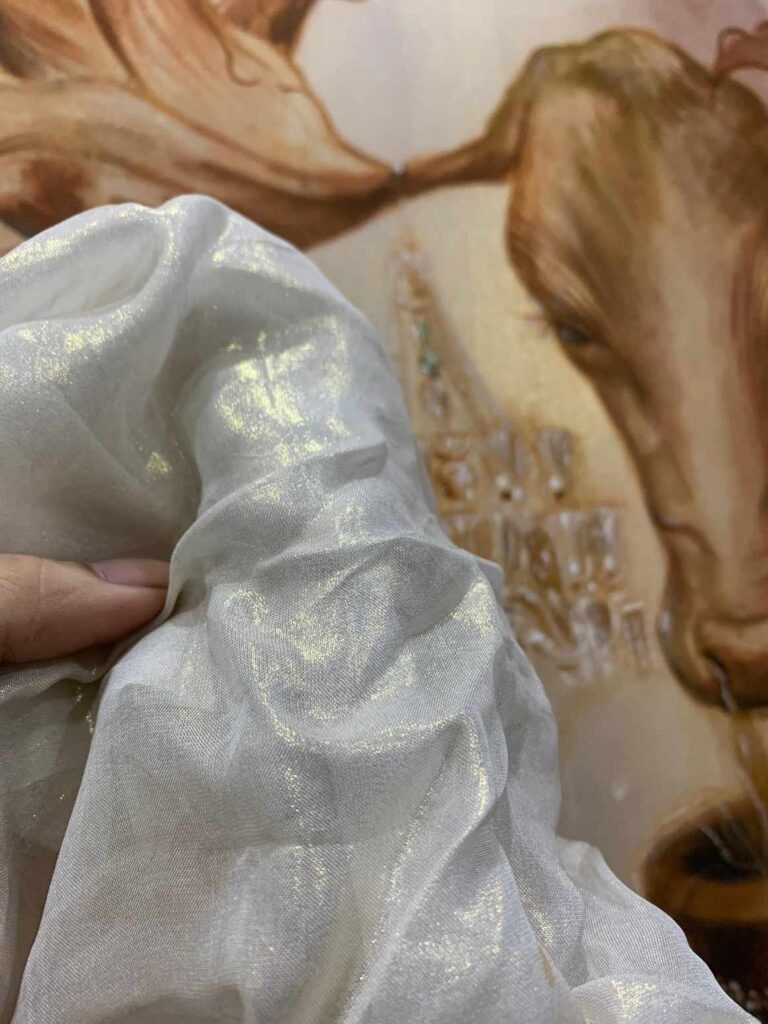
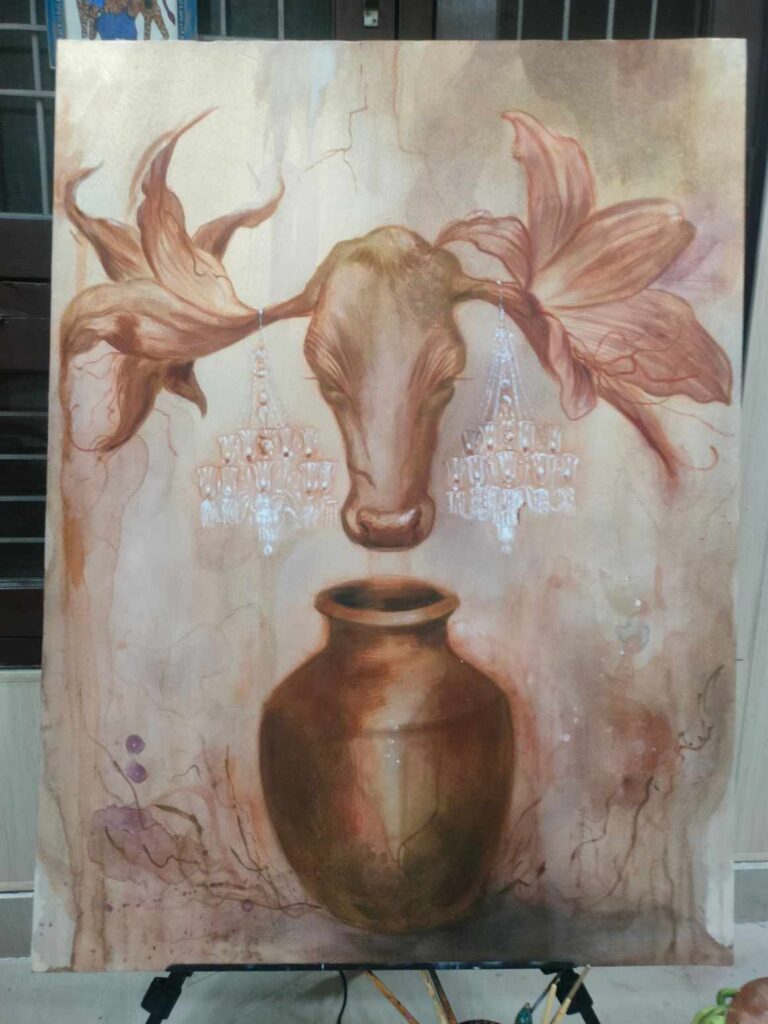
In the painting the lily petals became the cow’s ears. Her head rises from a brass pot like a plant kept indoors, safe and cared for. Small chandeliers hang beside her. The jewels are lovely. They also cover something up. He painted it on Chanderi, a fine silk with golden threads, bought long before only because it shone.
© Tanishq Pratap Singh
© Tanishq Pratap Singh
© Tanishq Pratap Singh
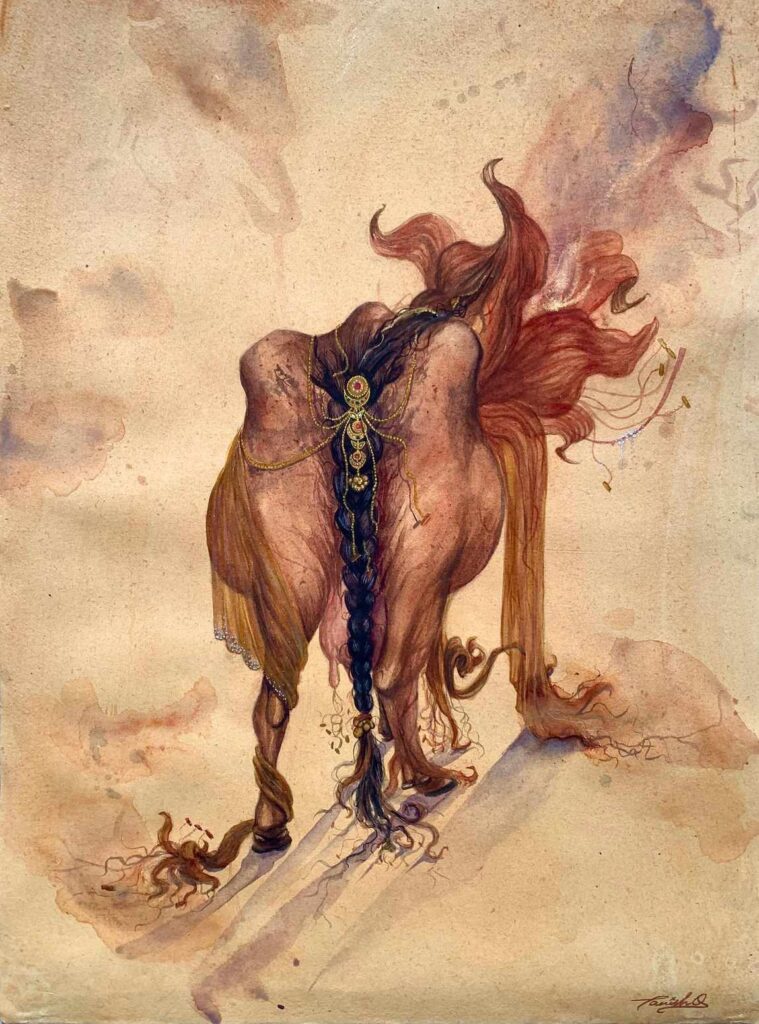
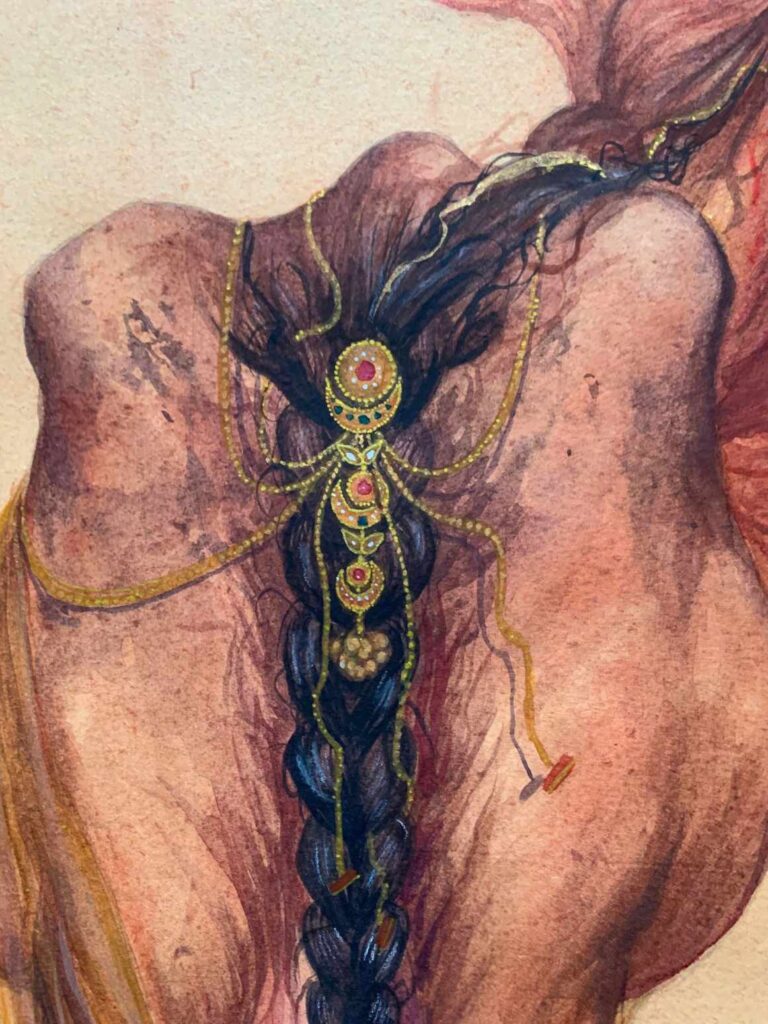
Women and cows walk down the same streets, he noticed, with the same grace. A braid swings like a tail. In Male Gaze he joined the two. It is not only about gender, he says. The gaze belongs to all of us, to the way a society decides how a body should look.
5. Why Wasli?
Wasli is a handmade paper, first made in Jaipur. For a long time it was used for work that had to last. Later, painters of miniatures used it for fine, slow detail. “That gives me a sense of labour and endurance,” Tanishq says. He connects the paper with the cows that stand all day in the street.
© Tanishq Pratap Singh
© Tanishq Pratap Singh
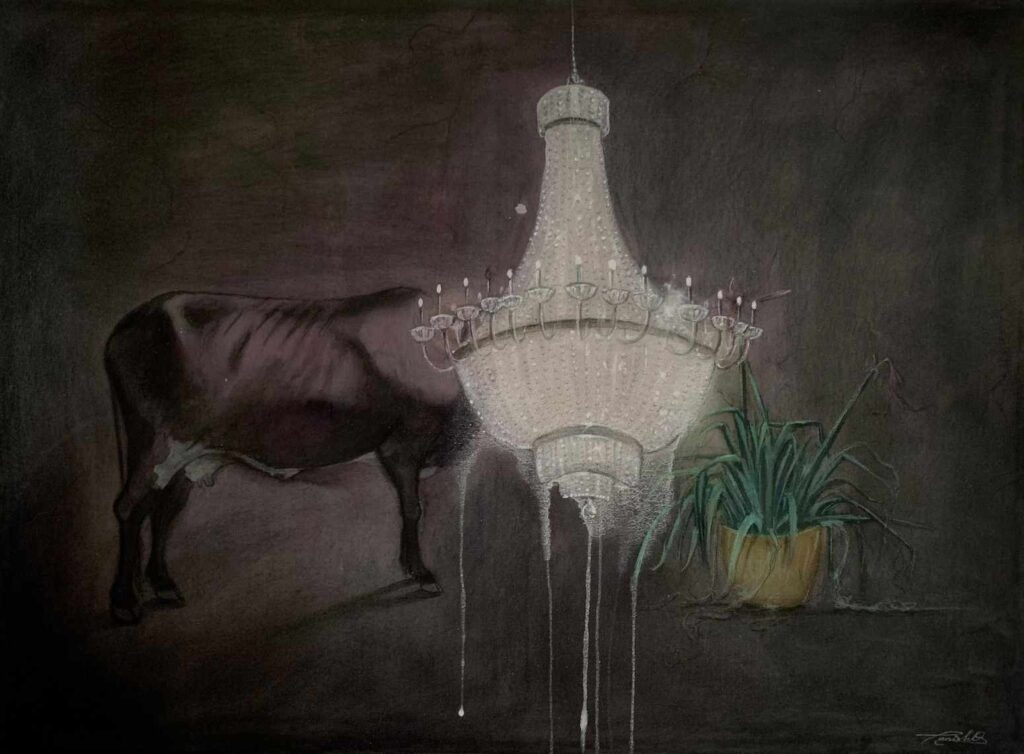
A thin cow stands in the dark under a huge chandelier. The chandelier shines in pearl-white paint. The cow is drawn in matt charcoal on the unprimed back of the canvas. Which do we notice first, the light or the animal? He leaves that question with us.
A house, not a home
“I live in a house, searching for a home.”
© Tanishq Pratap Singh
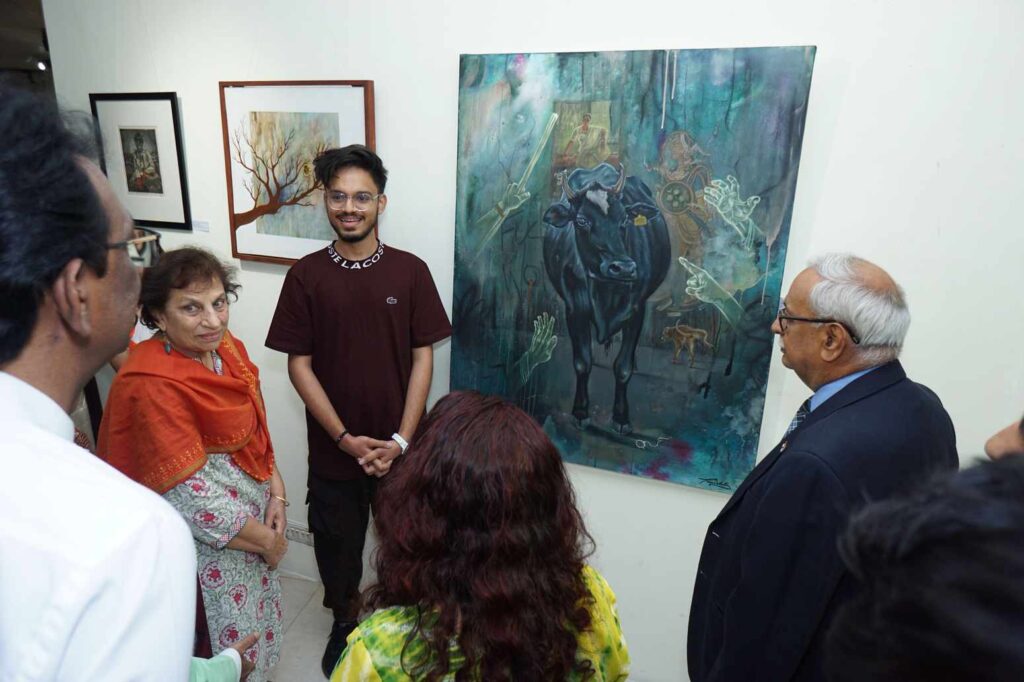
The cow in his paintings is loved and decorated but still not free. Tanishq asks the same questions of himself. He calls these paintings a breakthrough, a way to say what he had carried for a long time. What he wants now is guidance. He hopes for more platforms, residencies and grants that look at the work first. Young artists in small towns, he says, often cannot reach them. He is not turning back. “Honestly, I don’t have a plan B.”
Tanishq Pratap Singh
Instagram @tanishqbepainting
Read Issue Two, with all seventeen films →
More about Tanishq →
Next in Issue Two
 The Studio · SculptureA temple on a boatSourav Mohanty3 min read
The Raconteur is free for every reader and every artist. If you would like to help, you can give to Kalyani Kalakriti Foundation.
Send Tanishq a note.
A few words about their work mean a lot to a young artist. The team reads every note before it goes to Tanishq.
Get the next issue every Monday.
Free, just your email.