© Uttam Prajapat
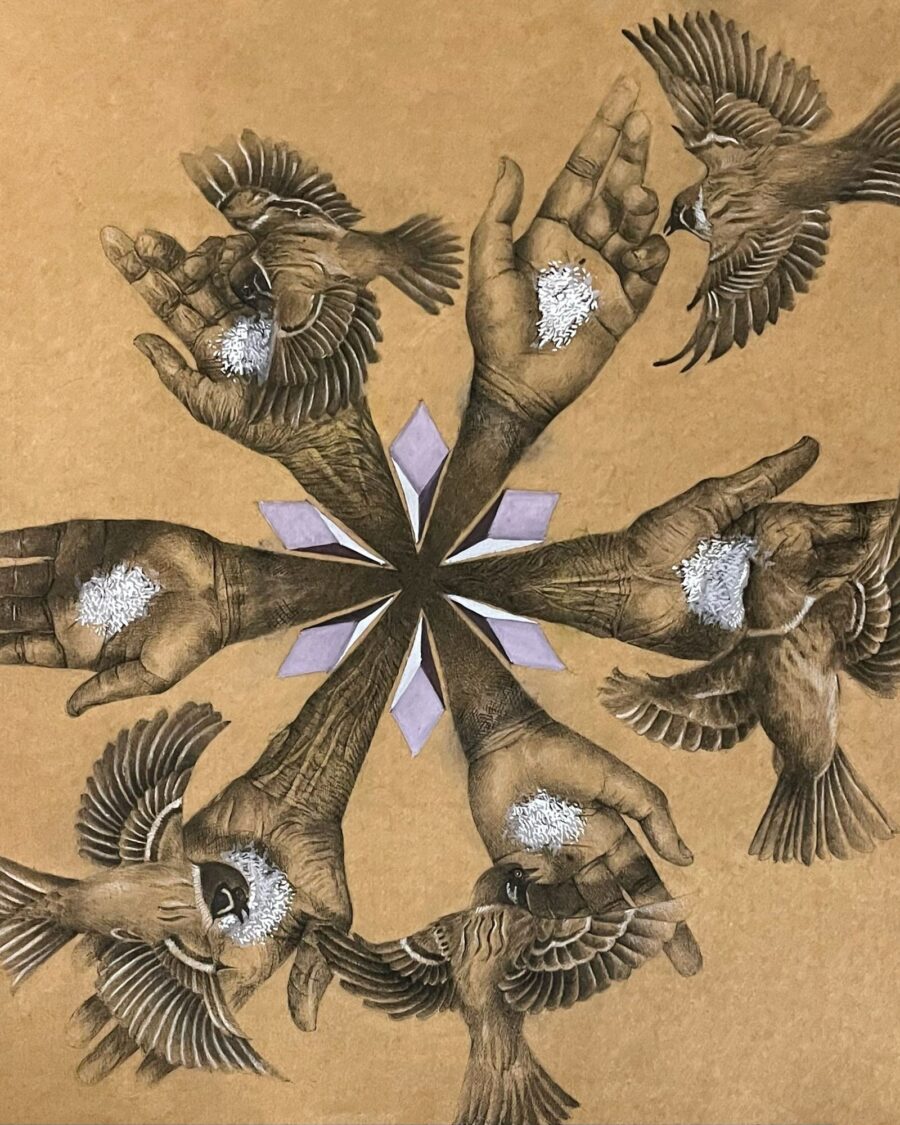
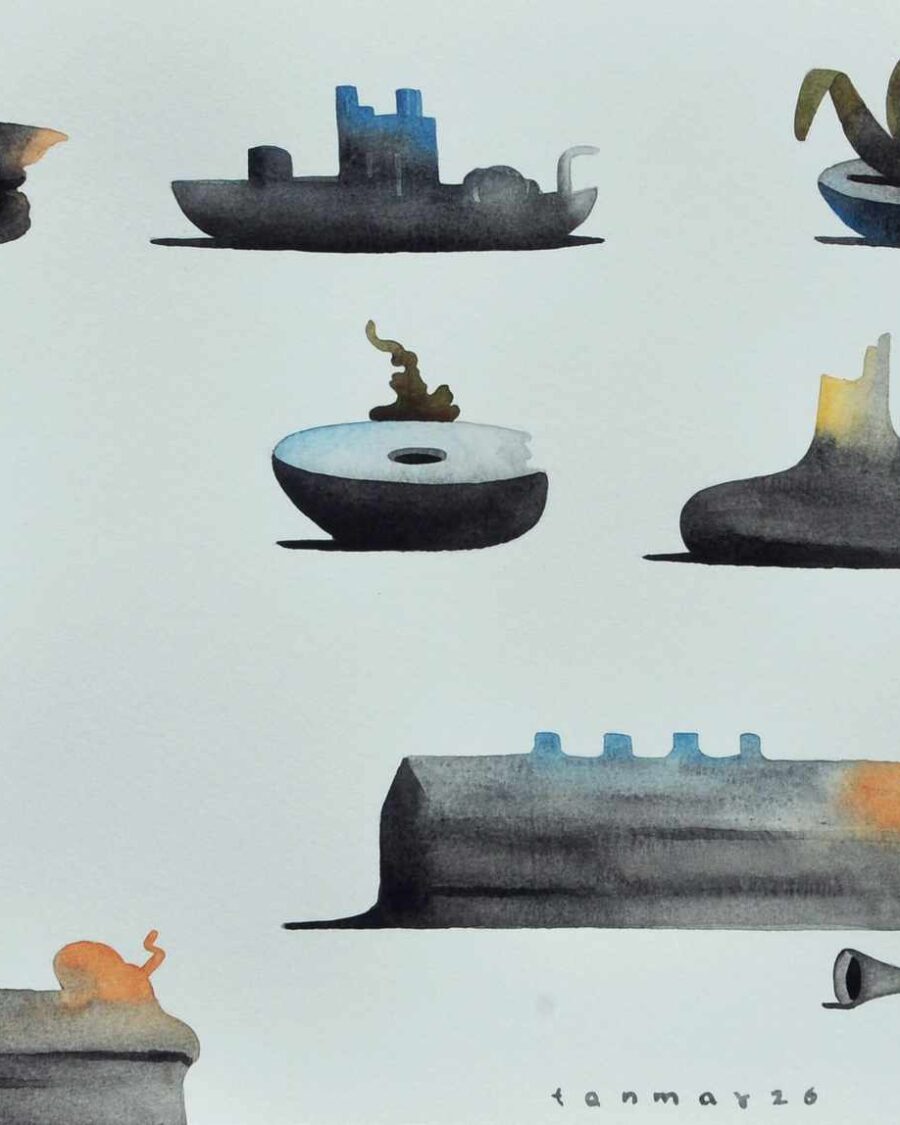
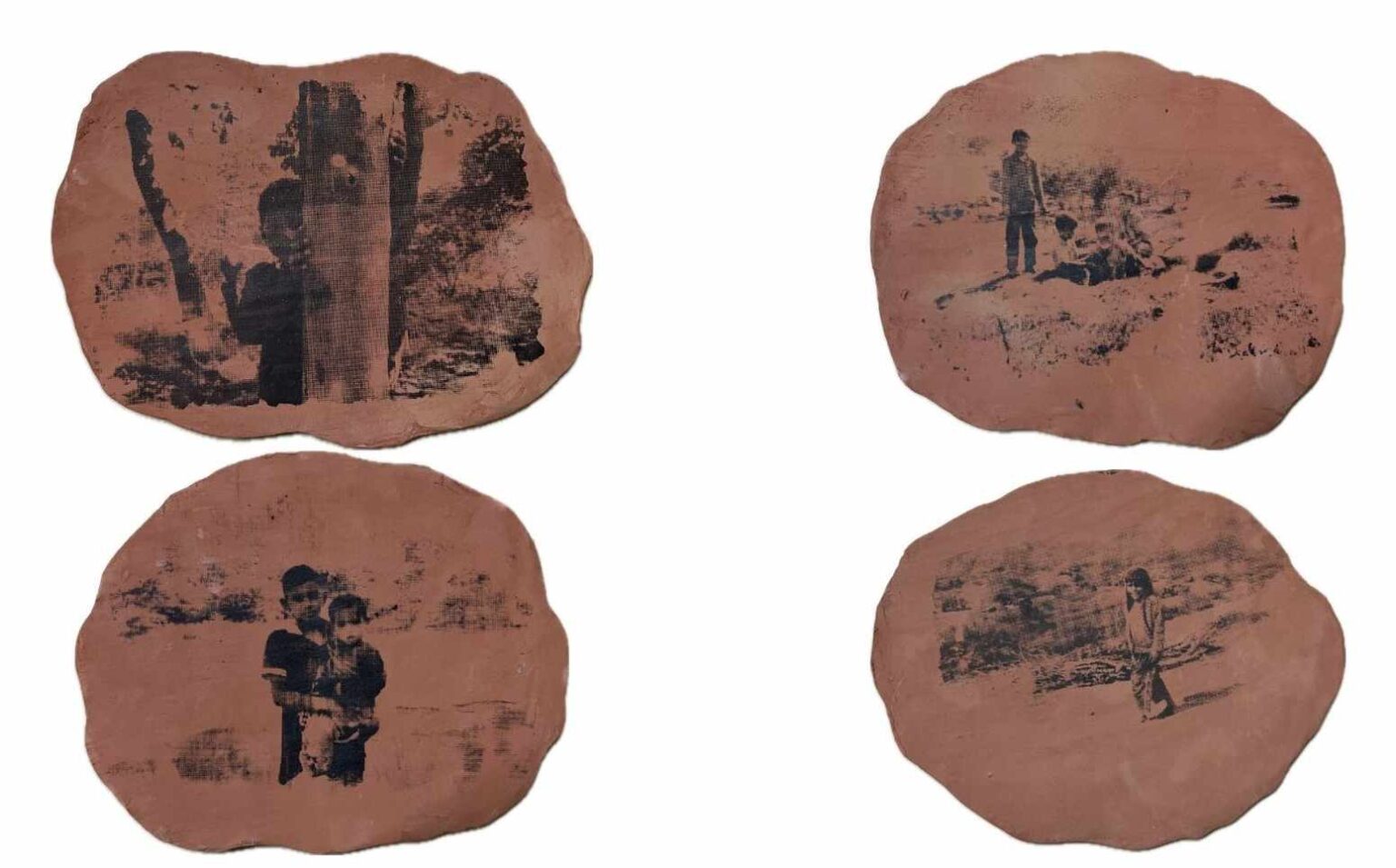
Vatera is a village in the Aravalli hills of Rajasthan. Mining is changing the land there and the lives of the people who depend on it. Uttam Prajapat grew up there. Today he studies art in Mumbai. He prints his pictures on fired clay and he lets the cracks stay.
Four questions, four answers.
1. Why print on clay?
Uttam finished his BFA at the School of Fine Art, IPS Academy, Indore, in 2024. Now he is in the second year of an MFA in Contemporary Art Practice at Sir J. J. School of Art in Mumbai. The move from a village to a big city changed the way he sees places and people. “My practice often comes from the distance between where I come from and where I am now,” he says.
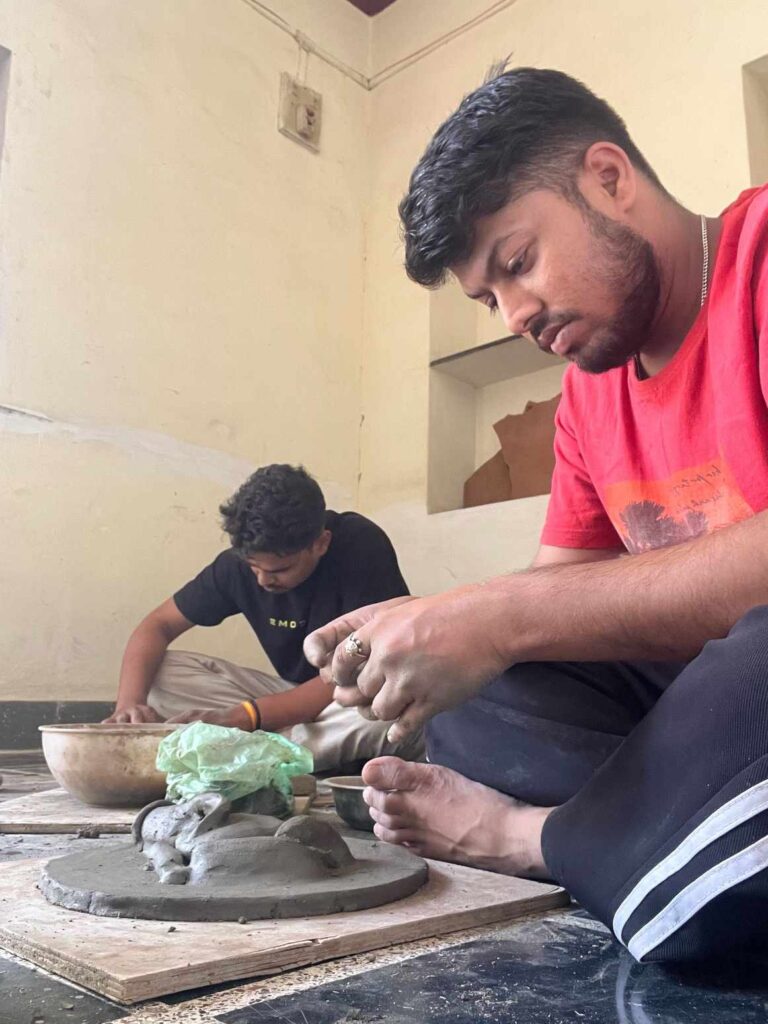
He works with terracotta, soil, drawing, printmaking and mixed media. He looks for materials that already carry a place inside them. “For me, soil is not simply a material; it carries memories of home, landscape, labour and belonging.”
Clay is close to home. He comes, he says, “from a family and environment where clay has a strong presence.” Working with earth lets him bring that background into his art “without simply illustrating it.”
© Uttam Prajapat
© Uttam Prajapat
“Sometimes allowing the material to respond can take the work somewhere I could not have planned beforehand.”
The print and the clay
“The cracks, roughness and variations were no longer mistakes; they became part of the image.”
At first he saw the clay only as a surface for his picture. He printed on it with a silkscreen, a method called serigraphy. “Printing on terracotta was not as predictable as printing on paper,” he says. “The surface was uneven, and sometimes the image did not transfer in the way I expected.”
He wanted control, so at first it felt like a problem. Slowly he stopped correcting every gap. He was making works about land, memory and things breaking apart and the clay was already carrying those ideas.
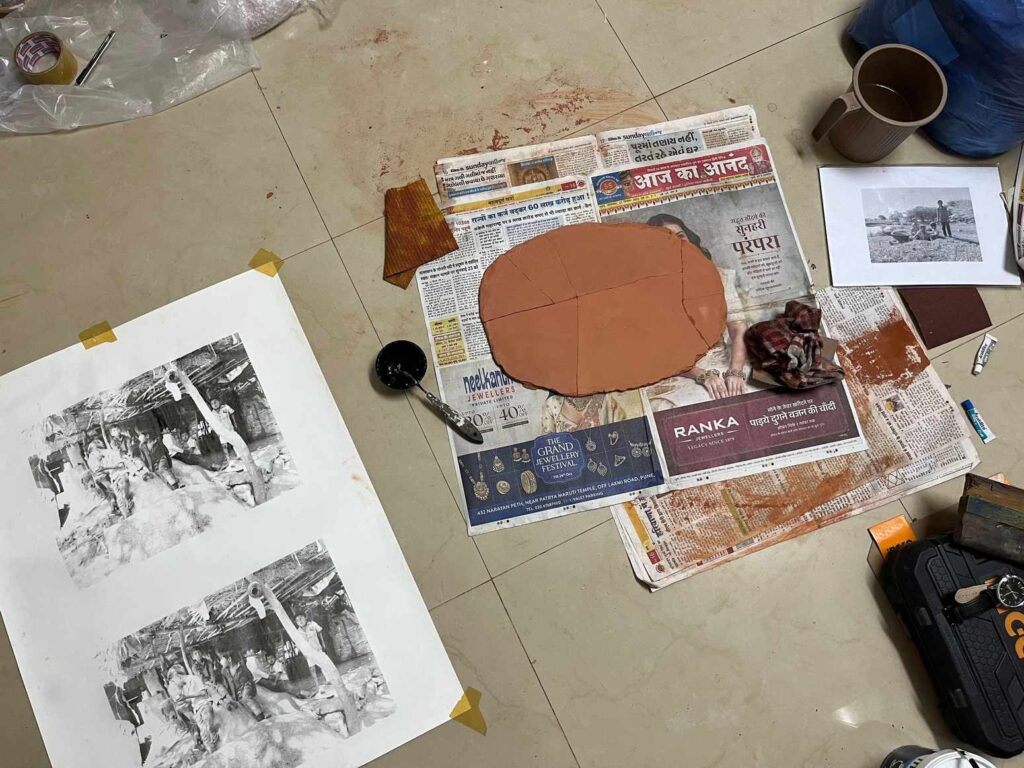
© Uttam Prajapat
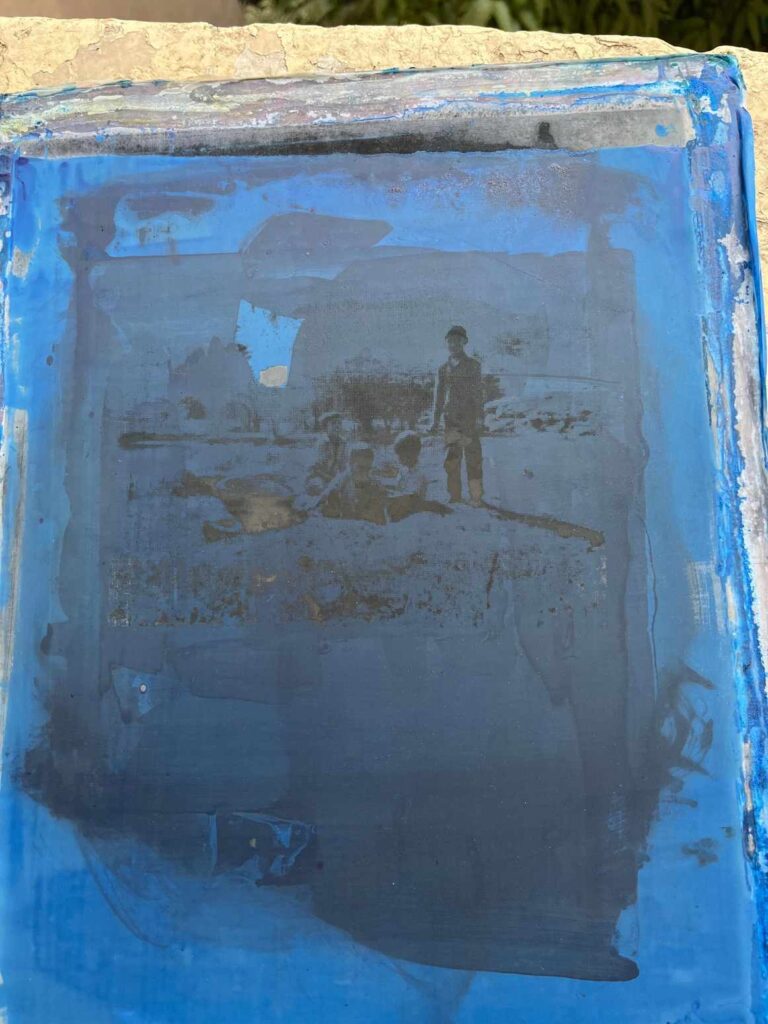
© Uttam Prajapat
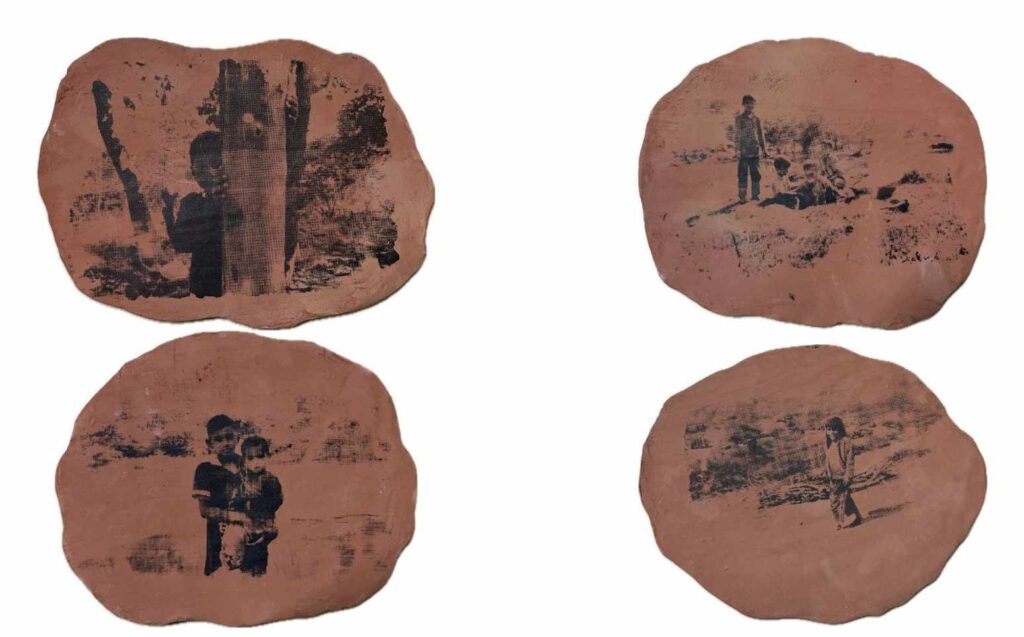
© Uttam Prajapat
The title is in Hindi. He makes the image with a silkscreen and lays it on fired clay. The clay keeps its own marks. Each print lands a little differently.
2. What is an unsettled body?
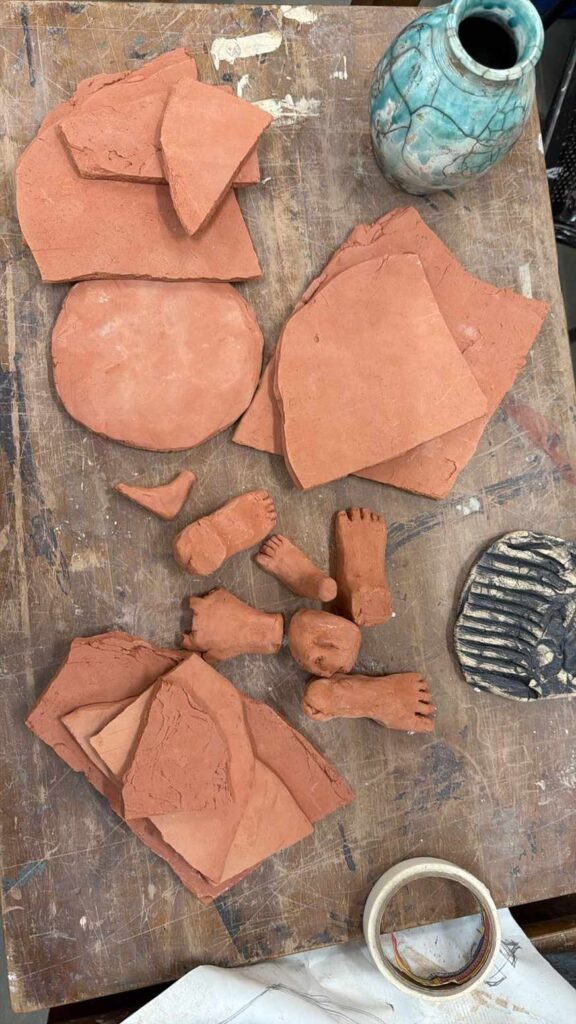
Bhilakti Kaya began, he says, “with thinking about the body as something connected to the land.” He wanted to show “an unsettled body, something that does not completely belong to one place anymore.” Through the human figure he speaks about memory, rural and tribal life, displacement and the changing Aravalli. He does not want to show mining and displacement “only as direct documentary subjects.”
Series 2 (The Broken) came from the same thinking, but it breaks further: people, animals, homes and land, in pieces. “The brokenness in the image is not only about physical damage,” he says. “It refers to disturbed land, displacement and the feeling of losing a familiar sense of belonging.”
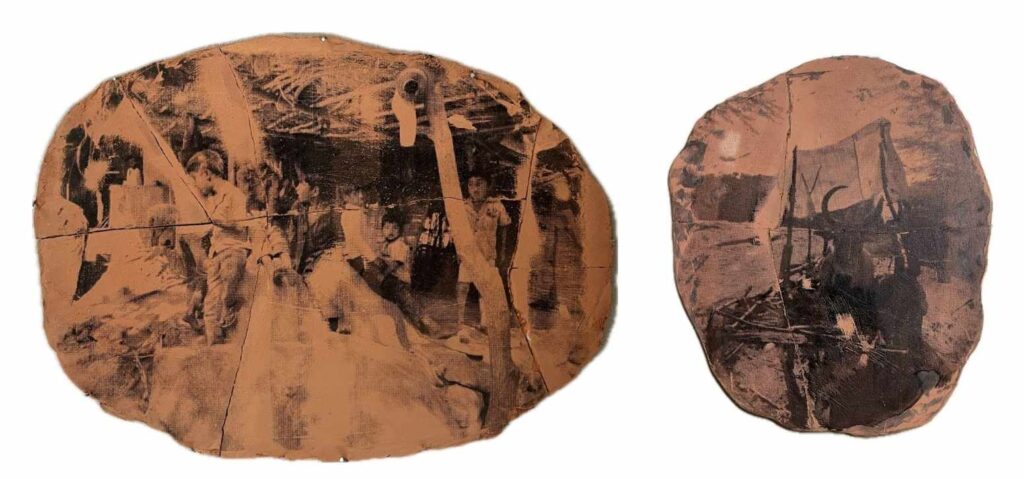
© Uttam Prajapat
3. What did the chulha hold?
© Uttam Prajapat
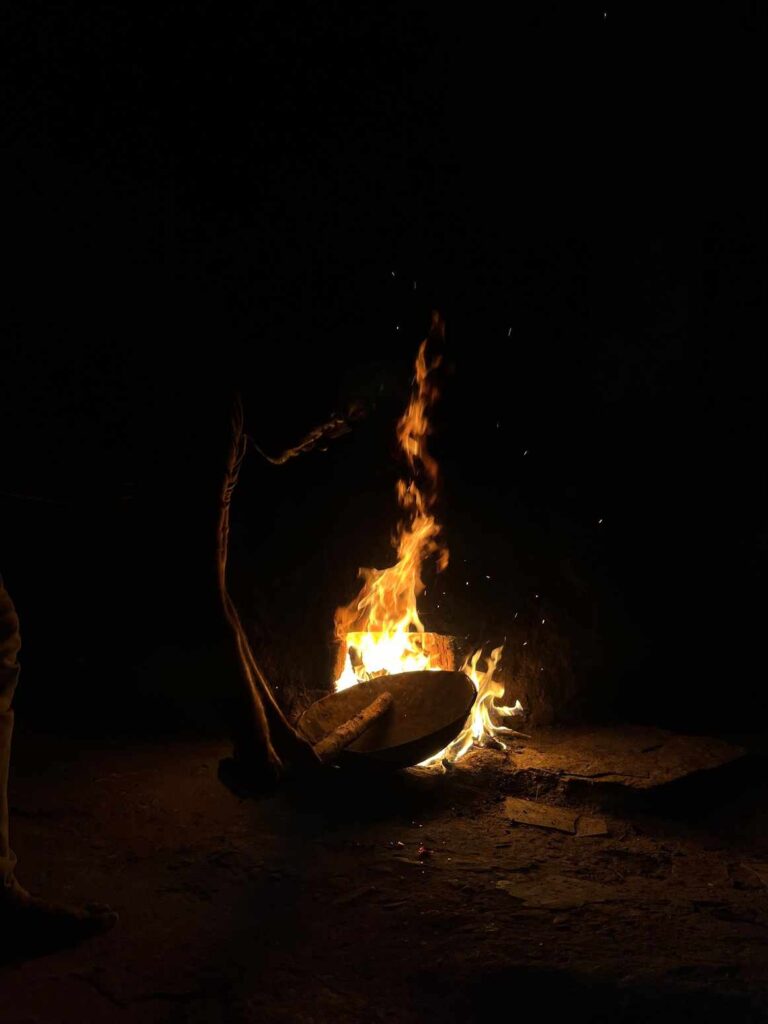
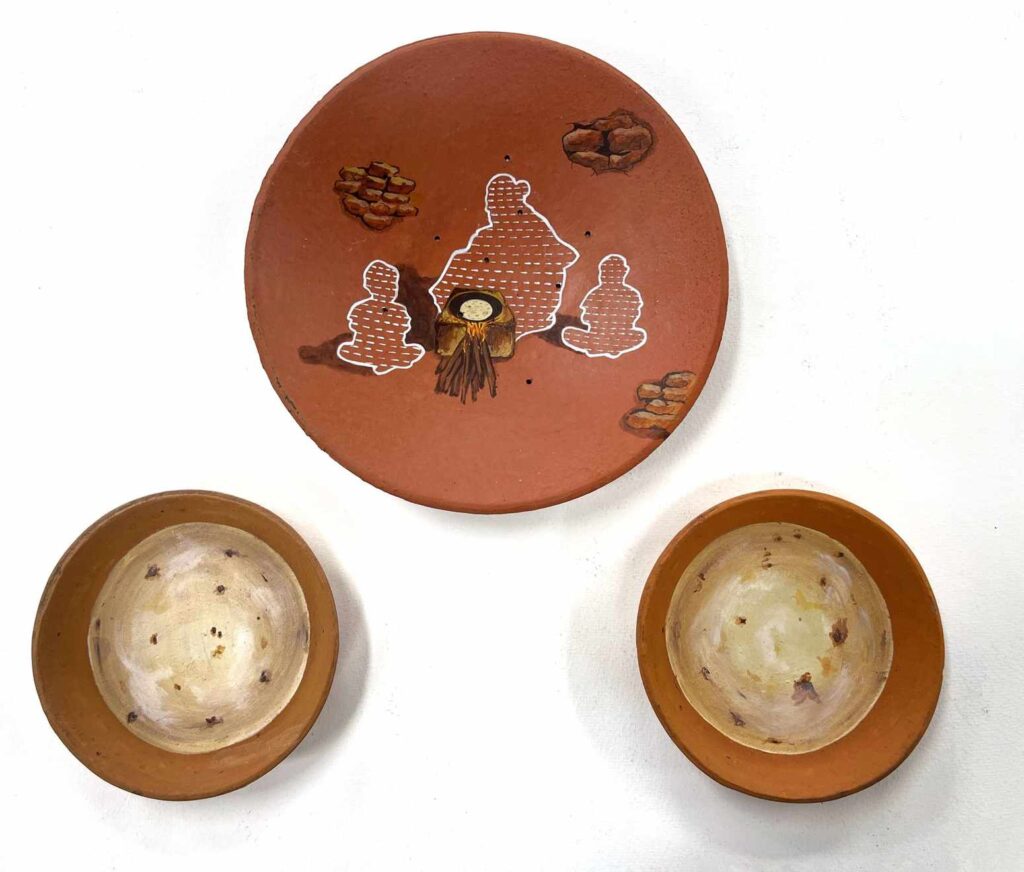
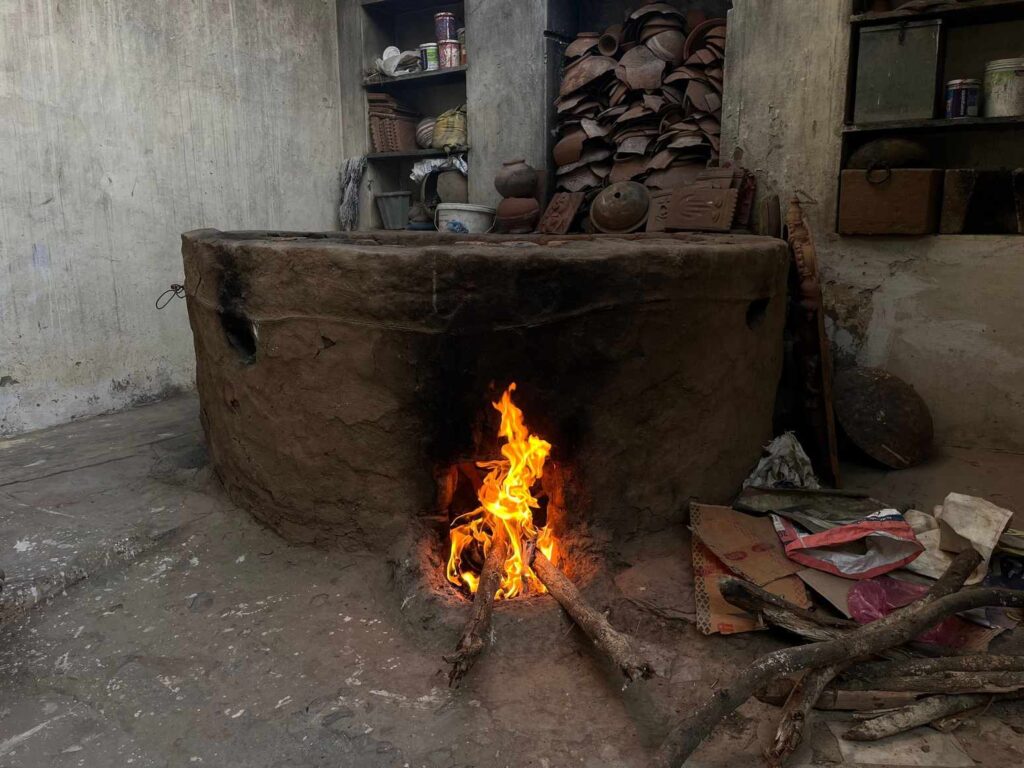
Lost Warmth is his most personal work. It comes from his childhood home in Rajasthan: “the chulha, clay utensils, family care and the warmth of being together.” He made it on terracotta plates, because the material takes him back to the clay things of that home. He did not want to tell the whole story. He wanted the memory to feel “partial and fading.” The warmth is the heat of the chulha and the food and also the warmth of a family.
4. Where does he go from here?
“A place can stay within us even after we leave it.”
© Uttam Prajapat
He wants to bring rural life, migration and changing land into contemporary art “without reducing them to simple representations of poverty, tradition or rural identity.” Time with communities in the Aravalli has taught him that an artist can listen and learn “rather than speaking for them.” He hopes for shows, residencies and research. He also wants to make the path easier for young artists from small towns and villages.
Uttam Prajapat
Instagram @_uttam._.01
Read Issue Three, with all seventeen films →
More about Uttam →
Next in Issue Three
 The Studio · PrintmakingStruggle and a smilePurabi Roy4 min read
The Raconteur is free for every reader and every artist. If you would like to help, you can give to Kalyani Kalakriti Foundation.
Watch Uttam Prajapat in his own words
Send Uttam a note.
A few words about their work mean a lot to a young artist. The team reads every note before it goes to Uttam.
Get the next issue every Monday.
Free, just your email.