
© Purabi Roy
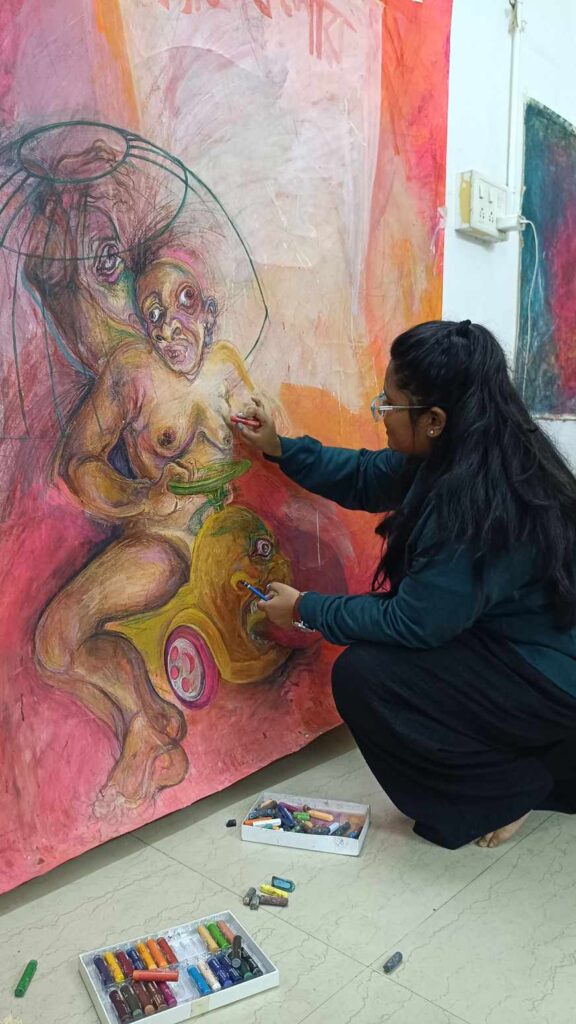
Apps replace the corner grocer. Battery rickshaws replace the pedal rickshaw. Malls replace the small cloth shop. In Purabi Roy’s own family, machines replaced the loom. She carves the people caught in the middle into wood: the hawker, the commuter, the small shopkeeper. And she watches them smile.
Four questions, four answers.
1. Whose lives does she print?
Purabi is from Kolkata. She finished her BFA in painting at the Indian College of Art and Draftsmanship in 2024. Now she is doing an MVA in printmaking at the Maharaja Sayajirao University of Baroda.
Her subject is the middle class and she knows it from the inside. Her own family once worked in weaving. When fully automatic machines took over, they had to find another way to earn.
“For me, the middle class is not simply an economic category; it is a way of living, thinking, dreaming, compromising, and surviving.”
“Why does an ordinary person have to struggle so much simply to maintain a basic and respectable life?”
© Purabi Roy
© Purabi Roy
© Purabi Roy
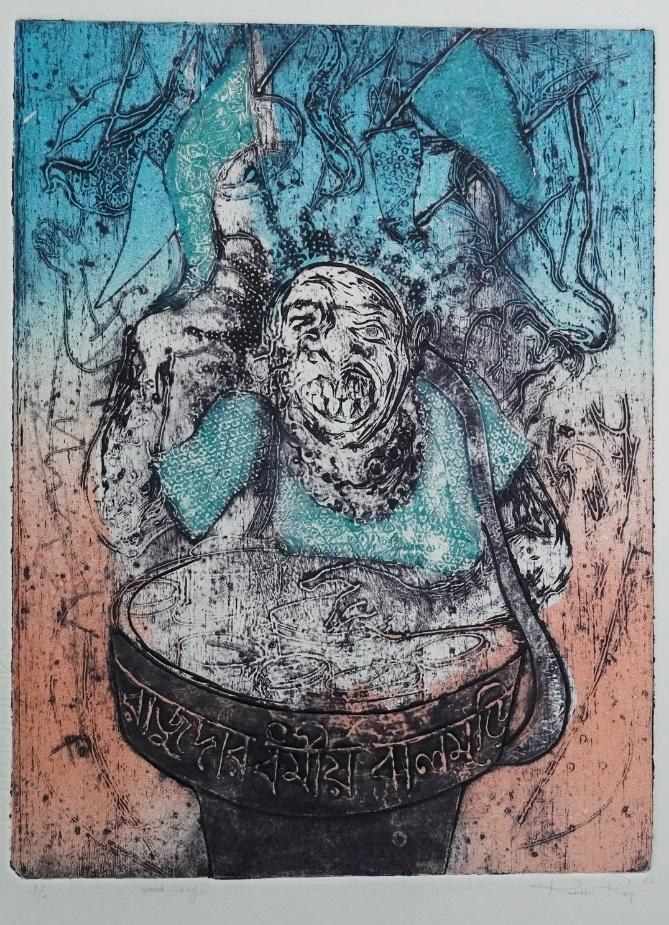
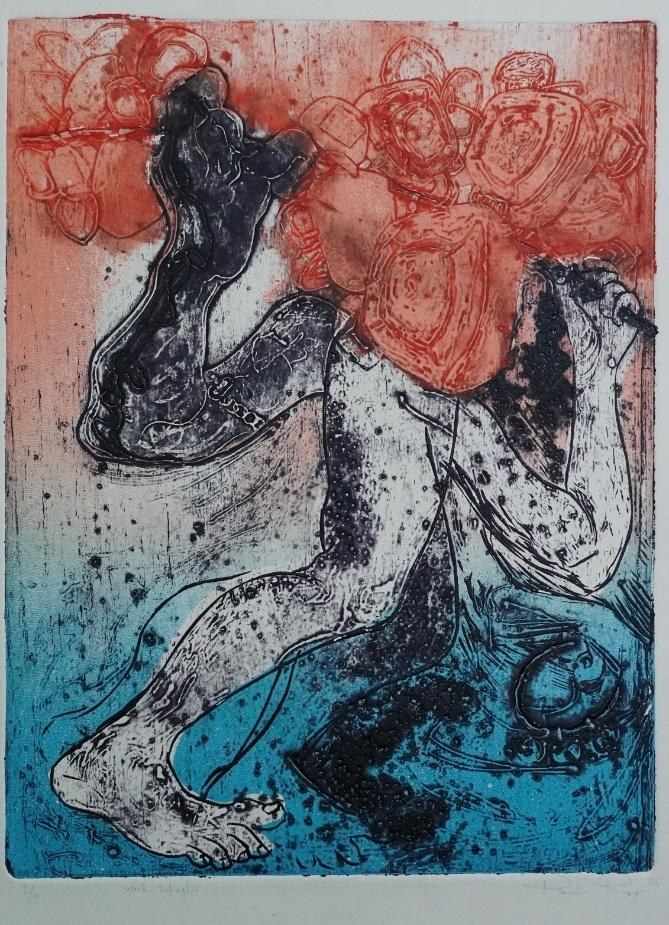
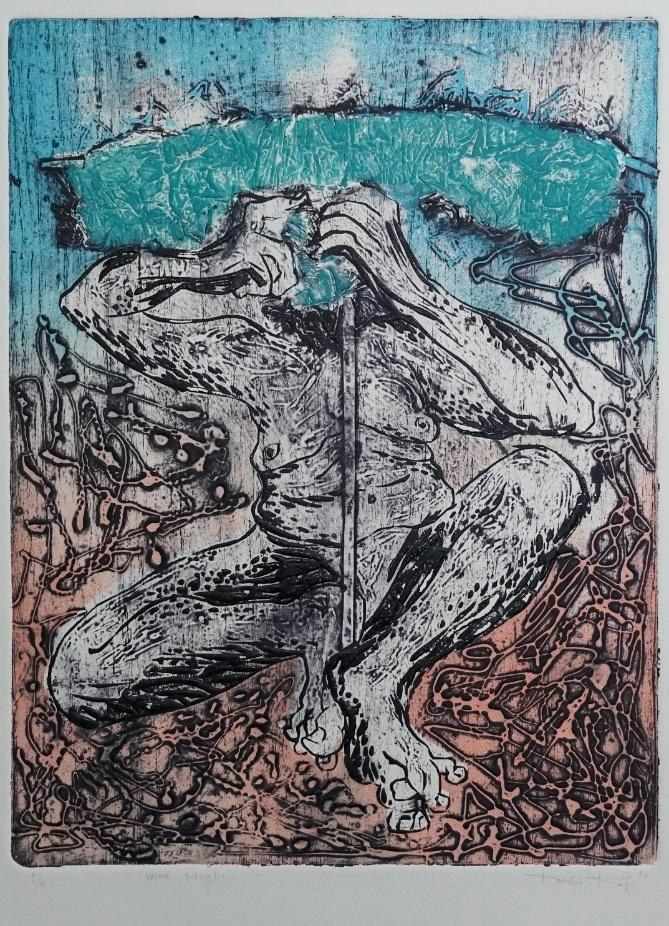
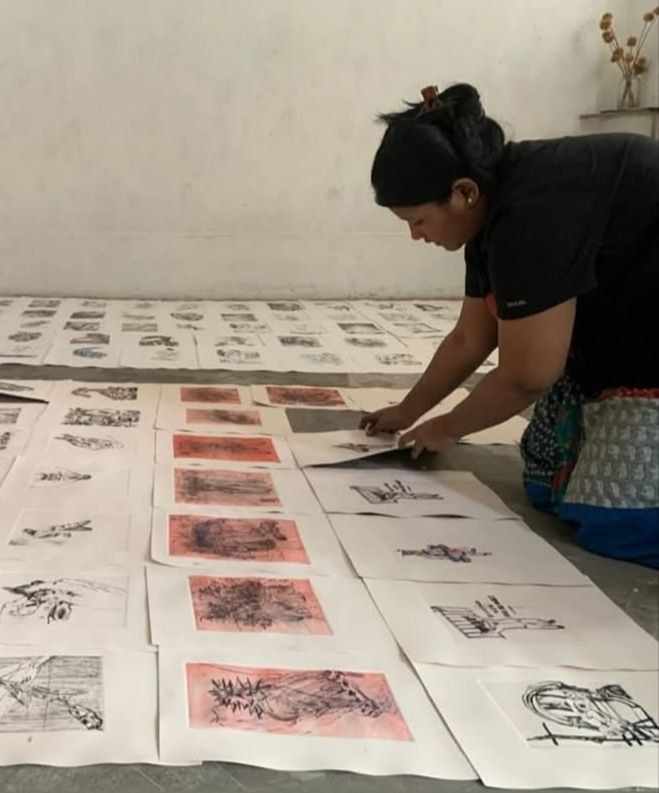
Three people who work hard, she says, “only for food” for their families. Each print is carved and inked by hand.
2. What is the candy seller carrying?
One of the people in By the Food, Of the Food, For the Food sells cotton candy. On his T-shirt Purabi carved lines of news.
In West Bengal, she says, hawkers were banned from trains, buses, bazaars, platforms and footpaths, without notice. Nobody asked where they would go or how their families would eat. The cotton candy seller wears the news that never made it into the papers.
“The articles that are not published in the newspaper.”
© Purabi Roy
3. What game is being played?
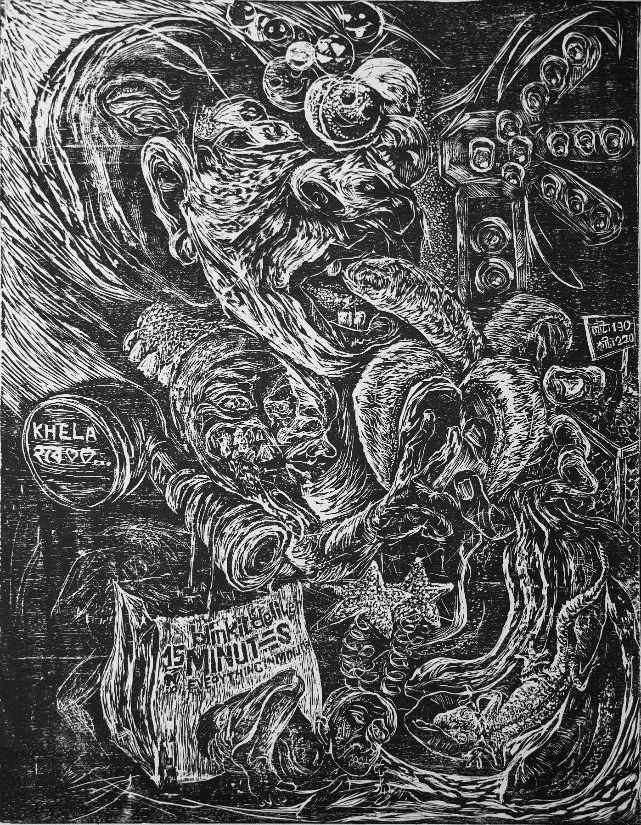
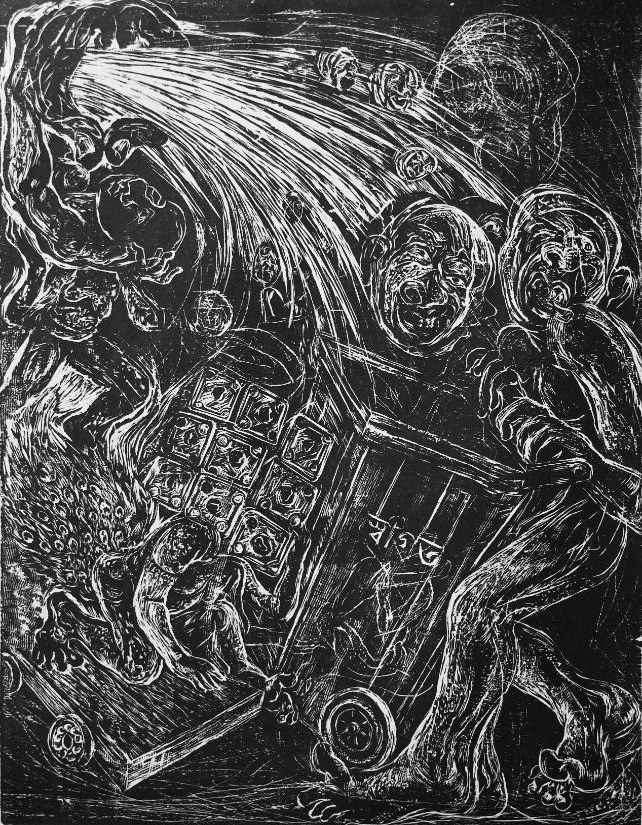
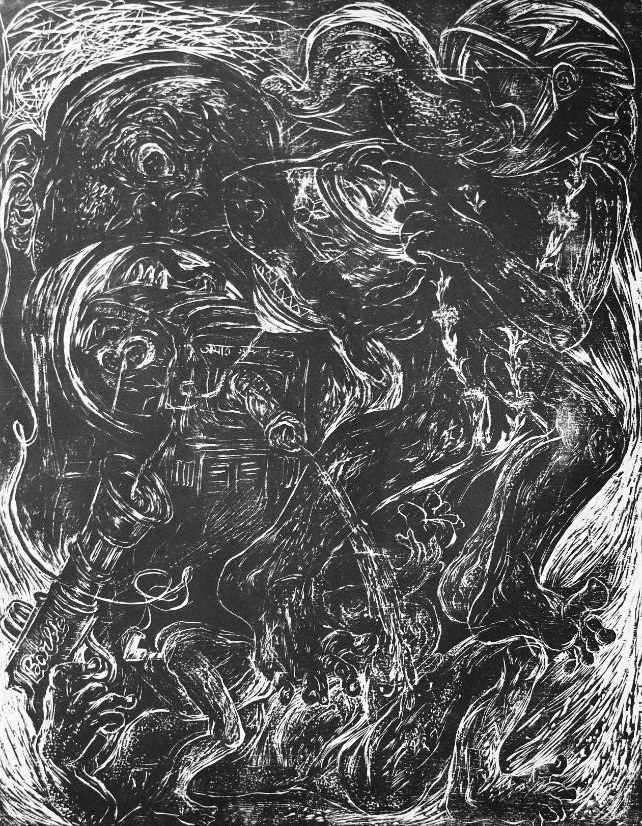
“Khela Hobee”, roughly “the game is on”, is a famous political slogan in Bengal. Purabi turns it into satire. Her woodcuts ask how ordinary people live through a game that is played for capital and for power.
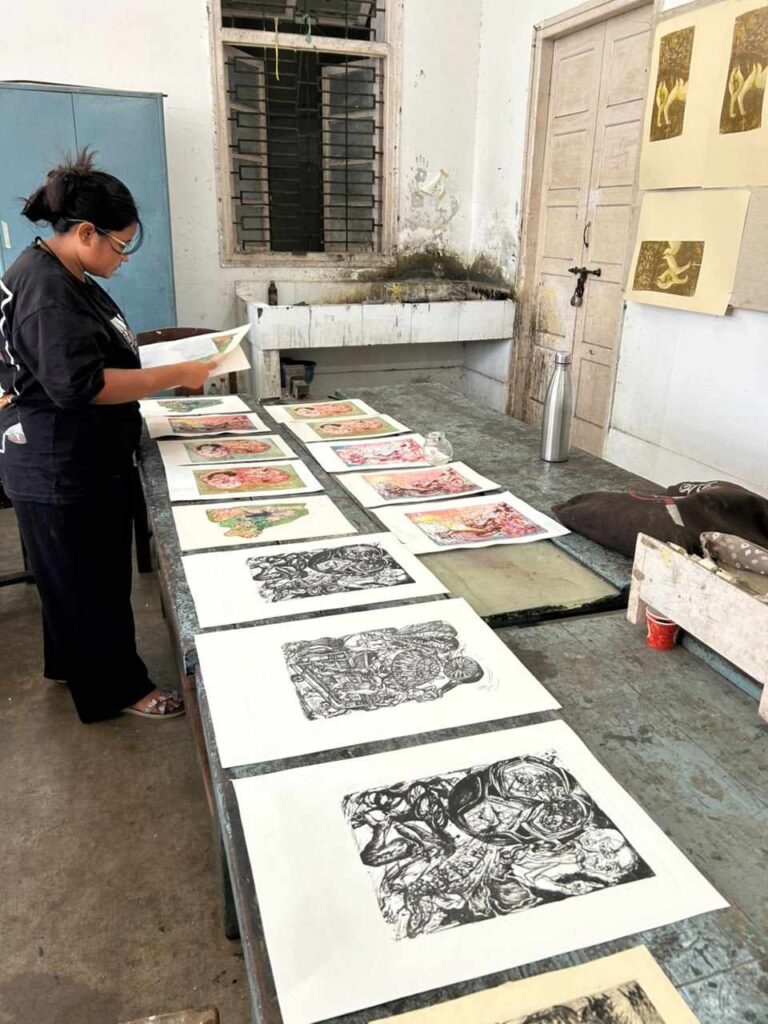
The prints are crowded and loud: faces, bottles, signs, wheels and smoke, cut into the wood in white lines on black.
She asks the questions plainly. “Who benefits from the existing system? Who carries the burden? Who gets opportunities, and who has to fight for them?”
“What is the larger system that keeps them struggling?”
© Purabi Roy
© Purabi Roy
© Purabi Roy
The class nobody wants to claim
Purabi says the middle class is hardly seen in pictures. Pictures go to great poverty, great wealth, power or drama. The person in between is not dramatic enough. Their struggles are quiet and they never stop.
Many people in the middle class do not even want the name. To them it sounds like limits or like failure. She asks why that should be a source of shame.
“Why should compromise be considered a weakness when compromise is often what allows a family to survive?”
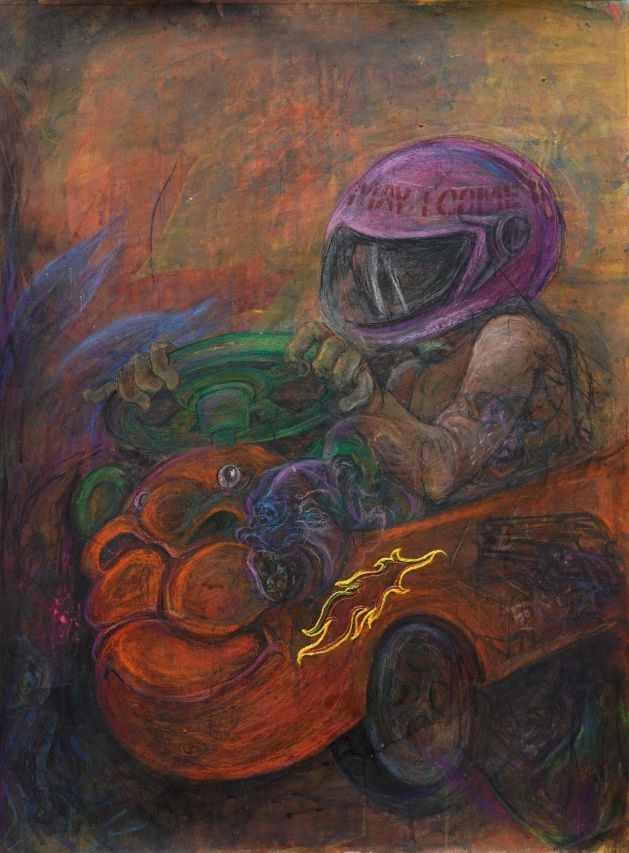
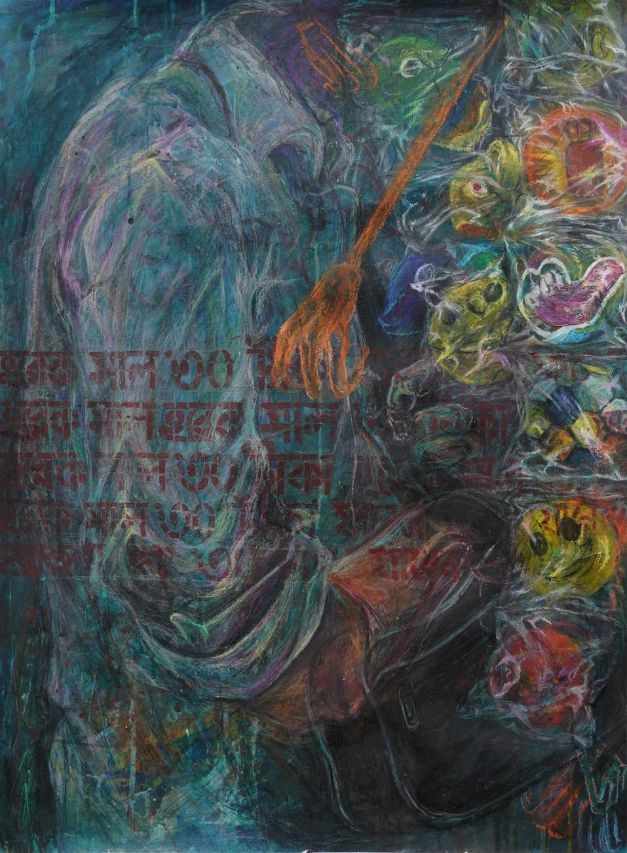
In Be Careful! Accident Prone Area she works in layers, with motifs, strong colours and everyday words. The title reads like a sign on the road.
© Purabi Roy
© Purabi Roy
“When prices increase, they adjust. When opportunities decrease, they adjust. When systems become difficult to navigate, they adjust.”
© Purabi Roy
Struggle and a smile
“There is happiness, hope, affection, humour, pride, and aspiration alongside struggle.”
What surprised her, she says, was not a new way to cut wood. It was people. For all the rules and pressures on them, they rarely give up.
She sees the smile at festivals and family gatherings, at birthdays and weddings, over small purchases. A child on a footpath with a balloon. Her father during Durga Puja.
She will not show only suffering.
4. Why cut, remove and press?
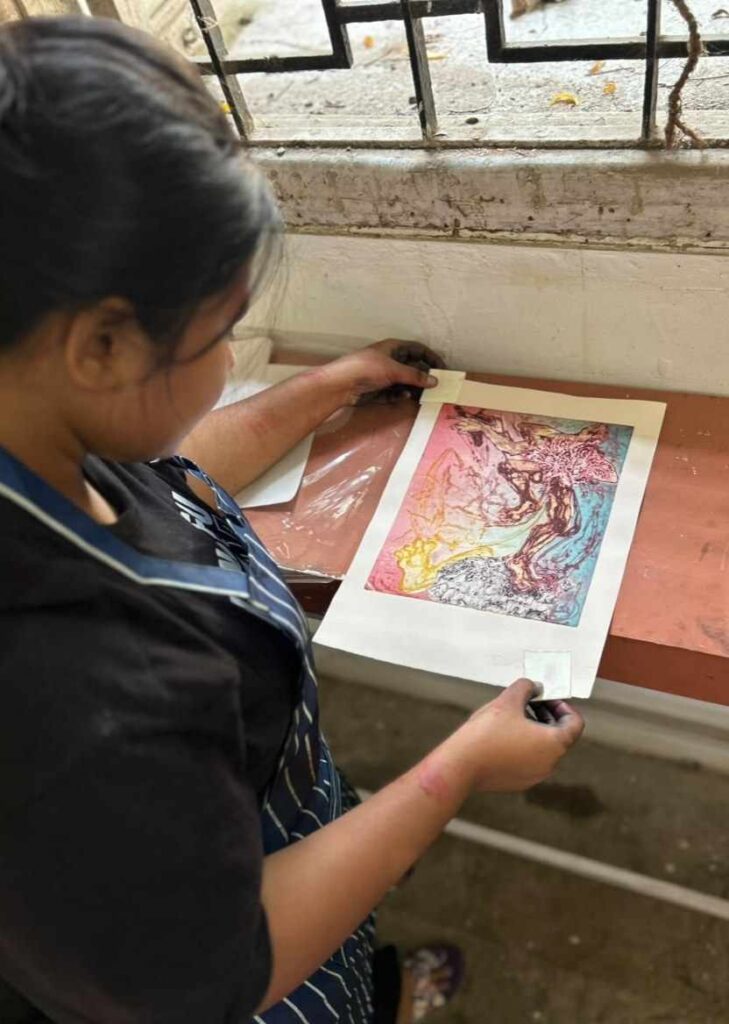
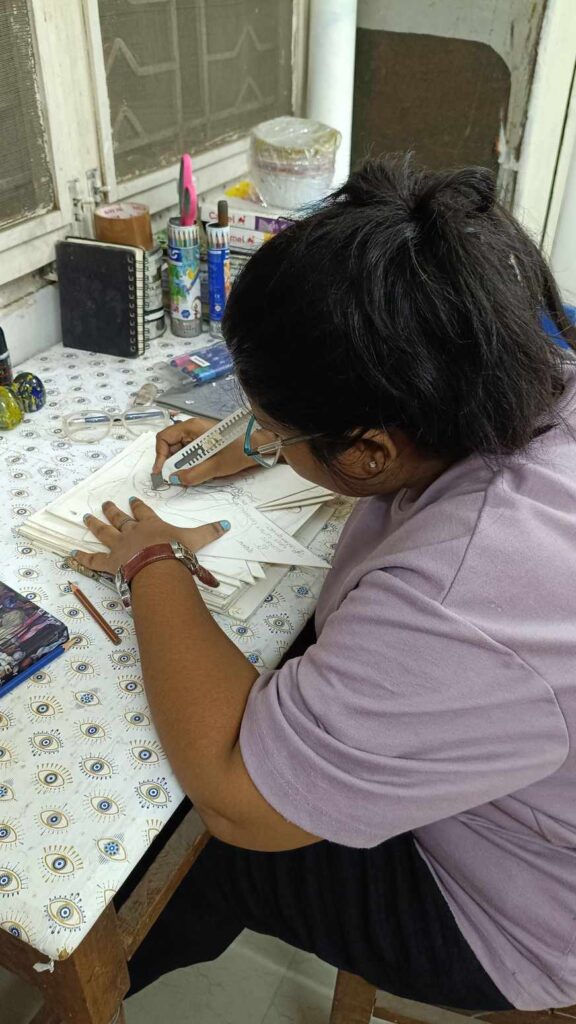
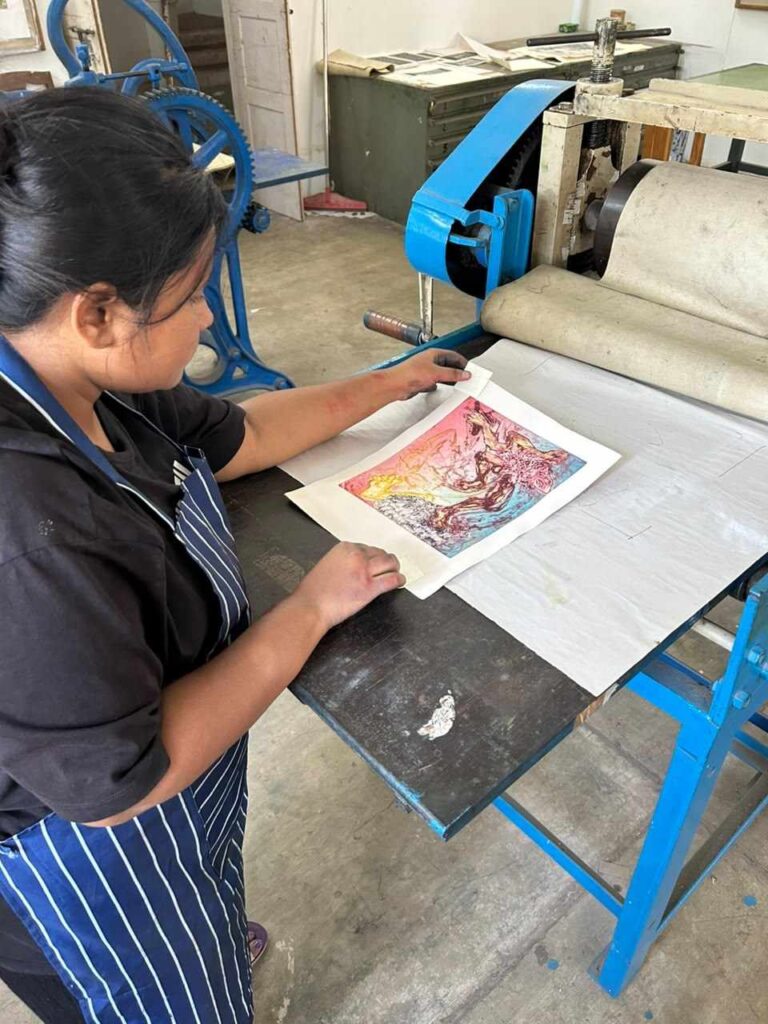
Carving, she says, creates a direct link between the image, the material and the hand. She keeps the force of the cut on purpose. It stands for people whose days are shaped by labour, repetition and pressure.
“The act of cutting, removing, pressing, and transferring the image becomes an important part of the meaning of the work.”
© Purabi Roy
© Purabi Roy
Out of the gallery
“I want every viewer to search for their own answer.”
© Purabi Roy
Next, she wants to take her video works into public places, where people meet them in daily life and not only in a gallery. She wants viewers to question the work and set it against their own lives. Her aim is to turn her practice into a social practice: to take part in society through her art, not only to show it.
Purabi Roy
Instagram @purabiroy_06
Read Issue Three, with all seventeen films →
More about Purabi →
Next in Issue Three
 First Year Out · DrawingCare, passed onJanani3 min read
The Raconteur is free for every reader and every artist. If you would like to help, you can give to Kalyani Kalakriti Foundation.
Watch Purabi Roy in her own words
Send Purabi a note.
A few words about their work mean a lot to a young artist. The team reads every note before it goes to Purabi.
Get the next issue every Monday.
Free, just your email.