© Janani
A kolam drawn in rice flour at the door of a home is also food for birds and ants. Janani draws that kind of everyday care, line by line, in pen: hands that hold, a paper fan and sparrows that are not yet sure of a new hand.
Five questions, five answers.
1. Where did the pen come from?
Janani grew up in the Nilgiris. She says it shaped the way she looks at the small details of everyday life. She studied painting at Karnataka Chitrakala Parishath in Bengaluru and graduated in 2025.
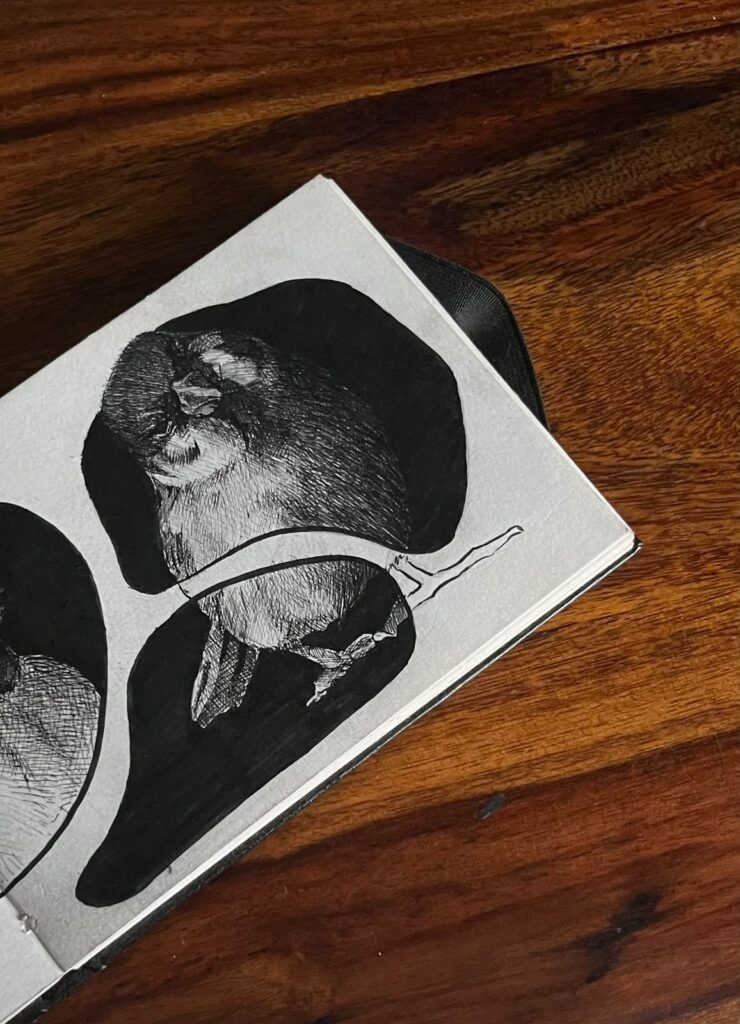
Yet nearly all her drawings are made with a pen. She began during the lockdown, when she spent long days at home. The pen also slows her down.
“Slowly building an image through repeated lines makes me spend a lot of time with the thought behind the work.”
2. What do the holding hands mean?
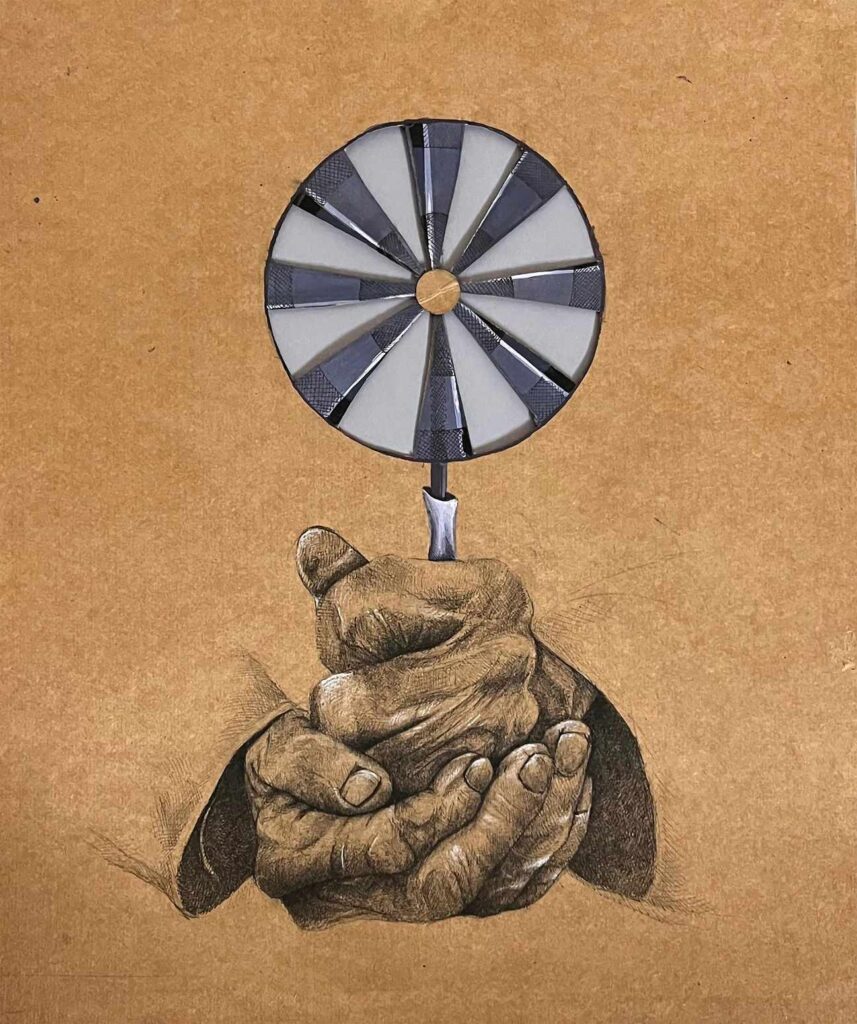
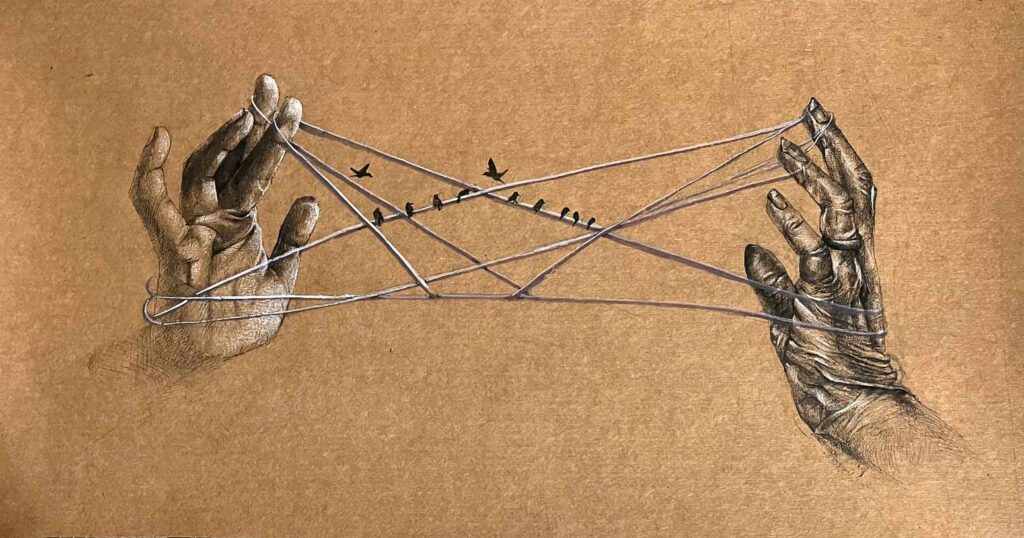
She sees her works as moments in one bond, not as separate stories. The first is childhood, as a place of safety. The paper fan is a child’s innocence. The hands around it hold, but they do not control.
For her the gesture is “a quiet promise of love and presence.” It is one of the small acts that make a childhood feel safe and that stay with us long after.
© Janani
© Janani
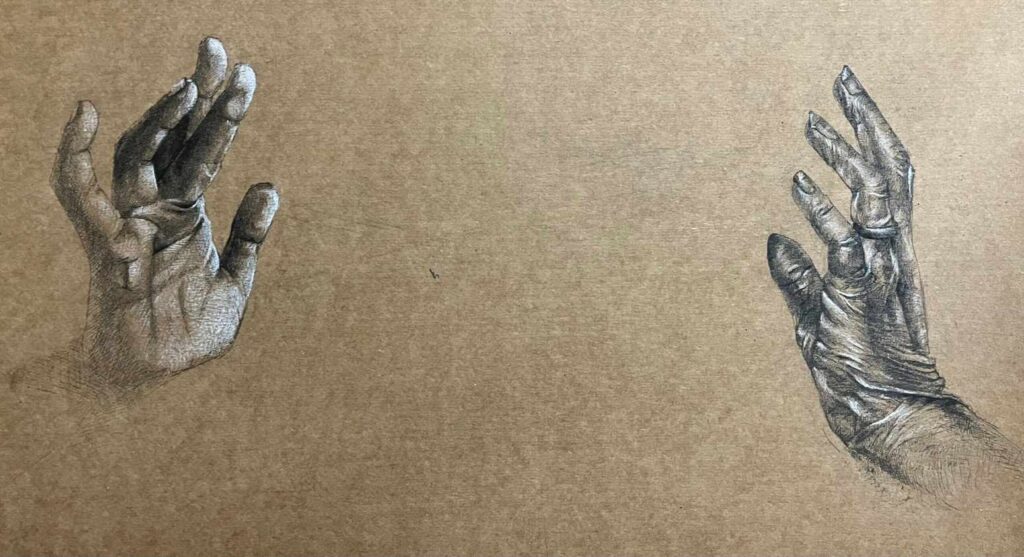
The second moment in the bond. The elder is no longer there and the younger one carries the care forward. Hidden in the drawing is a shape like a home, with birds flying around it.
3. What stays when someone is gone?
She grew up close to the elders around her and their care is what she keeps coming back to. For a long time she kept her feelings to herself. Then she began to turn memories into images. Drawing became a way to say what she could not put into words.
When she showed the works, people began to talk about their own grandparents and the elders who cared for them. She learned that a memory may belong to one person, but the feelings inside it are shared by many.
“The love and care they showed us will stay with us.”
© Janani
4. Why do the sparrows hesitate?
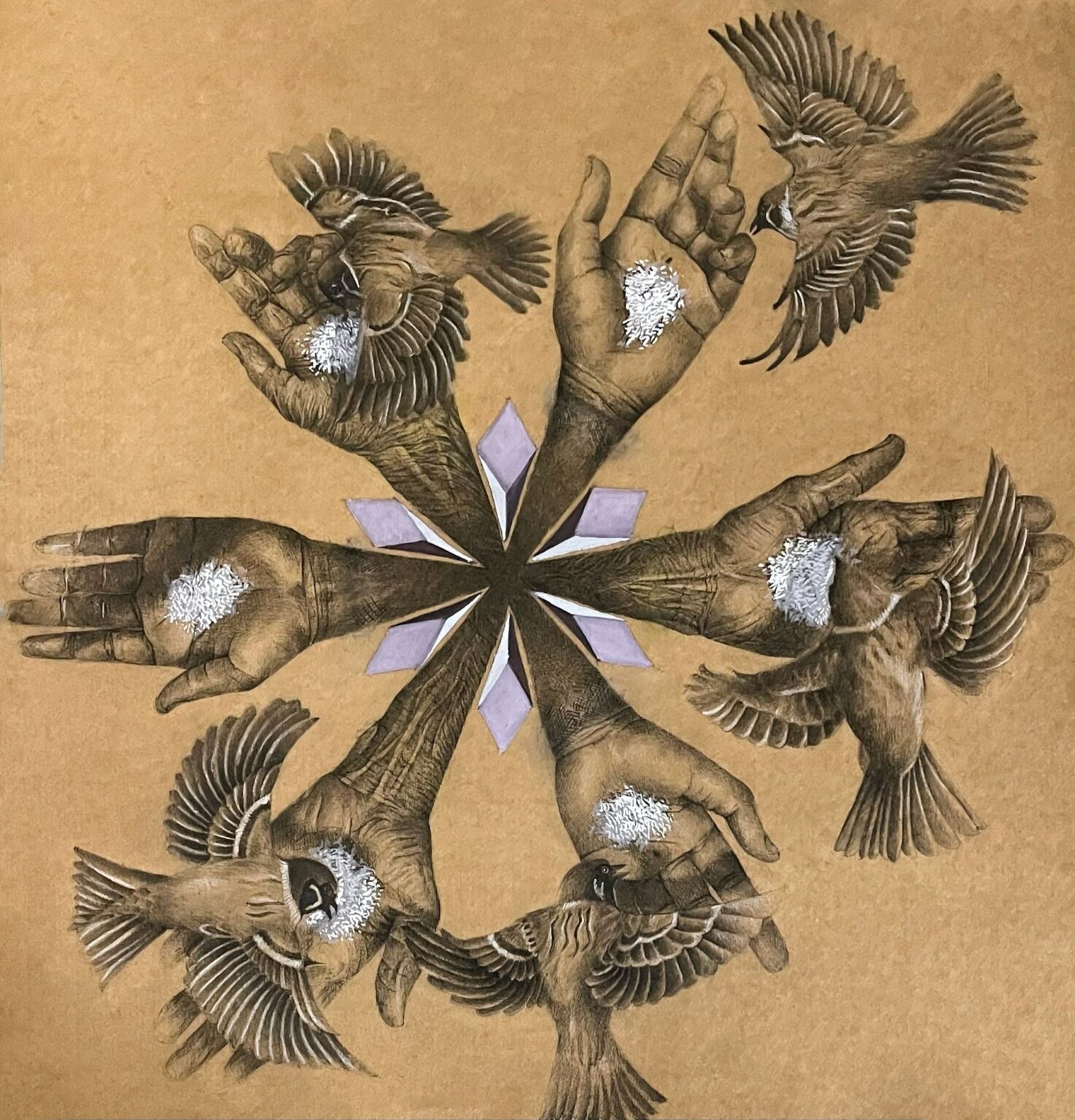
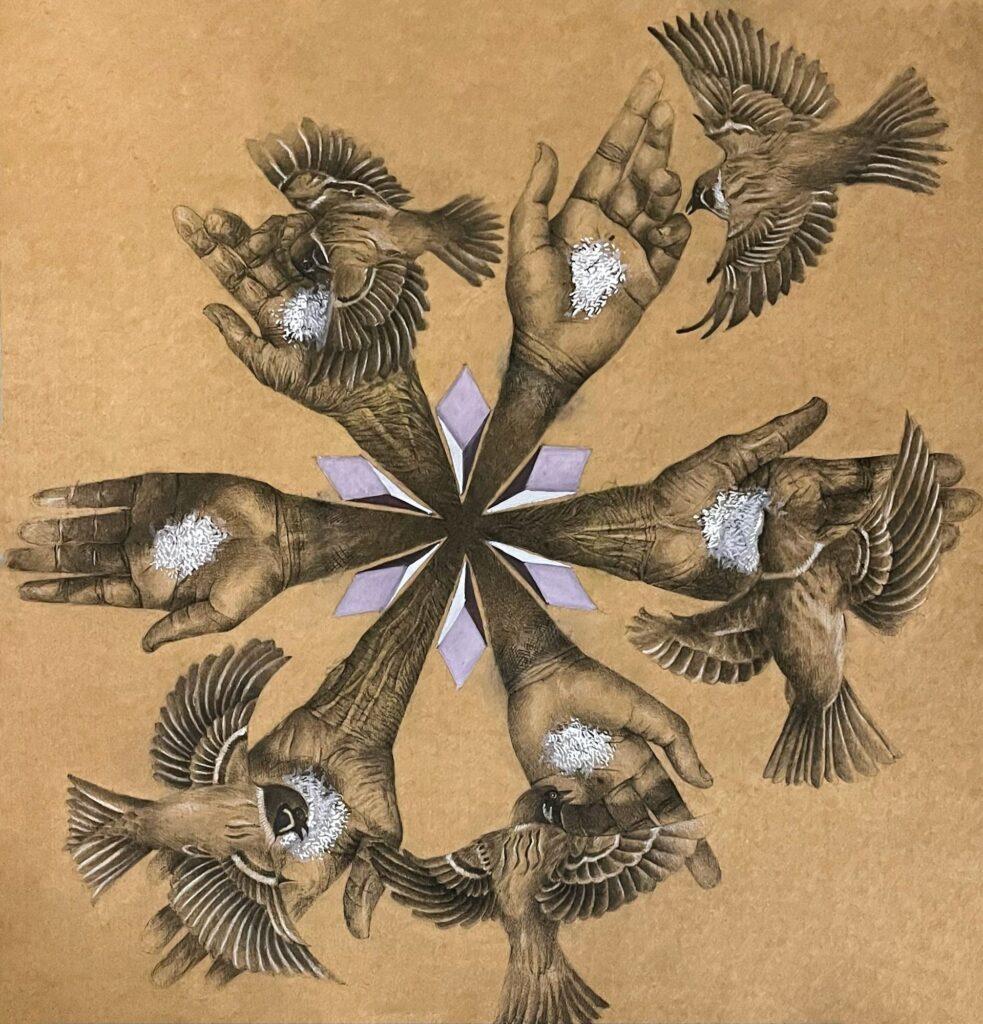
Feeding Birds began with her memory of kolams. Rice flour patterns at the door of a home are also food for birds and insects. She was drawn to that small act of giving.
Two hands sit in the drawing, an elder’s and a younger person’s. The sparrows have learned to trust the older hand. They are not yet sure of the new one, which is reaching out for the first time.
“Trust develops slowly through familiarity and repeated gestures of care.”
© Janani
The kolam sits at the threshold of a home: between what was given and what must now be carried on.
5. What can a drawing keep?
Cameras and phones can now keep almost any moment. Janani is interested in what they leave out.
“We can preserve an image of a person, record their voice, or keep a video of a moment, but we cannot truly record what it felt like to experience that moment.”
She wants to keep growing what she calls an emotional language and to find out how far it can go in new materials and forms.
Janani
Instagram @asethete_owl
Read Issue Three, with all seventeen films →
More about Janani →
Next in Issue Three
 The Long ViewLooking, with listeningProf. Tanmay Santra3 min read
The Raconteur is free for every reader and every artist. If you would like to help, you can give to Kalyani Kalakriti Foundation.
Watch Janani in her own words
Send Janani a note.
A few words about their work mean a lot to a young artist. The team reads every note before it goes to Janani.
Get the next issue every Monday.
Free, just your email.