Saroj Kumar Badatya is one of the four artists who chose this edition. Each week, one of them steps into The Long View.
Saroj’s work keeps coming back to grass, farming, climate change, folk culture and the knowledge of people who work the land. He makes woodcuts, drawings and videos.
When a grass disappears, he says, the language and culture around it disappear too. So when he meets a new grass, he looks at the soil. He collects soils to make his own pigments.
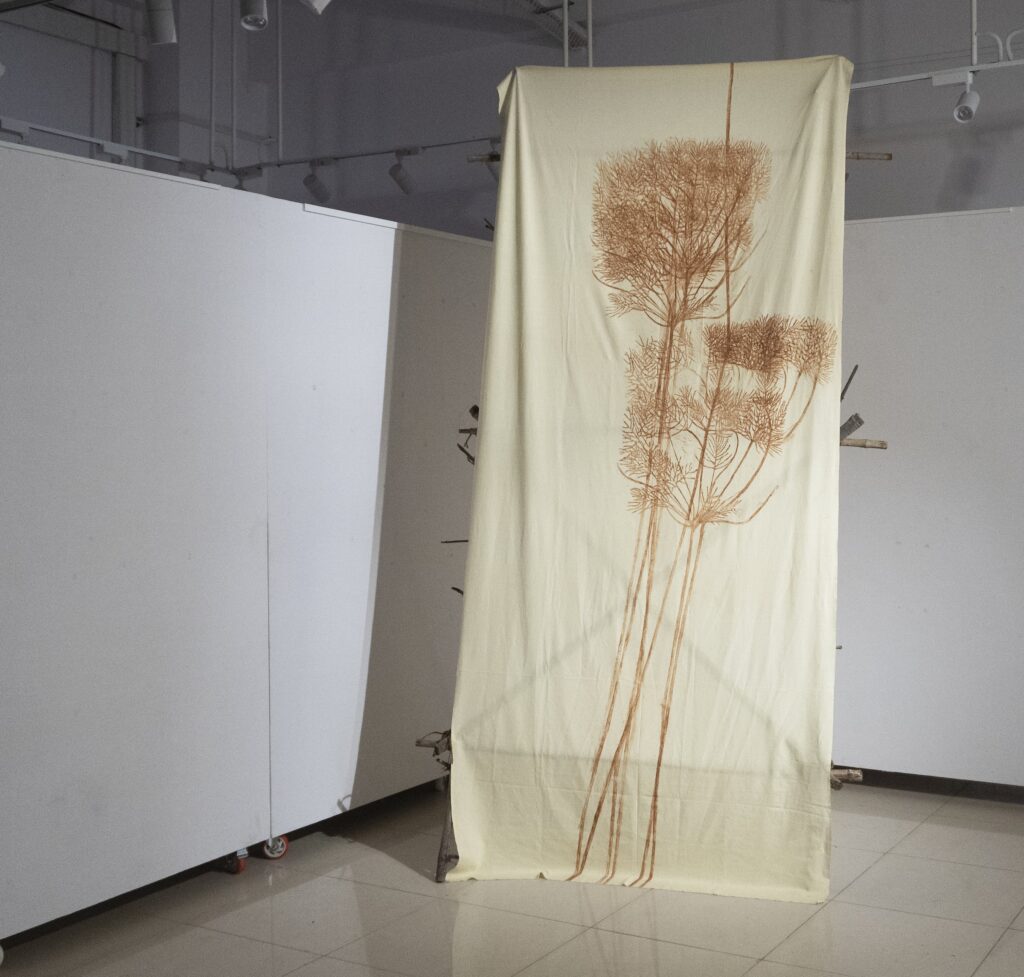
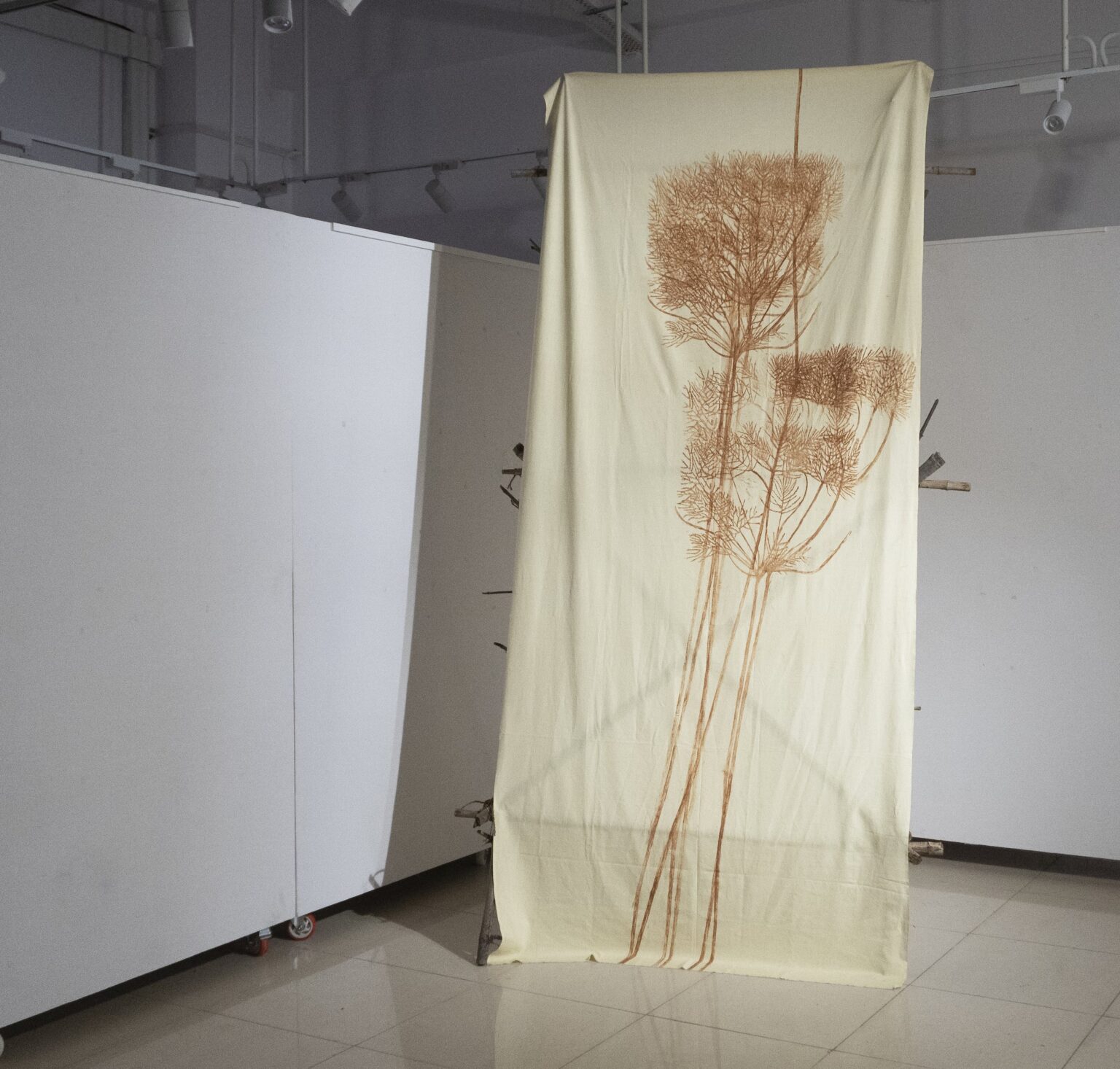
Ghasa is the Odia word for grass. Motha Ghasa is a woodcut printed on cloth. It is three metres tall. Every stem was cut into the wood by hand. He prints on cloth because it moves with the wind. “That makes my work feel alive.”
“Through grass I explore a place, its people, its stories and the hidden stories of farmers and climate,” Saroj says. Finding pigment, he says, “is very engaging. It helps me explore and understand the surrounding environment more closely.”
Saroj did his master’s at the Sarojini Naidu School of Arts and Communication, University of Hyderabad. Later he taught there as Visiting Faculty. He knows what happens to many students after the degree show. “Many art students complete their studies, but most of them cannot continue their practice because of economic difficulties.”
On the panel
Edition One was Saroj’s first time on a jury. “While selecting the artwork, I first looked at the visual aspect of each work, the colour, material and subject,” he says. “Then I considered how the artist’s concept was translated into a visual form, and how deeply they had engaged with the ideas behind the work.”
“An image should be more powerful than text.”
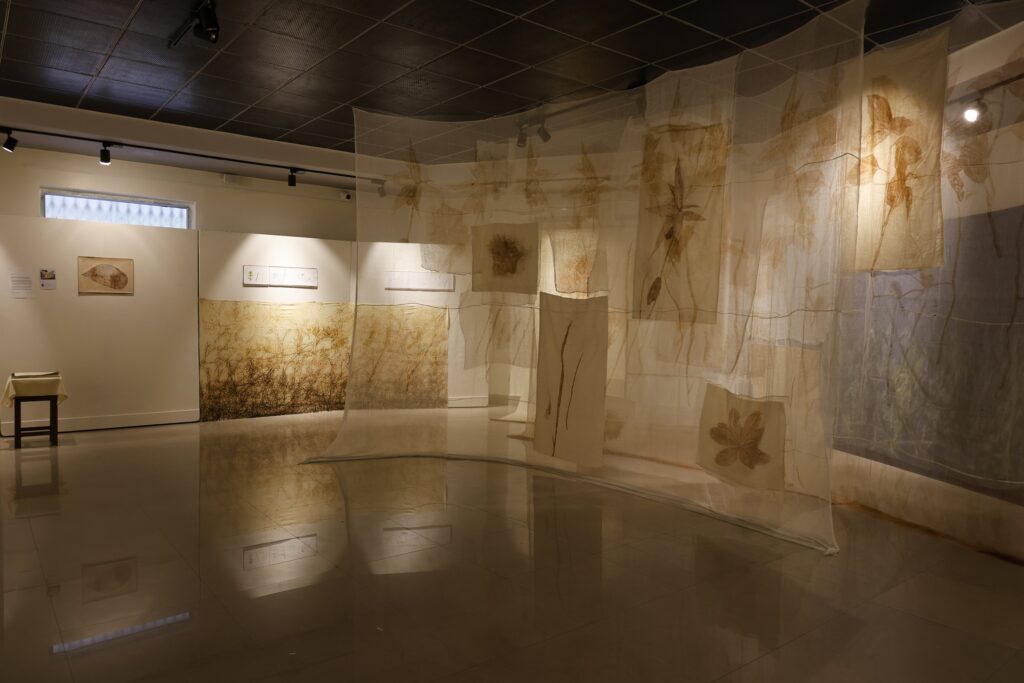
Read Issue One, with all eight films →
More about Saroj →
Send Saroj a note.
A few words about their work mean a lot to a young artist. The team reads every note before it goes to Saroj.
Get the next issue every Monday.
Free, just your email.