© Sayali Eknath Khanvilkar
Sayali Eknath Khanvilkar has always lived in Mumbai. She finished art school this year. We call our rivers mothers and goddesses, she says. Then we fill them with waste. Her paintings ask what we will be remembered by.
Four questions, four answers.
1. Where did the question start?
© Sayali Eknath Khanvilkar
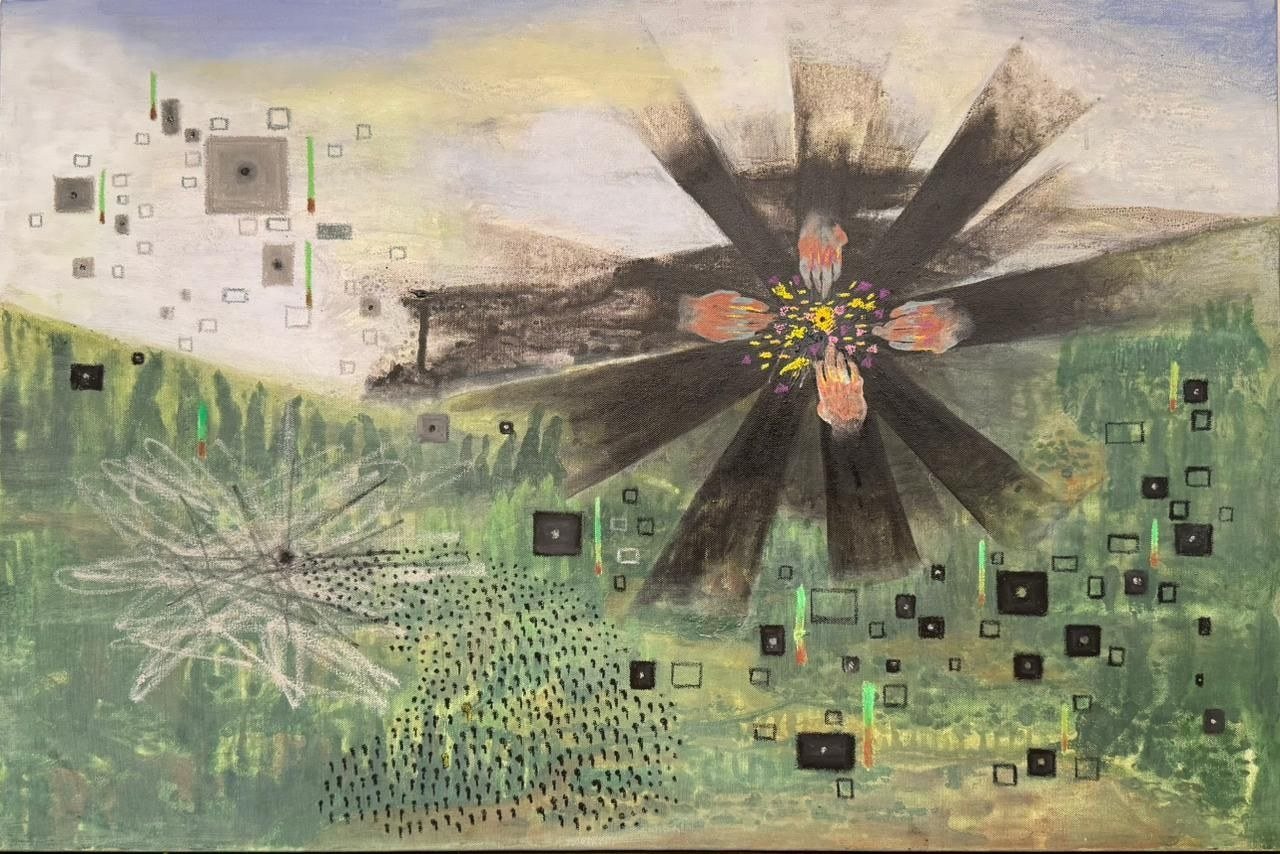
She has seen rivers that people now call drains. Sewage, garbage and the waste left after rituals go into them. “We praise Ganga and Yamuna, rivers, as our mothers and goddesses,” she says. What we do to them does not match.
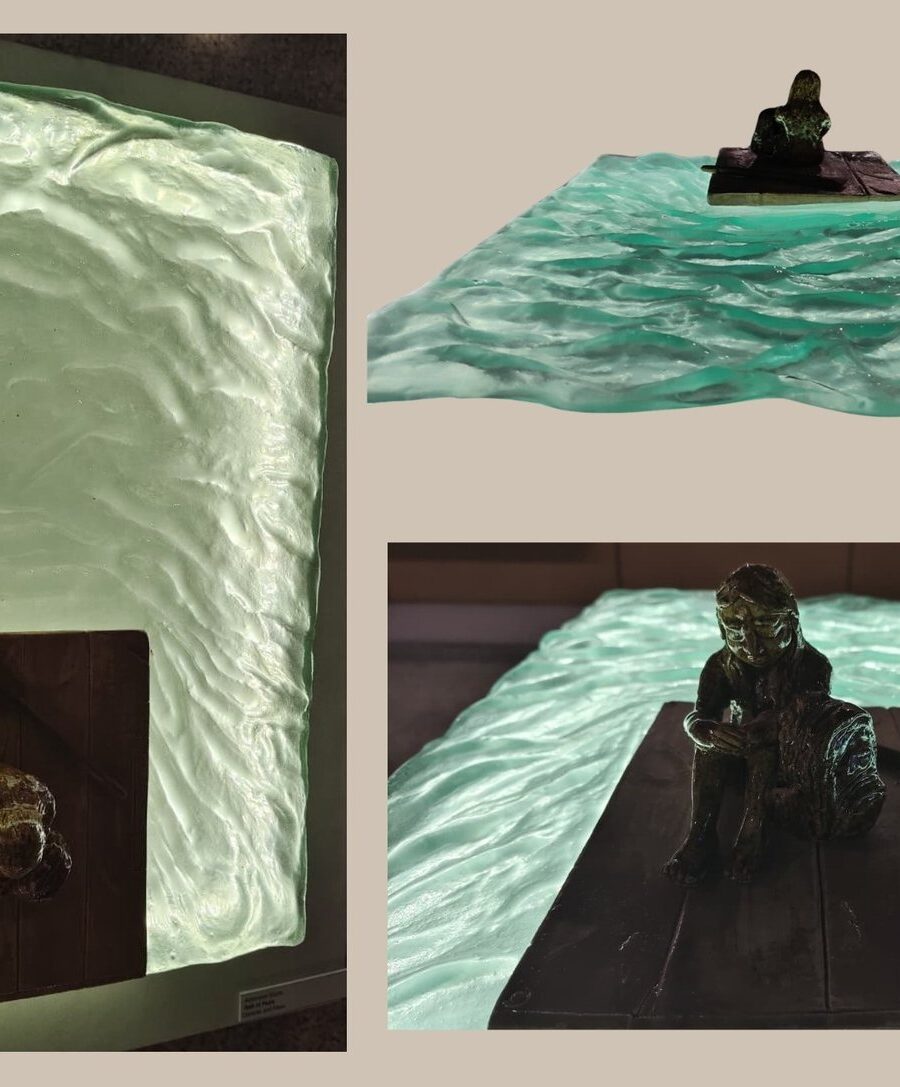
In Faith or Act the wires work like the hooks of a fishing net: always taking from the river, giving nothing back.
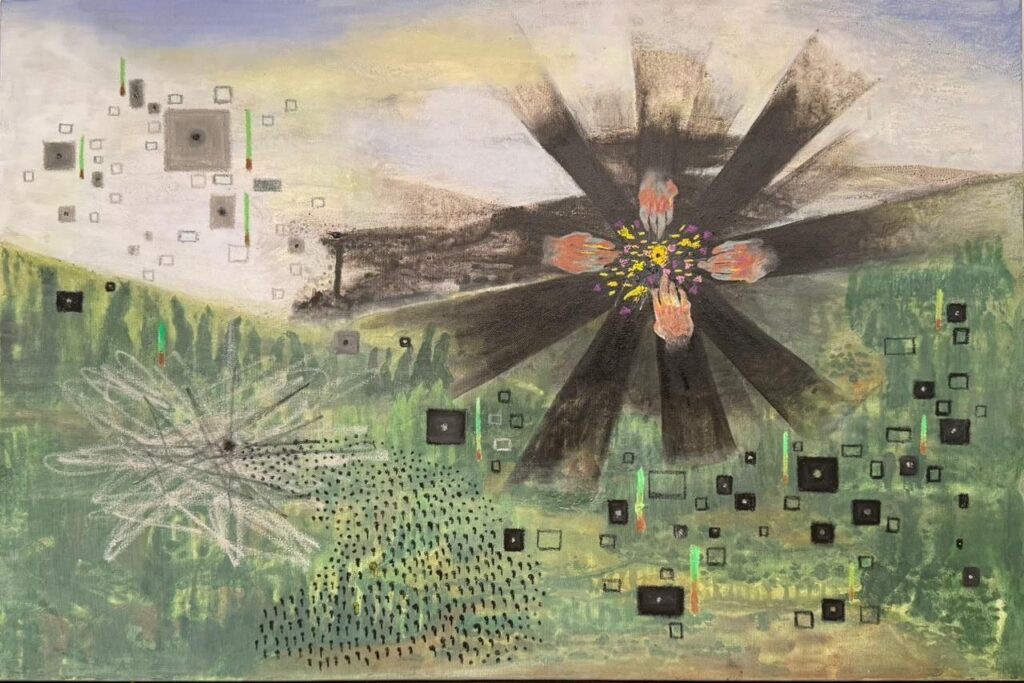
Layers of white
“During my trip to Shimla, I experienced layers of white, layers of pollution that stayed in my mind.”
© Sayali Eknath Khanvilkar
She experienced mountains in Shimla and found pollution among them too. Back home in Mumbai she saw the same haze and a city growing “at the cost of leaving our environment behind.” She built the painting up in veils of white acrylic and pastel, layer on layer, like the haze itself.
2. What did the fish teach her?
For Faith or Act she made fish out of bioplastic. She wanted to spread the word about things that break down in nature. The fish reacted to moisture and the experiment failed.
She is not sad about it. “This experiment taught me how the experiments should be more precise,” she says.
“Failure is also a mentor.”
© Sayali Eknath Khanvilkar
3. Why is every print different?
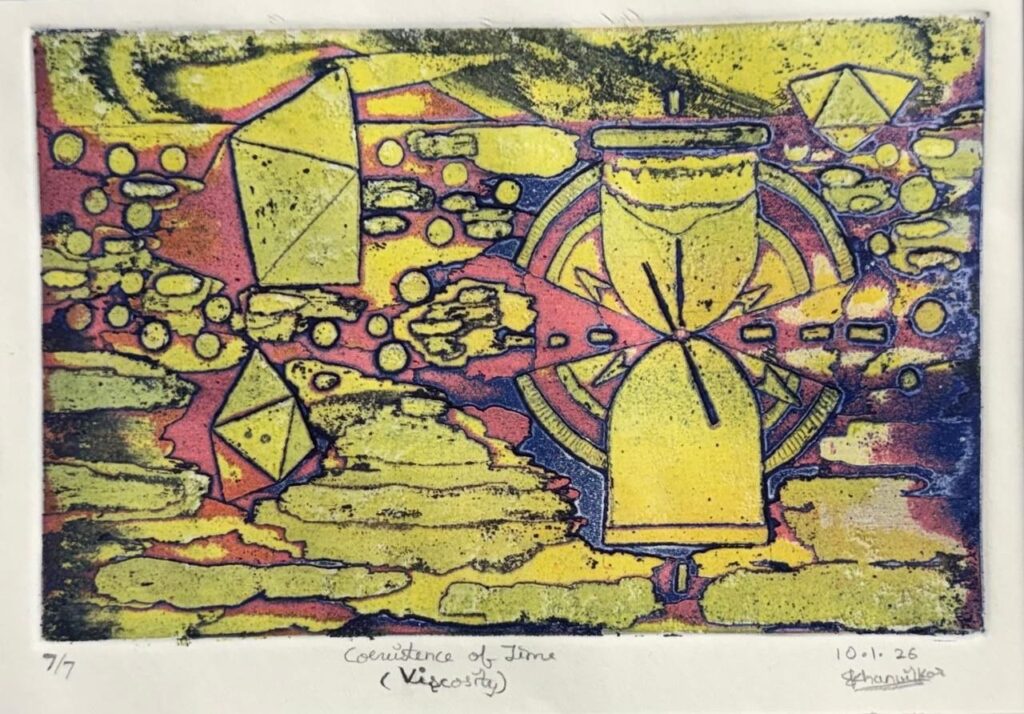
Her favourite process is viscosity printing. She prepares a metal plate, inks it and then rolls more colours over it with three rollers: hard, medium and soft. Each roller presses differently, so the colours sit in different layers. Then the plate goes through the press.
“It is a calm but very exciting process where you never fully control everything,” she writes, “and that surprise is what I enjoy the most.”
© Sayali Eknath Khanvilkar
© Sayali Eknath Khanvilkar
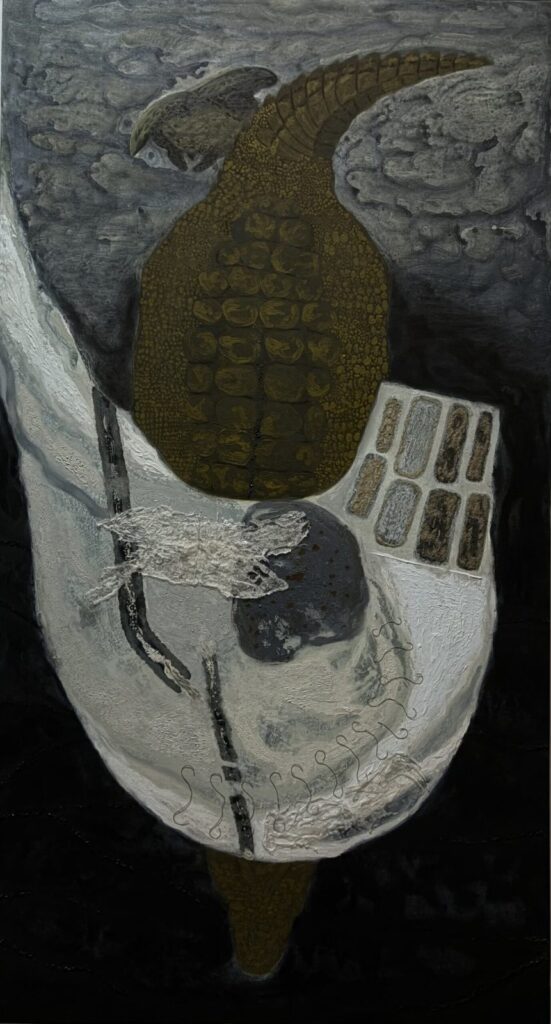
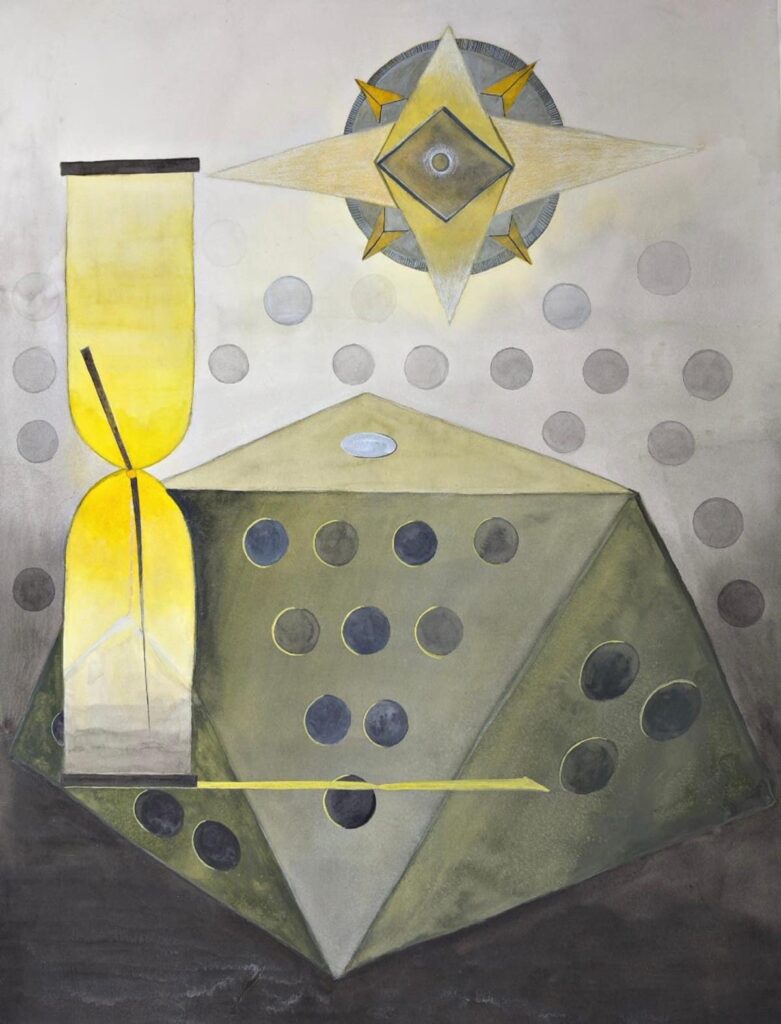
A die, an hourglass and a compass stand for time, “always changing and never stable.” As time moves, she says, we move with it and forget what we owe to nature.
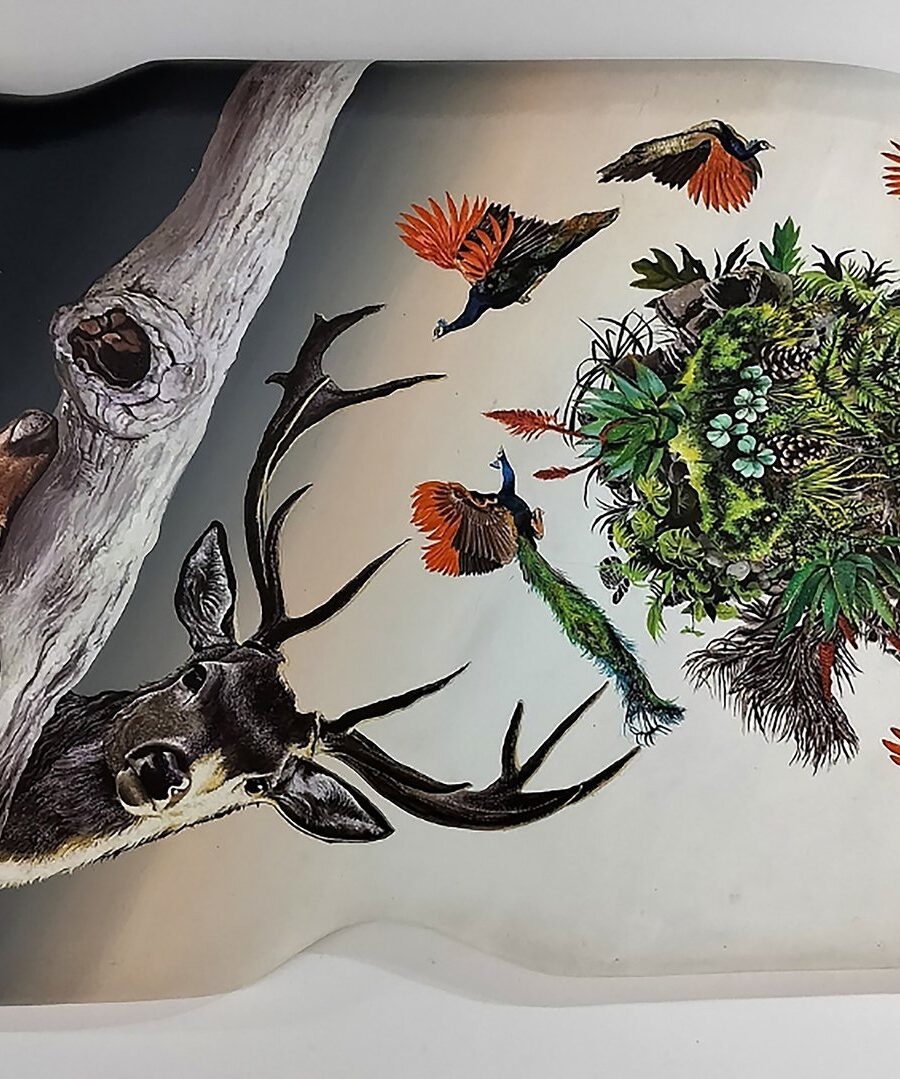
She sees one idea in all her works: “the duality of human nature.” We live with nature and we use it up.
“My practice is not about shouting, but about questioning.”
4. What would she tell young women artists?
“Don’t lose any hope and keep on working with whole energy.”
She thinks of young women coming out of art schools. She hopes her work shows that a subject as large as ecology can be told through small, personal things: being close to someone, being apart, a touch.
She wants her work to reach people outside galleries too. Next, she wants to try more sustainable materials.
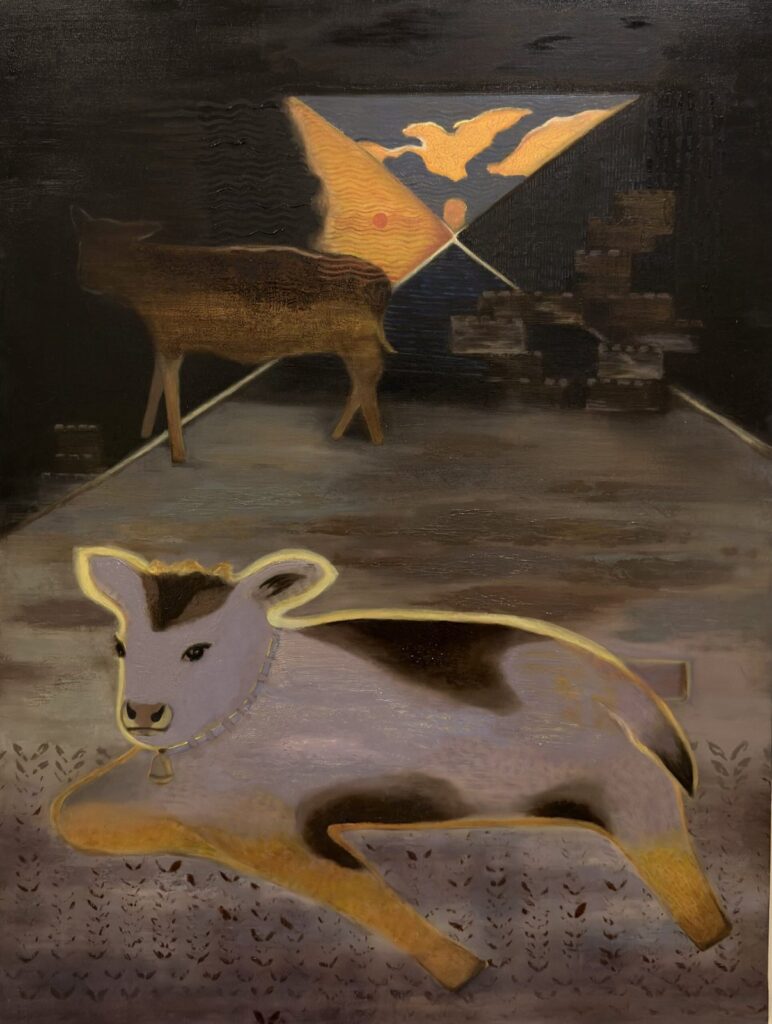
© Sayali Eknath Khanvilkar
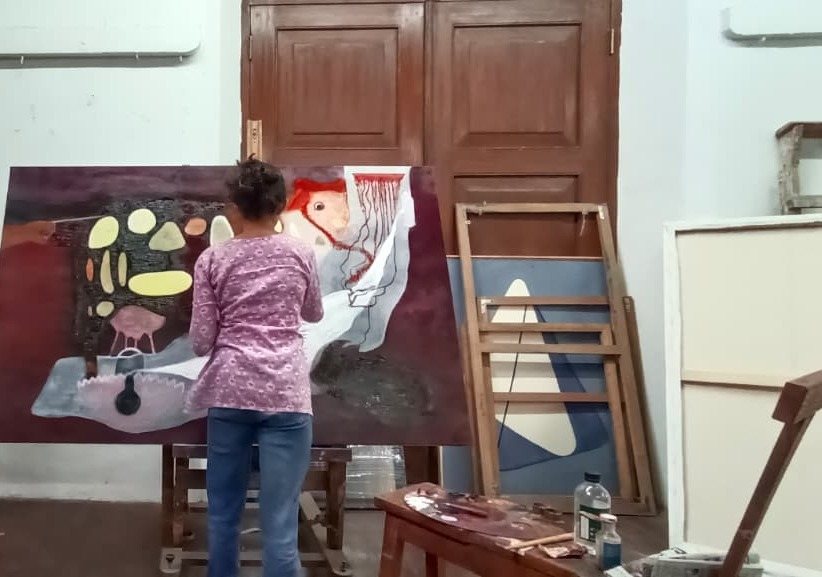
In the studio
© Sayali Eknath Khanvilkar
© Sayali Eknath Khanvilkar
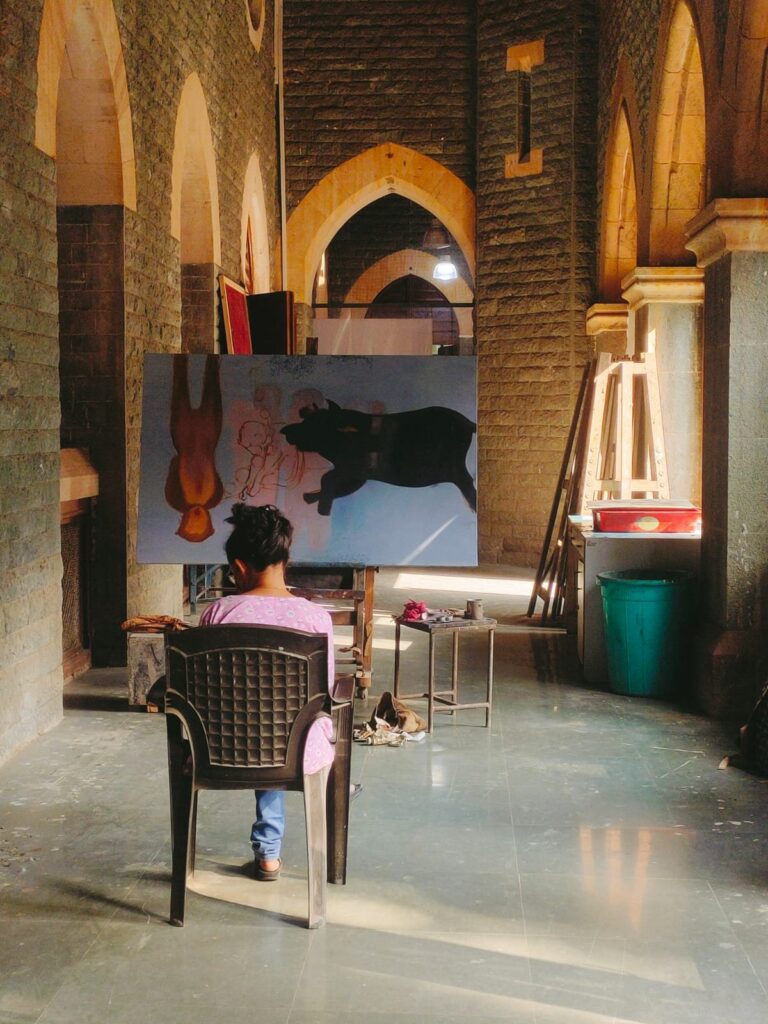
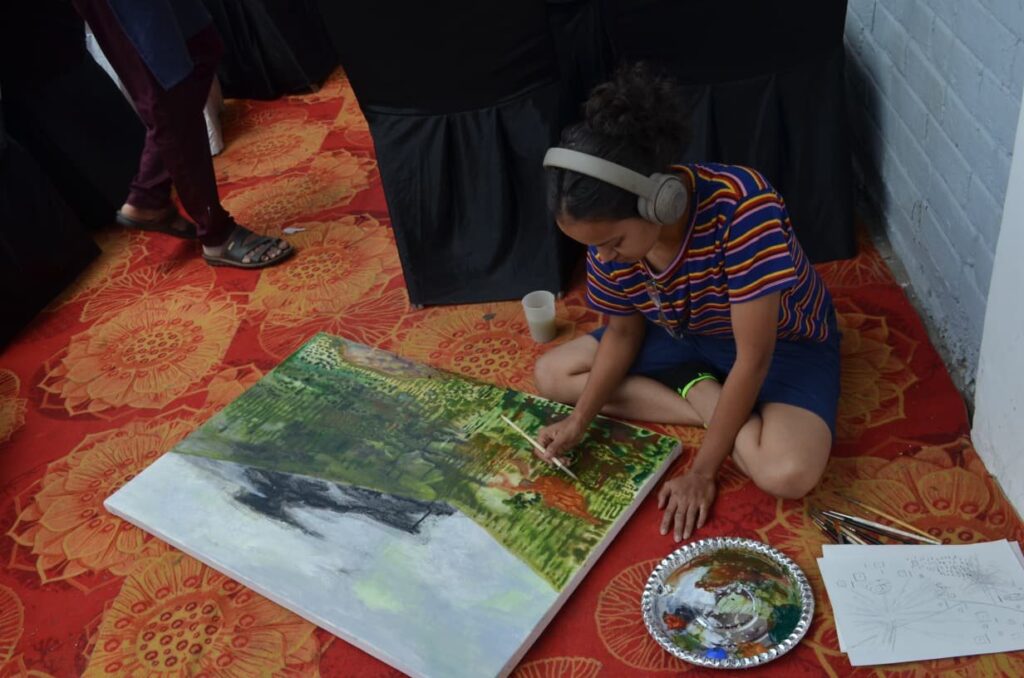
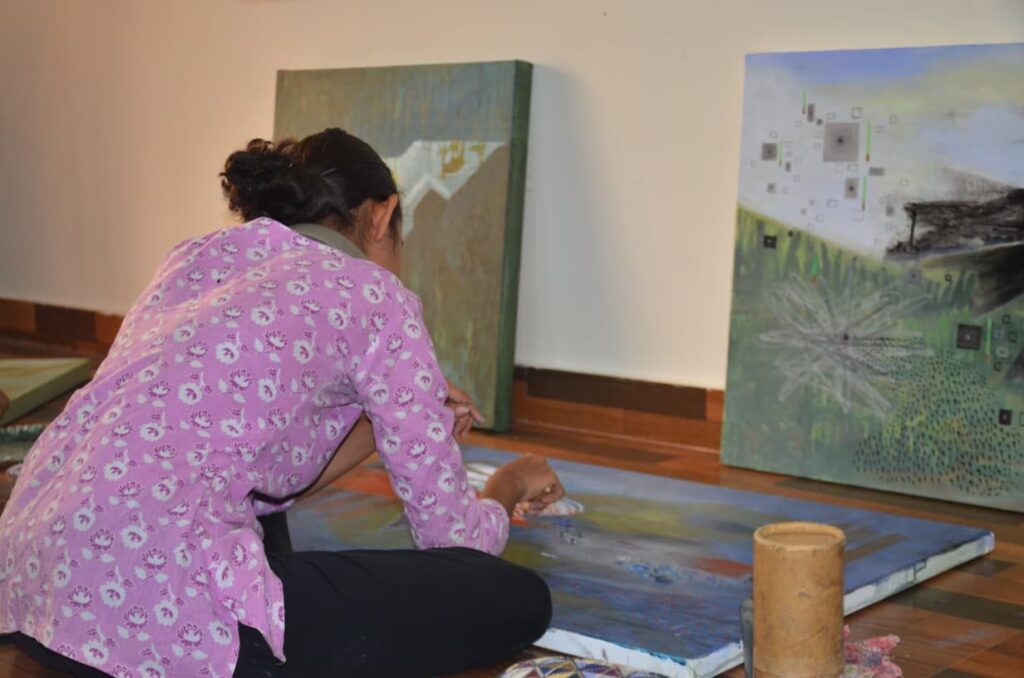
She paints standing at the easel, sitting on a chair and down on the floor, often with more than one canvas on the go.
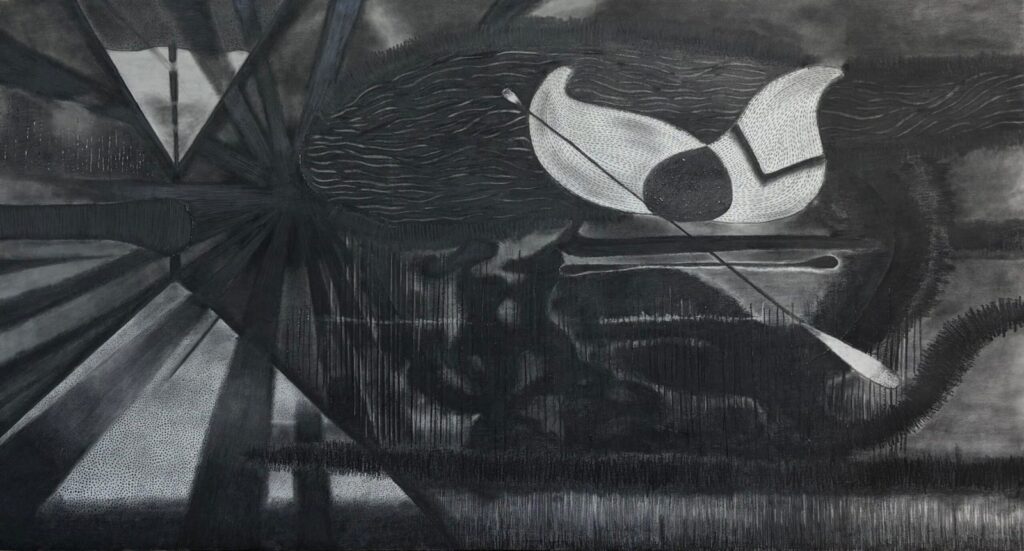
More from the studio
© Sayali Eknath Khanvilkar
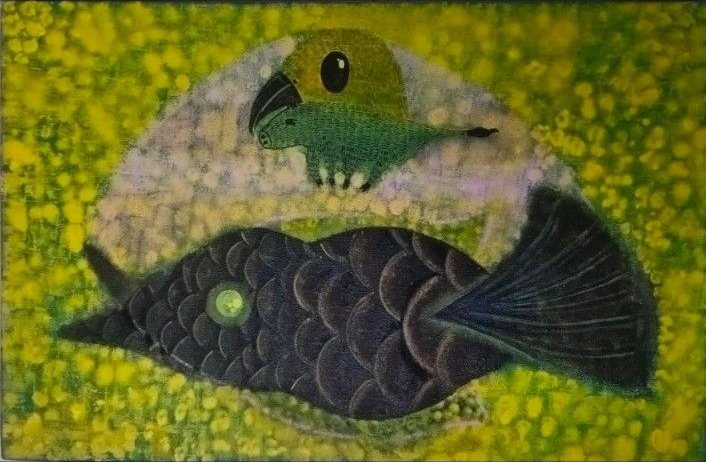
© Sayali Eknath Khanvilkar
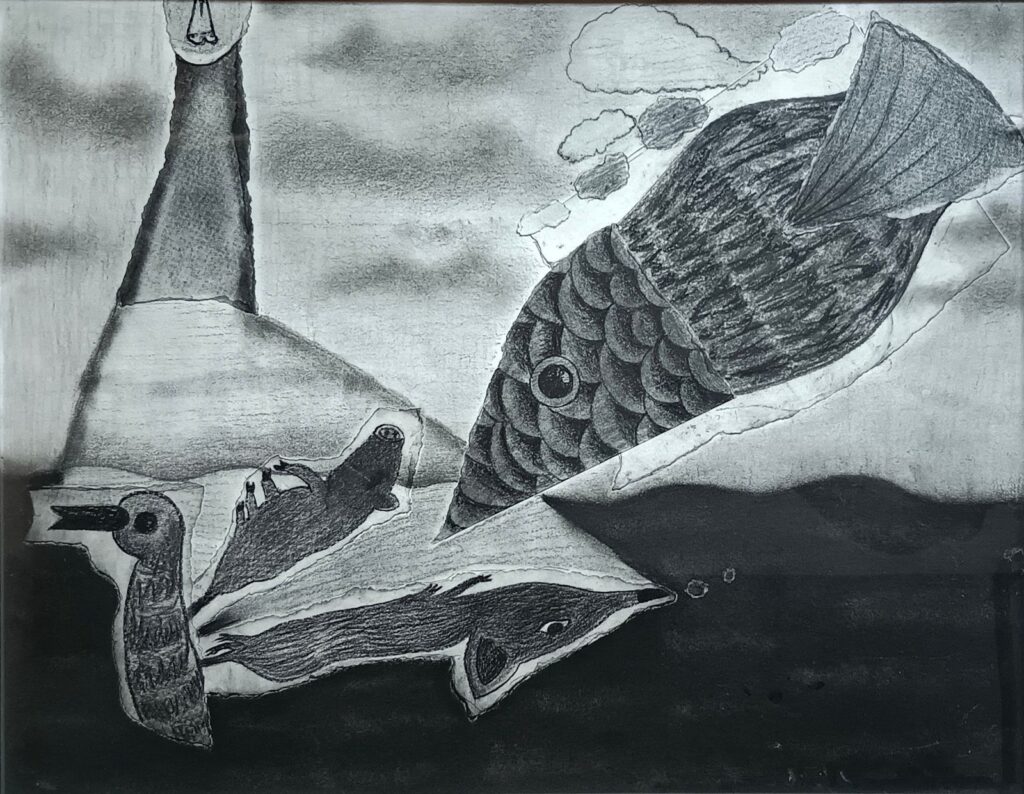
© Sayali Eknath Khanvilkar
She calls this “a transition phase.” She is now studying for a Diploma in Art Education, to understand art “as both practice and pedagogy.”
Sayali Eknath Khanvilkar
Instagram @_sayali_._.__
Read Issue Four, with all eighteen films →
More about Sayali →
Next in Issue Four
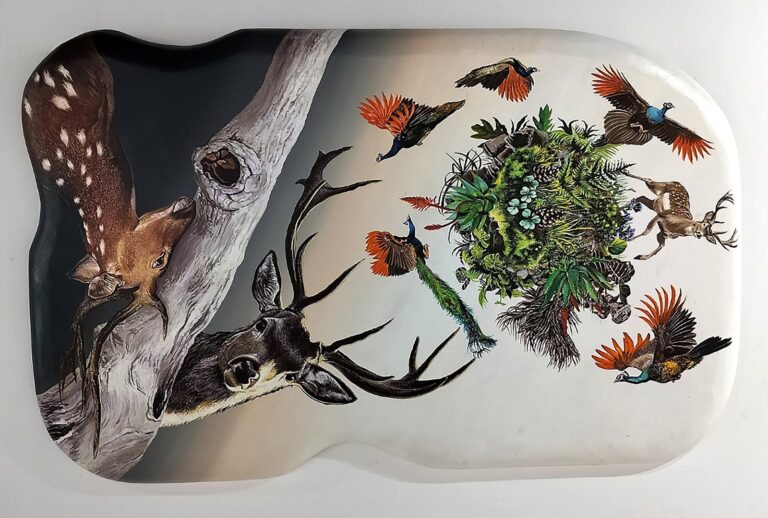 The Long ViewLight into motionProf. Satadru Sovan Banduri2 min read
The Raconteur is free for every reader and every artist. If you would like to help, you can give to Kalyani Kalakriti Foundation.
Send Sayali a note.
A few words about their work mean a lot to a young artist. The team reads every note before it goes to Sayali.
Get the next issue every Monday.
Free, just your email.