© Kotha Revanth
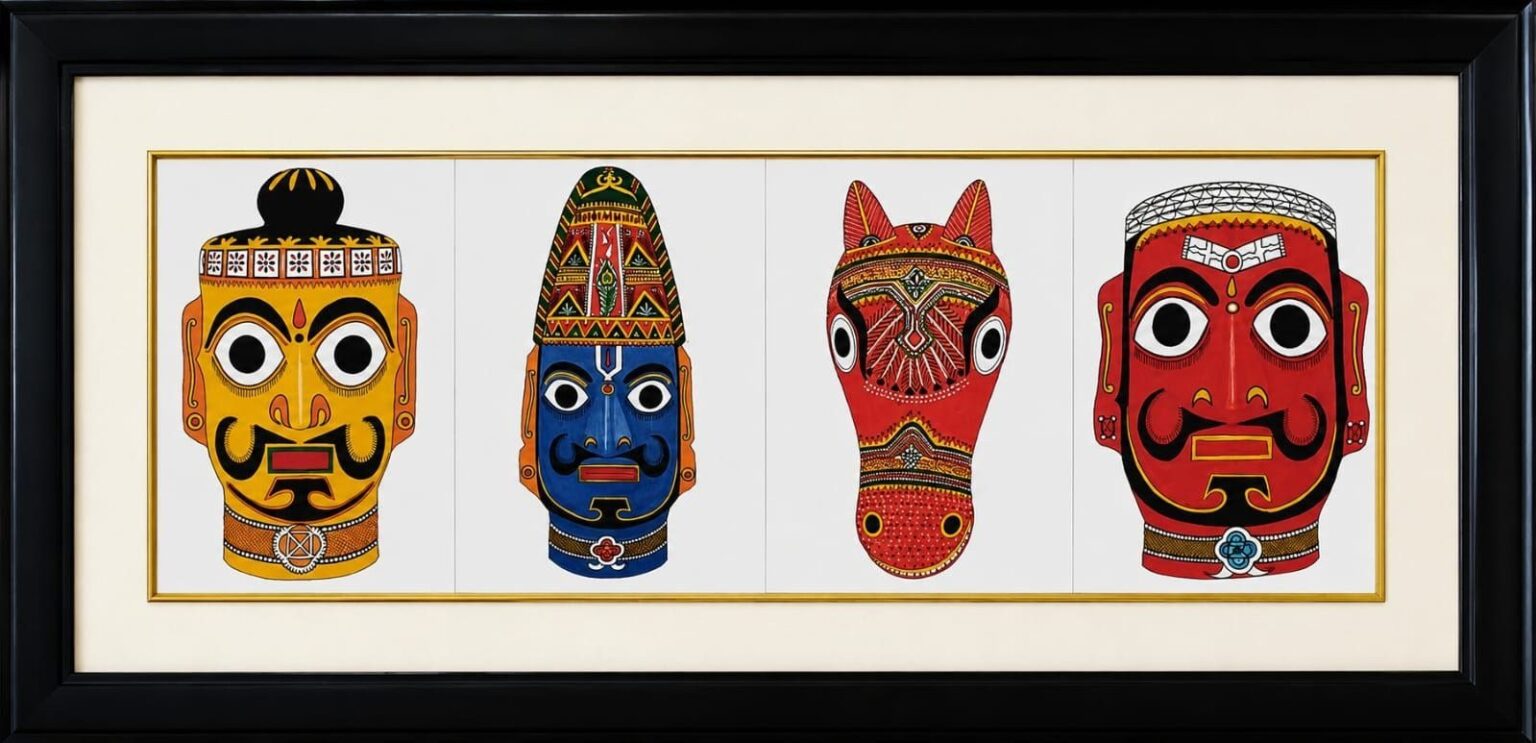
In the Naikpod community of Telangana, a mask is not a decoration. It is a God. People wear it on the head and dance to the drums. Kotha Revanth grew up with these masks. Now he paints them, on paper, on canvas and on mats woven from palm leaves.
Four questions, four answers.
Art is God
“Growing up in a tribal community, I learned that art is the sacred part of our everyday life.”
© Kotha Revanth
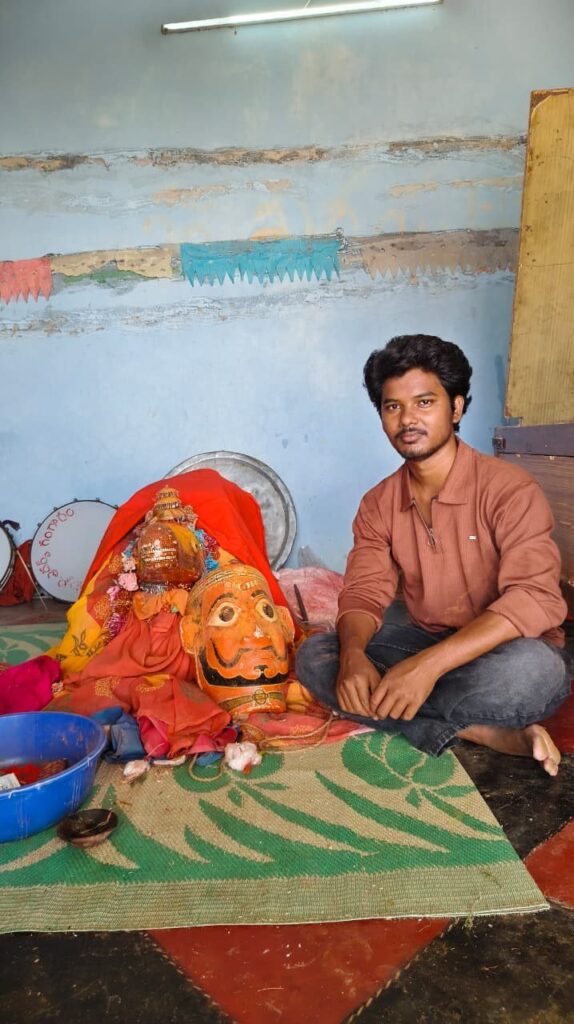
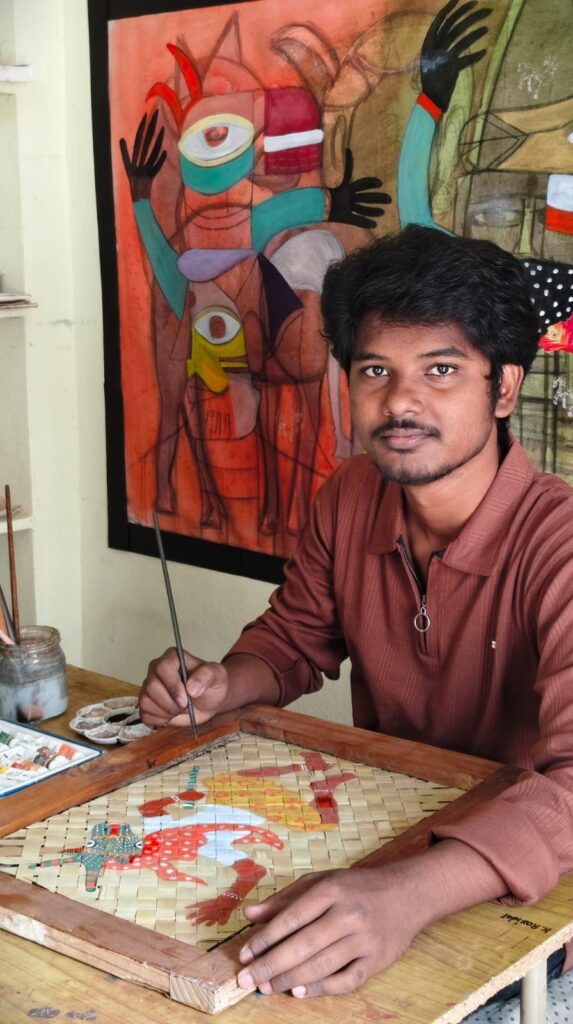
His father is an artist and an art teacher. Revanth began by watching him work. He did his BFA in painting at the same university where he now studies for his MFA.
1. Why is a bison a God?
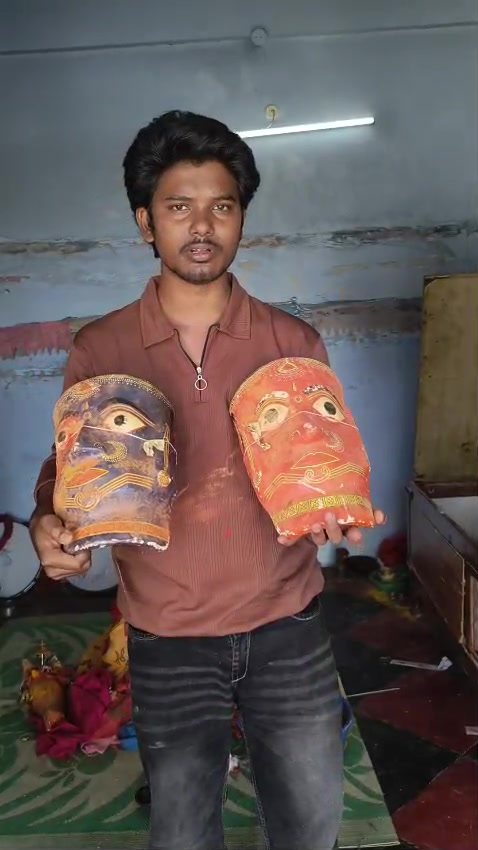
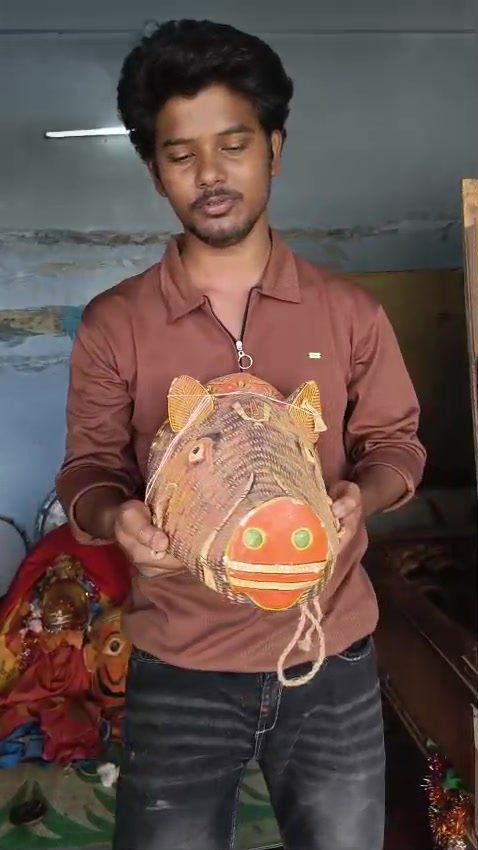
Revanth holds up a mask with the horns of a bison. Long ago, he says, bison came into the fields of the Naikpod people and ate the crops.
“Instead of punishing the animal, they used to worship the bison as a God.” They named the God Gurrapothu.
The mask is covered in fine lines and dots. The colours, he says, come from natural minerals.
“We worship animals as Gods.”
2. Who are the masks?
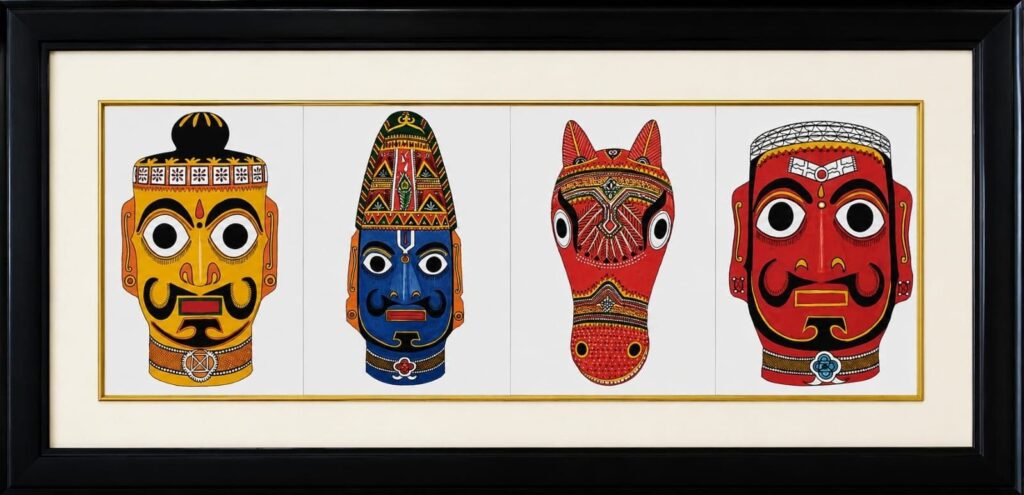
Lakshmi Devara is the main goddess of his community. Pothuraju is her brother. Singaboyudu is the leader of the people and a king. “We worship the king as a God,” Revanth says. There are masks for the five Pandavas too. In the story he tells, they lived with the Naikpod and helped them in their fields.
The masks are finished with a paste of tamarind seeds. Then the Nakashi artists of Cheriyal paint them with natural colours and fine brushes. At the festival, people wear the masks on their heads and dance to the drums.
© Kotha Revanth
3. Why paint on a palm-leaf mat?
© Kotha Revanth
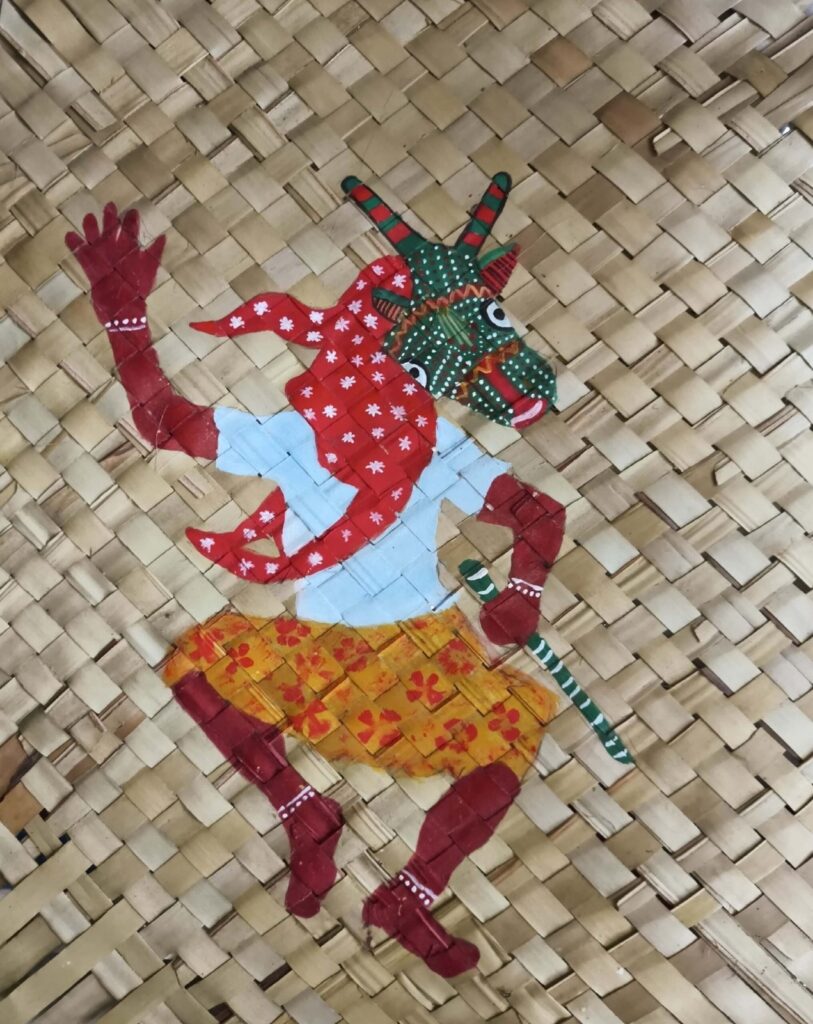
The mat is woven by hand in a tribal region. He paints on it in acrylic and lets the weave show through. The dots are made with a pen. “These dots are inspired from the tribal masks,” he says. The masks are covered in patterns that repeat and he brings them into the painting.
© Kotha Revanth
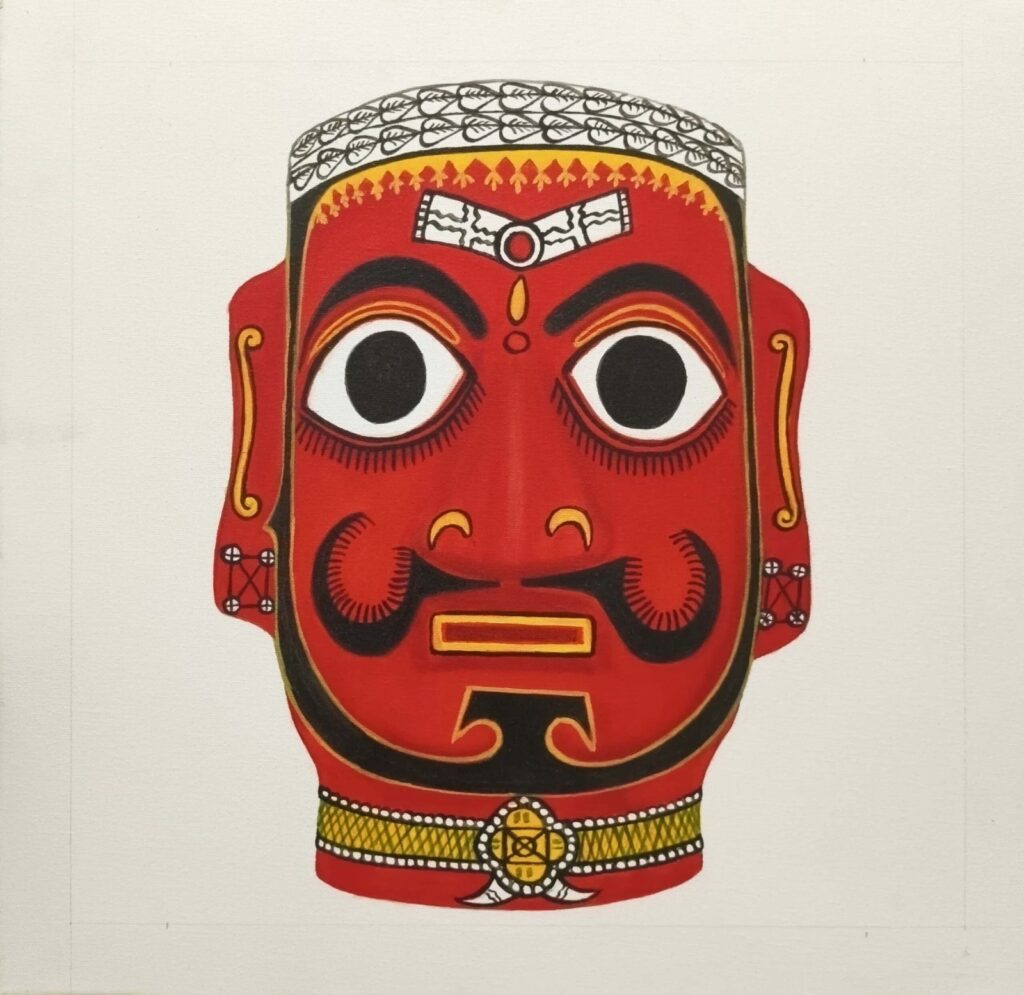
“I studied the Naikpod masks very closely,” he says: “their faces, their expressions and the colours.” He chose watercolour for these faces because it is clear and light. It let him follow the small details of each mask.
“I want the cultural elements to remain meaningful and authentic without making the work feel like a simple documentation of tribal life.”
4. What if a painting loses its way?
© Kotha Revanth
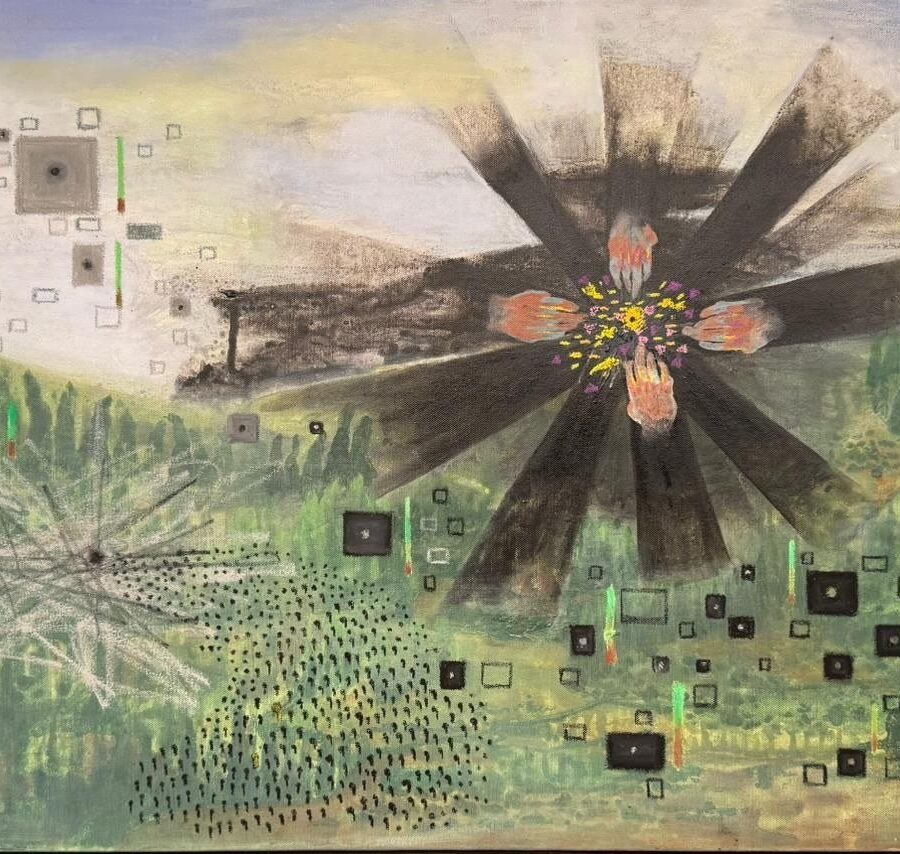
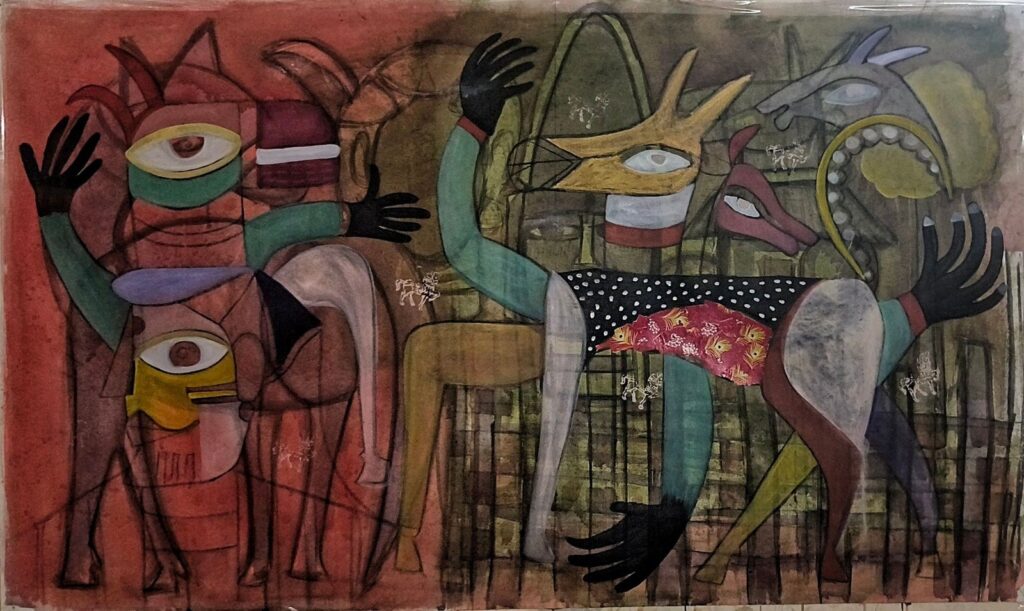
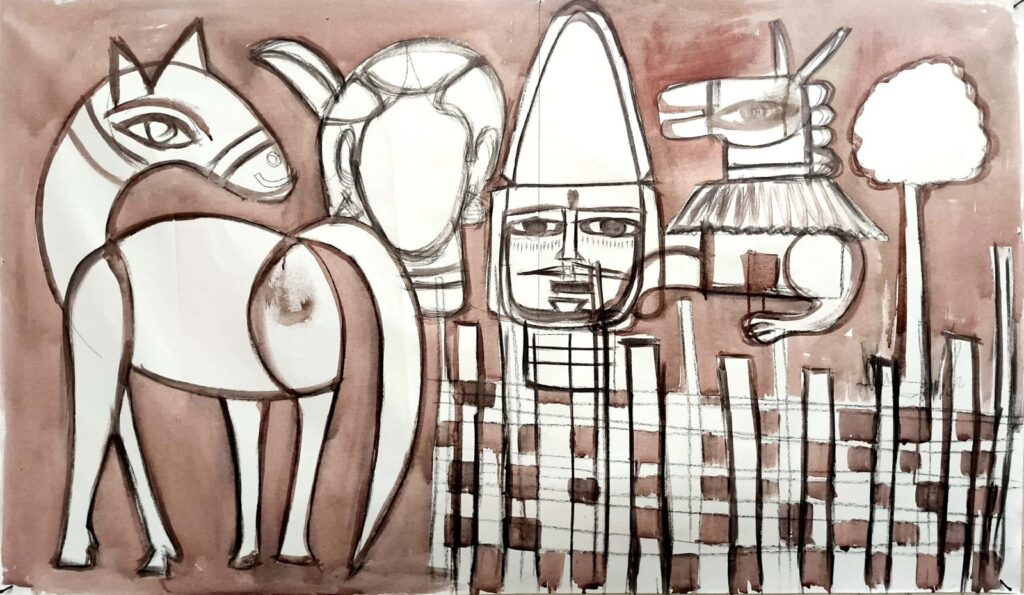
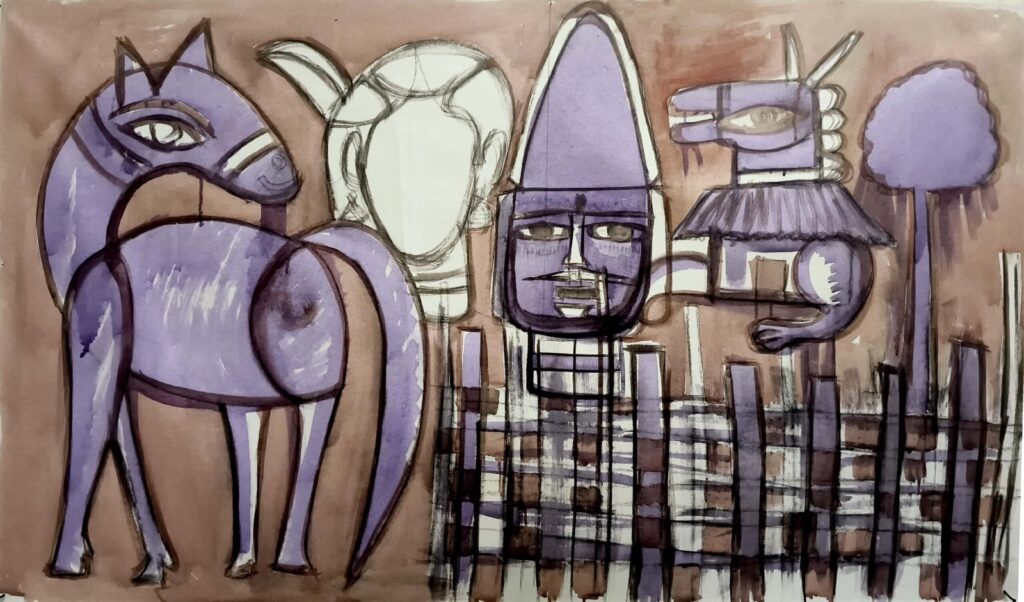
He began with figures, painted white over them and drew some back in charcoal. Then came colour and dots from the masks. Halfway, the painting stopped working. “Instead of removing everything and starting again, I decided to respond to what was already on the surface.” The marks he took for mistakes began to help. “I did not need to control every stage of the painting.”
© Kotha Revanth
© Kotha Revanth
The Gods he grew up with
© Kotha Revanth
© Kotha Revanth
In the short films he sent us, Revanth lifts each mask to the camera, turns it and tells us its name and its story. These are the faces that return in his paintings.
More from the studio
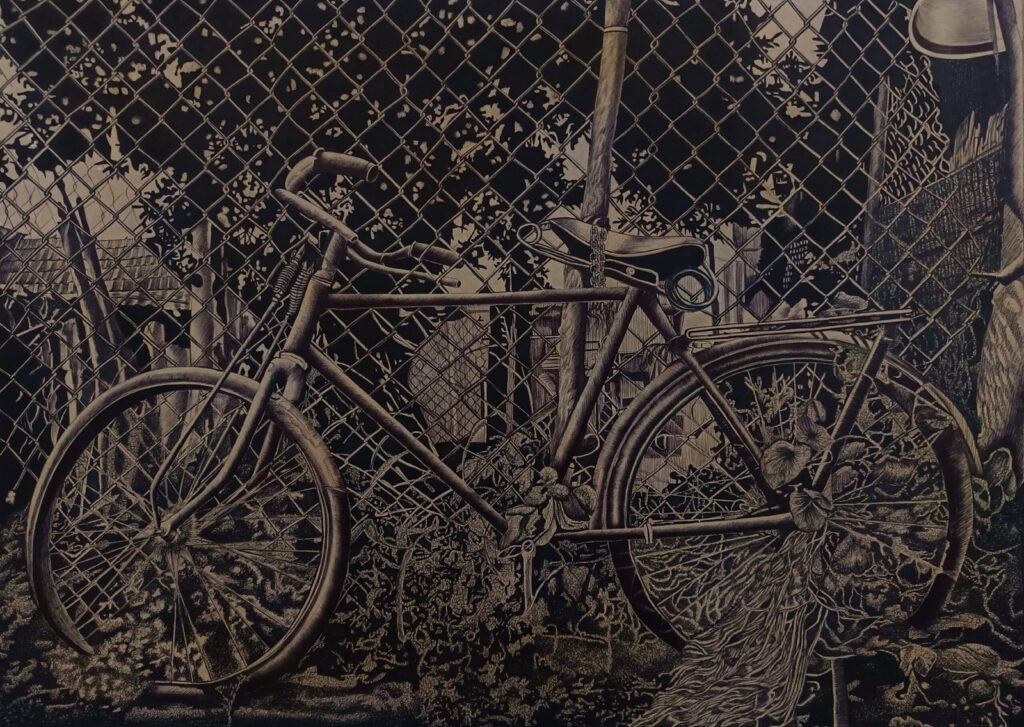
© Kotha Revanth
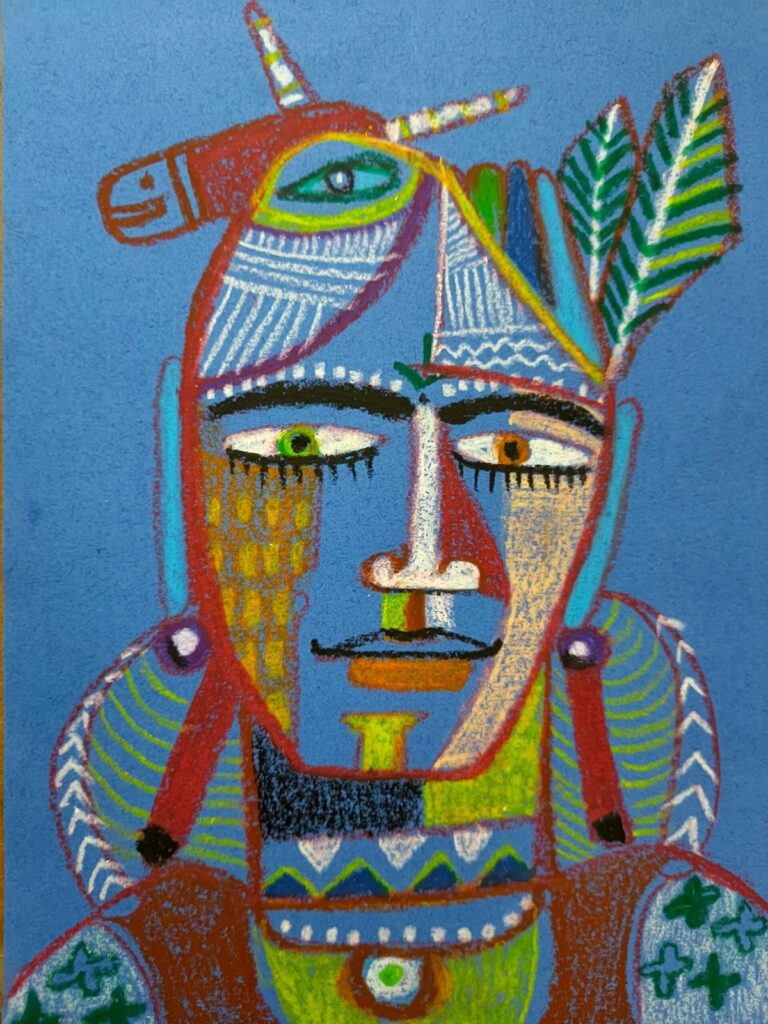
© Kotha Revanth
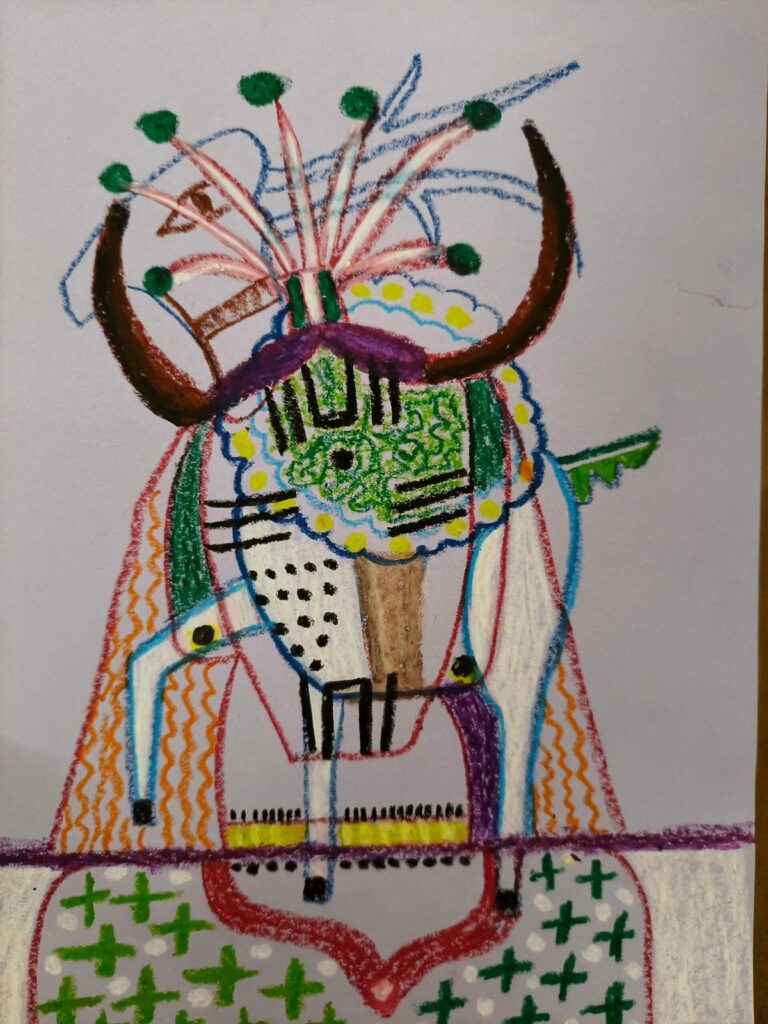
© Kotha Revanth
“I especially want to encourage young tribal artists to value their own cultural knowledge and see it as a strength and a possible artistic future.”
Kotha Revanth
Instagram @tribal_artistry
Read Issue Four, with all eighteen films →
More about Revanth →
Next in Issue Four
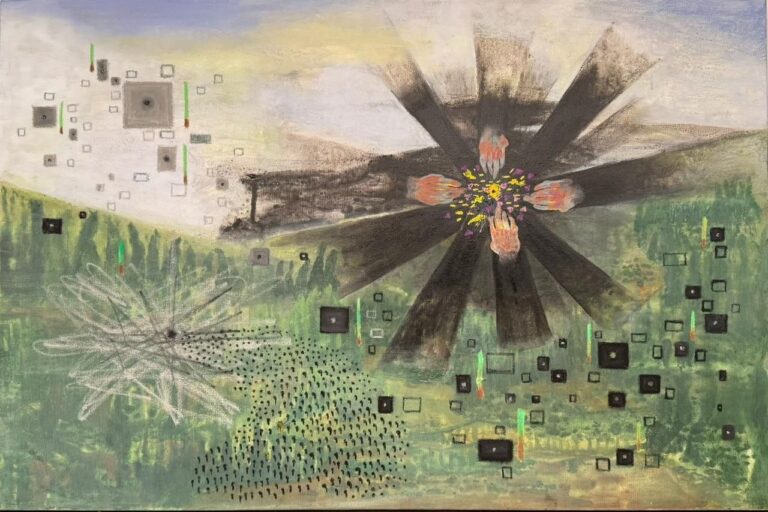 First Year Out · Painting and printmakingOur faith or our waste?Sayali Eknath Khanvilkar3 min read
The Raconteur is free for every reader and every artist. If you would like to help, you can give to Kalyani Kalakriti Foundation.
Send Kotha a note.
A few words about their work mean a lot to a young artist. The team reads every note before it goes to Kotha.
Get the next issue every Monday.
Free, just your email.