
© Aakansha Gupta
When she was a child, a flood came into her family’s home in Kishanganj, Bihar. Aakansha Gupta now studies the history of art in Santiniketan. In the studio she turns what the water ruined into fired clay and glass, so that it cannot be washed away again.
Four questions, four answers.
1. What does she remember first?
Aakansha did her BFA at Kala Bhavana, Visva-Bharati. She is now in the first year of an MFA in History of Art there. Alongside her research she makes sculpture in clay and glass.
Her series When Water Came begins with a flood she lived through as a child. “I don’t remember everything clearly,” she says. “I mainly remember how suddenly we had to move our things upstairs.”
The family carried bags, mattresses and food to the roof. “The terrace became our last safe place. That image stayed in my mind.”
“Our normal domestic life suddenly moved outside.”
© Aakansha Gupta
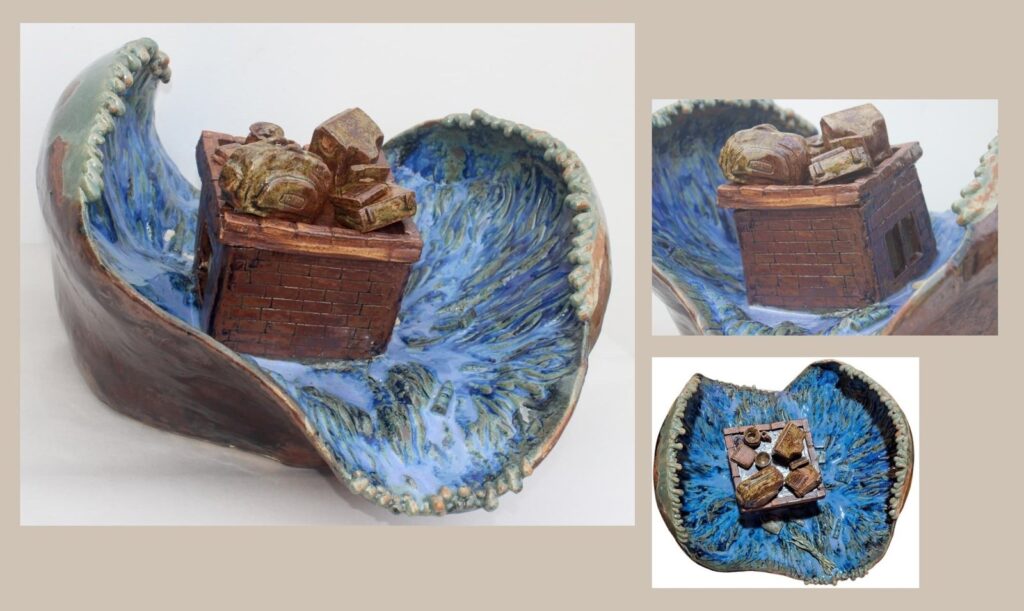
The house and the things piled on its roof are matte and earth coloured. Around them rises one big wave in glossy blue. The blue is the water and it is also sorrow, she says. In the kiln the glazes on the house ran in ways she had not planned. They left marks like the ones a flood leaves on a wall.
The kiln
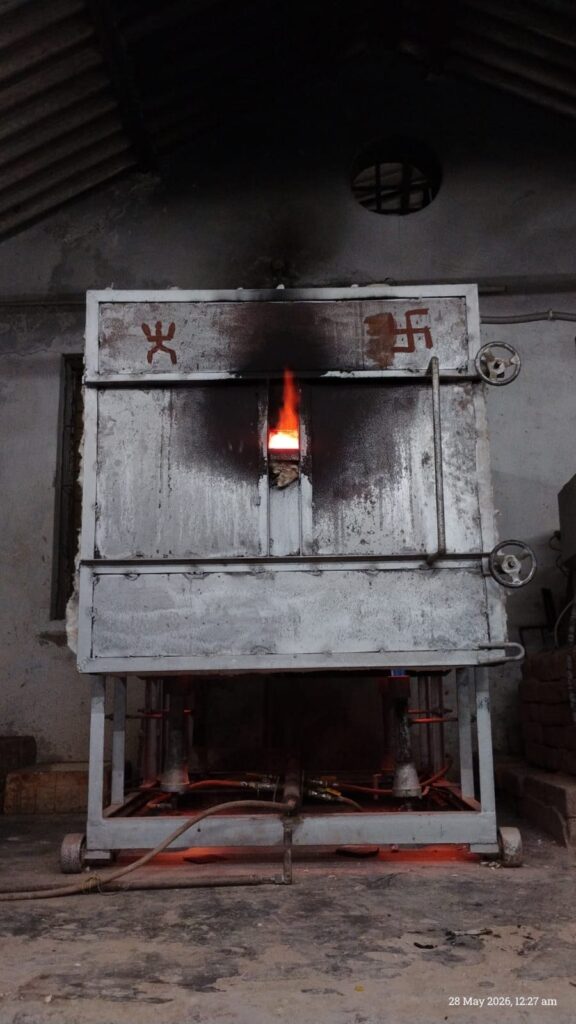
“Allowing the kiln to have its own voice was essential to representing natural chaos.”
© Aakansha Gupta
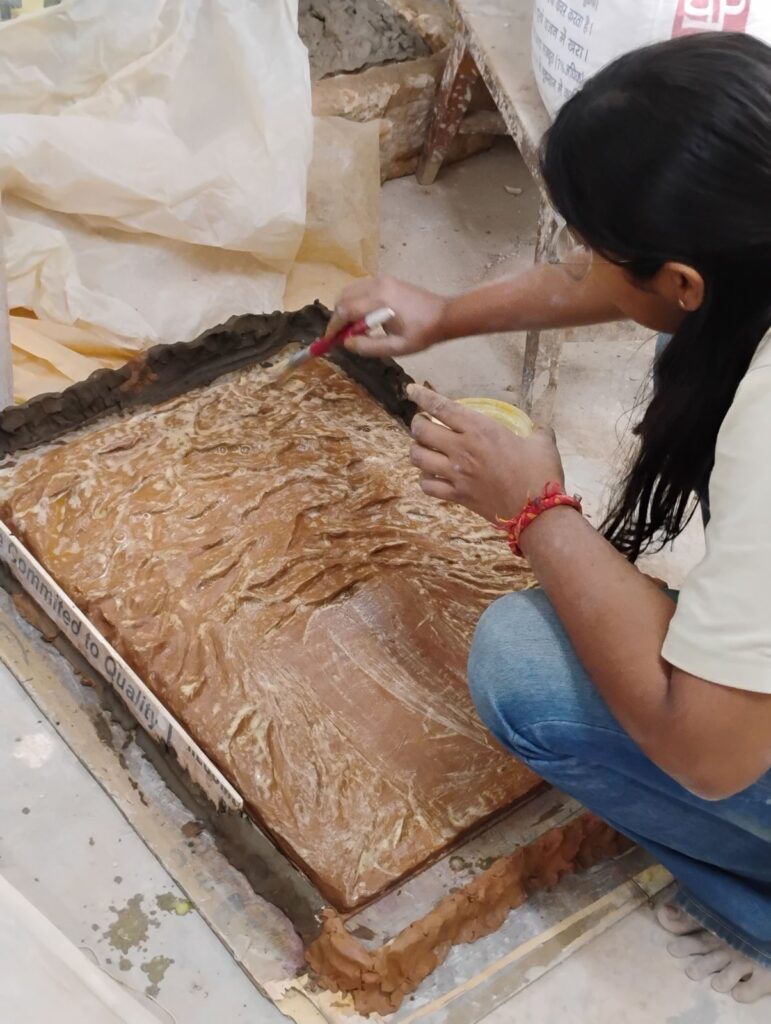
She builds by hand in stoneware and fires at a high heat. A mattress, a toy or a suitcase is soft and water ruins it fast. Fired clay is hard and lasts. “The clay gives permanency to the impermanent,” she writes.
2. Why is the rescuer only a paddle?
© Aakansha Gupta
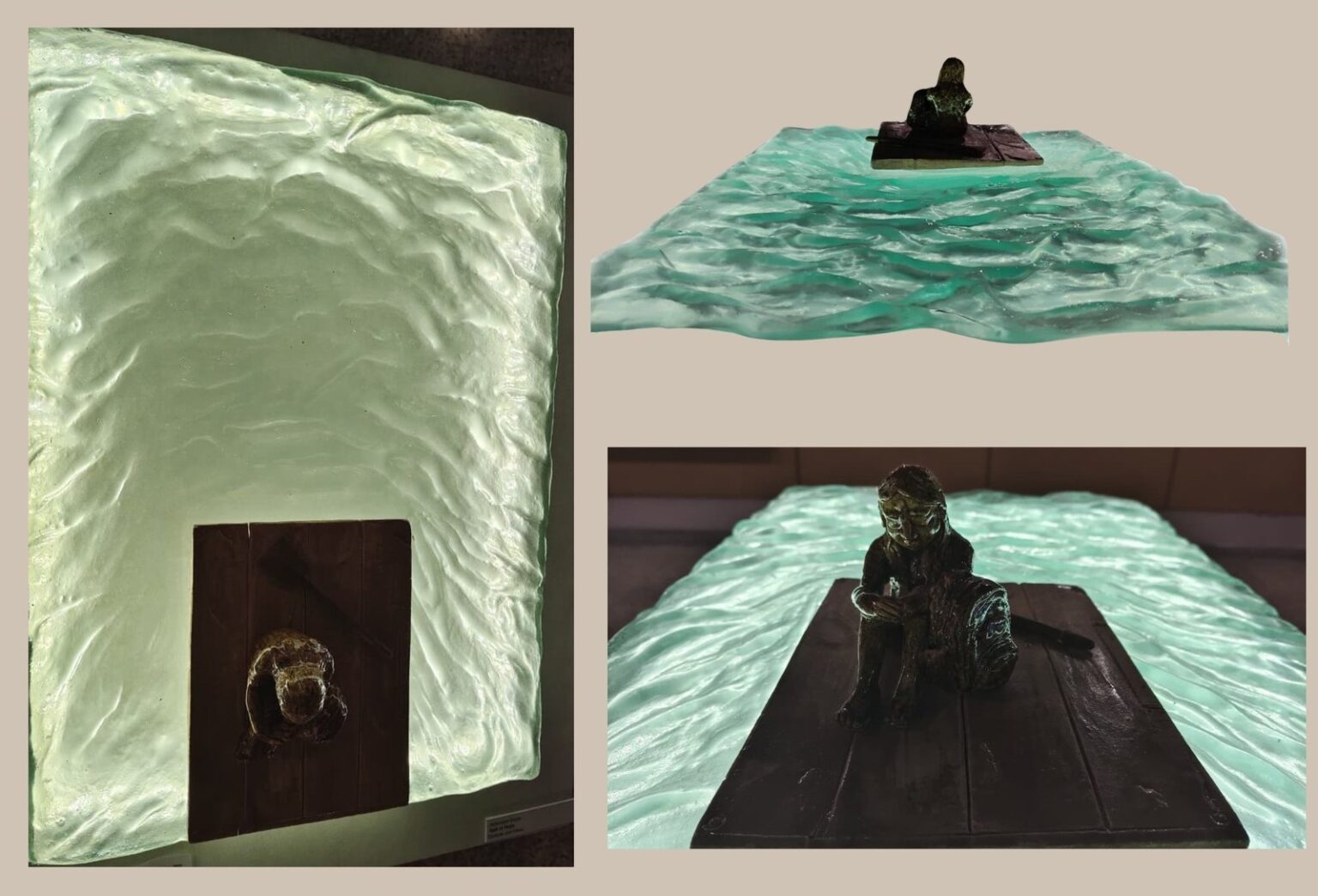
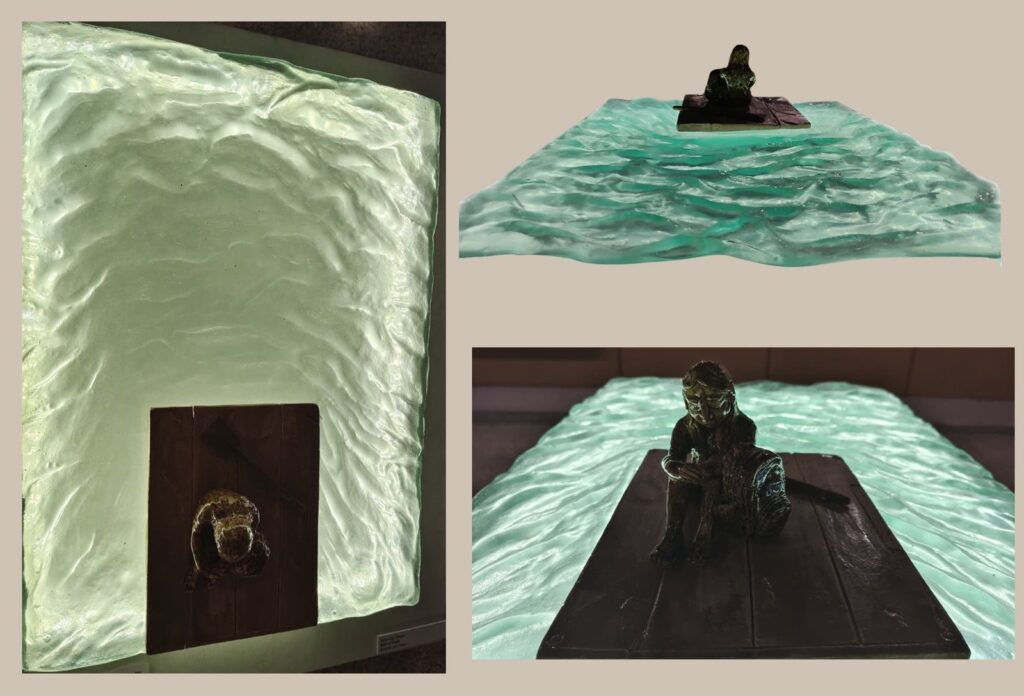
Help did not come in time. Neighbours used a wooden door frame as a raft and carried the family to safety. At first she made a second figure for the raft, the neighbour who helped. “The piece felt too crowded,” she says. She took him out and put in a wooden paddle. “The oars say something a person could not.” She kept the glass clear, not muddy. On the raft, “all I felt was a complete, terrifying emptiness and an endless expanse of water.”
3. What did the box keep?
© Aakansha Gupta
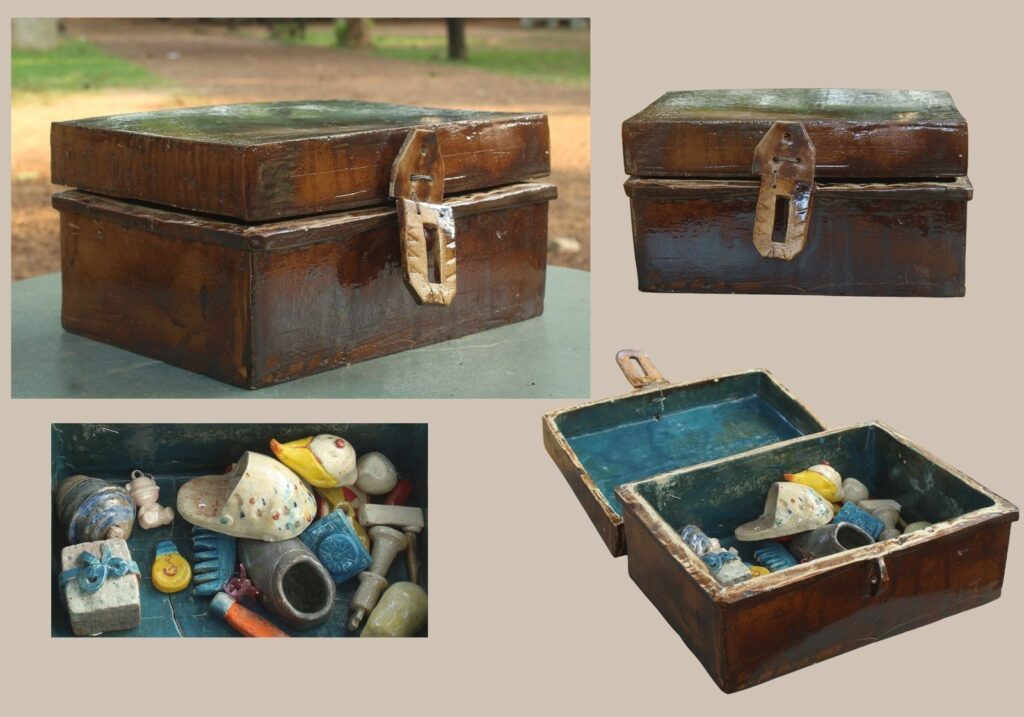
As a child she had a small wooden box tied with wire. In it she kept “little treasures like toys, photographs and interesting found objects.” In the flood the box lay under water in a corner. When she found it, everything inside was ruined.
So she made the box again in clay, with real wire around it. Inside she shaped combs, small figures and trinkets one by one and glazed them in bright colours. The outside looks like it came through the water. The inside looks the way it did before.
4. How does art history meet the kiln?
“A way to build a physical archive of survival.”
© Aakansha Gupta
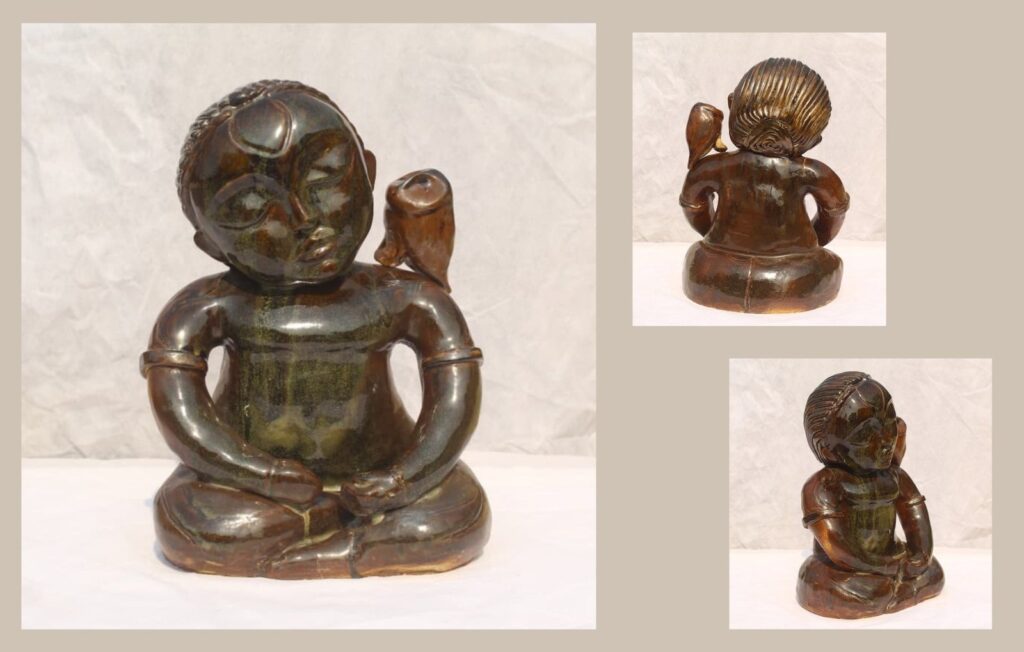
“For me, art history and studio practice are not separate,” she says. Her studies taught her to see old objects as records that carry feeling. People have long used fired clay to record their lives. She uses it to keep her own memory of the flood.
In the studio
© Aakansha Gupta
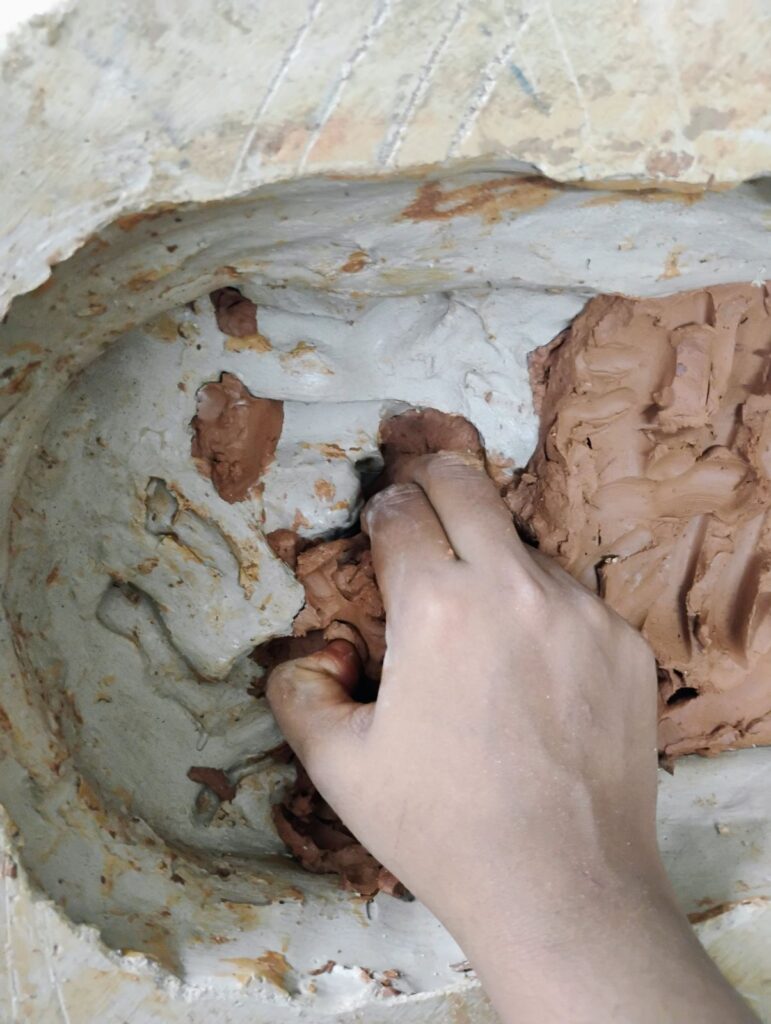
“Clay becomes a way to preserve these memories and keep those moments safe.”
© Aakansha Gupta
More from the studio
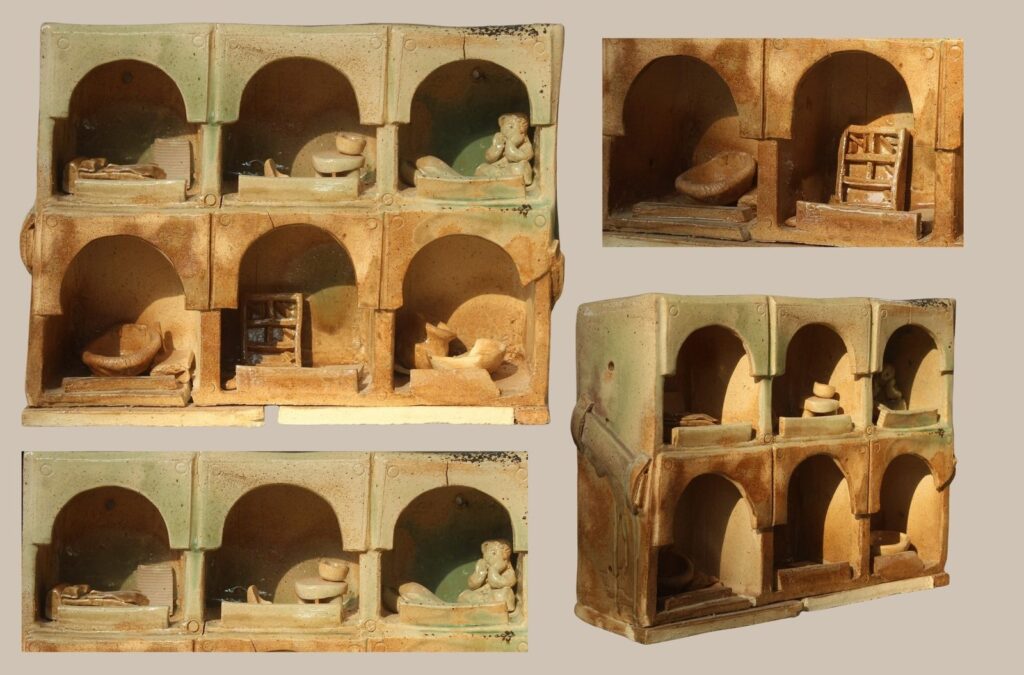
© Aakansha Gupta
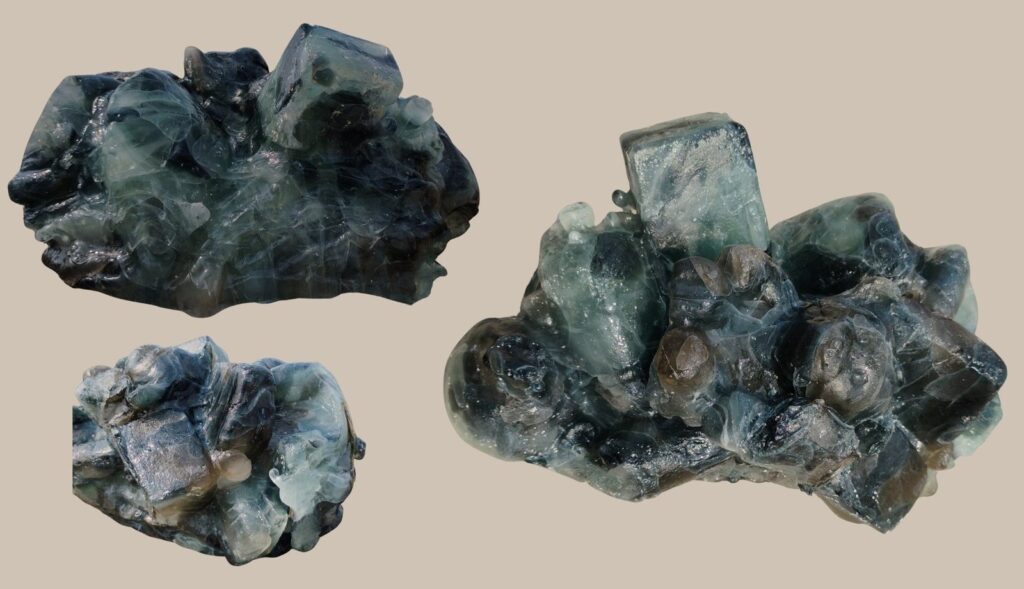
© Aakansha Gupta
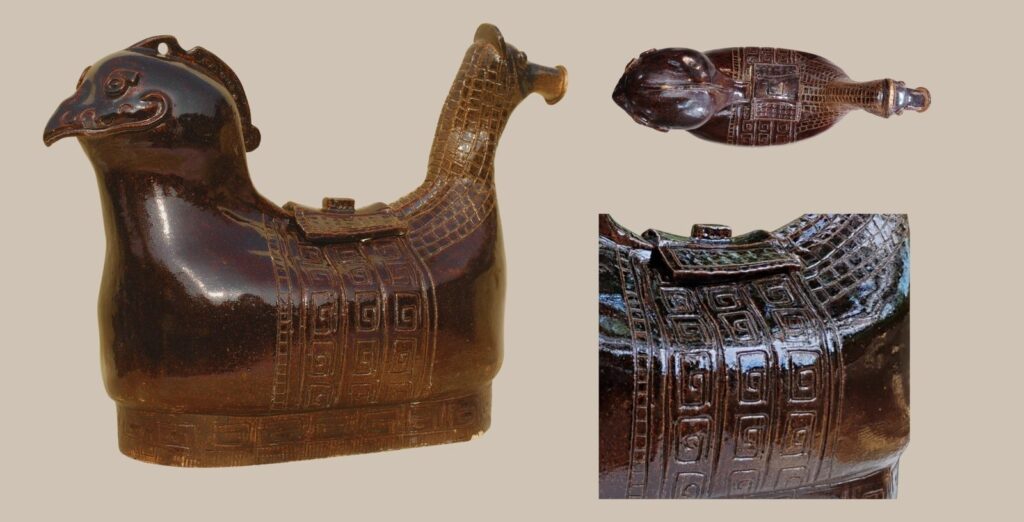
© Aakansha Gupta
She wants young sculptors to take risks with more than one material. She also hopes students like her can find kilns, glass furnaces and research centres to work in.
Aakansha Gupta
Instagram @aakanshha7
Read Issue Four, with all eighteen films →
More about Aakansha →
Next in Issue Four
 The Studio · PaintingWhen the masks danceKotha Revanth3 min read
The Raconteur is free for every reader and every artist. If you would like to help, you can give to Kalyani Kalakriti Foundation.
Send Aakansha a note.
A few words about their work mean a lot to a young artist. The team reads every note before it goes to Aakansha.
Get the next issue every Monday.
Free, just your email.